

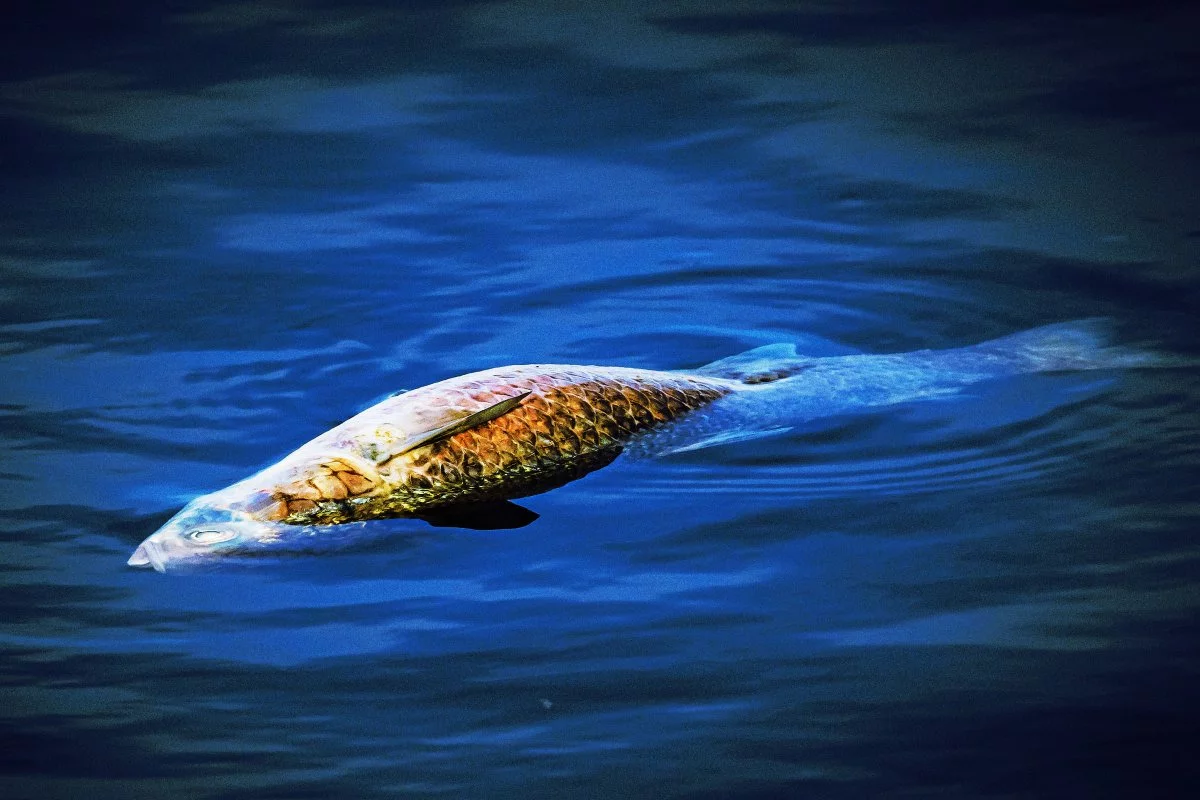

Fish kills as a climate signal: when “seasonal” mortality becomes a systemic warning
Reports of mass fish die-offs across Como Lake in Minnesota, San Carlos Lake in Arizona, and the Charles River in Massachusetts are more than localized environmental incidents. They are increasingly consistent with a broader pattern: warming waters, volatile hydrology, and oxygen collapse converging to push aquatic ecosystems past their tolerance thresholds.
At the center of these events is a well-understood mechanism with newly destabilized timing. Fish require sufficient dissolved oxygen (DO) to survive; yet warm water holds less oxygen, and heat accelerates fish metabolism—raising oxygen demand precisely when supply is falling. Add drought-driven low water levels, stagnant conditions, and nutrient loads that fuel microbial decomposition, and the system can tip rapidly into hypoxia.
What makes the current wave of die-offs notable is not only scale—tens of thousands of fish in some cases—but also timing and compounding triggers. Sudden dam releases can shift temperature and mixing dynamics; drought reduces dilution capacity; and unseasonably high temperatures can bring forward mortality that historically peaked later in summer. With May ranking as the second-hottest on record globally, and forecasters warning that summer 2026 may set new heat extremes amid an evolving El Niño cycle, these fish kills read less like anomalies and more like early chapters of a recurring climate-era stress test.
For policymakers and business leaders, the implication is stark: aquatic biodiversity and water quality are becoming climate-sensitive infrastructure, with direct consequences for public health, local economies, and capital planning.
The technology stack emerging around oxygen, temperature, and predictive control
As fish kills become more frequent and less predictable, the response is shifting from reactive cleanup to instrumented prevention. The most immediate opportunity lies in building a real-time operational picture of water bodies—turning lakes and rivers into monitored systems rather than intermittently sampled ones.
Key technology pathways gaining urgency include:
- Real-time monitoring networks
Distributed dissolved-oxygen probes, thermal loggers, and water-quality sensors can detect the onset of hypoxia and thermal stress before mortality cascades. When paired with telemetry and cloud platforms, these networks enable continuous situational awareness for municipalities, lake associations, and watershed managers.
- AI-driven forecasting and early-warning platforms
Predictive analytics can integrate sensor feeds with weather forecasts, hydrological models, and historical patterns to estimate when DO levels may breach critical thresholds. The practical value is operational: alerts can trigger targeted interventions—aeration, circulation, or controlled releases—when they are most effective and least costly.
- Advanced aeration and circulation as climate adaptation infrastructure
High-efficiency aerators, solar-powered mixers, and bottom-water oxygenation systems are moving from niche deployments to what may become standard equipment in climate-vulnerable watersheds. The strategic shift is toward modular, scalable systems that can be deployed quickly during heat waves and sustained through prolonged drought conditions.
- Biotechnology and resilience R&D for aquaculture
As thermal stress intensifies, aquaculture and fisheries science are likely to accelerate work on heat-tolerant strains, microbiome-based stress resilience, and disease prevention tools (including vaccines) to reduce losses from opportunistic pathogens that thrive when fish are weakened by heat and low oxygen.
Collectively, these tools point toward a new operating model: measure continuously, predict early, intervene precisely. The winners in this space will be those who can integrate hardware, analytics, and field operations into a reliable service layer—especially for public agencies with limited staff and fragmented budgets.
Economic exposure: fisheries revenue, water-treatment costs, and the rise of biodiversity risk pricing
Fish kills are often framed as ecological tragedies, but they also function as economic shock events—with costs that ripple through tourism, utilities, insurance markets, and municipal finance.
Several financial channels stand out:
- Recreational and commercial fisheries impacts
Sudden die-offs can depress revenues from licensing, charters, bait and tackle retail, and hospitality. Repeated events risk longer-term reputational damage to destinations and can contribute to declining waterfront property values, particularly where odors, cleanup operations, and visible ecological decline become recurring features of summer.
- Water utilities and treatment complexity
Large die-offs increase organic loads and elevate biochemical oxygen demand (BOD), which can worsen algal blooms and intensify decomposition by-products. Drinking-water and wastewater authorities may face higher operating costs—especially energy-intensive aeration and filtration—while managing public concerns about taste, odor, and safety.
- Insurance, underwriting, and municipal bond implications
As ecological disruptions become more frequent, underwriters are beginning to treat them as priced risks, including emerging “biodiversity risk” coverage concepts. Over time, this can influence premiums and potentially affect the cost of capital for infrastructure projects near high-risk watersheds—particularly where climate adaptation plans are absent or underfunded.
For investors and boards, the message is that ecosystem volatility is no longer peripheral. It is increasingly a material risk that can affect cash flows, asset values, and community relations—especially for sectors tied to water: utilities, real estate, tourism, agriculture, and food supply chains.
What executives and public agencies can do now: from ESG metrics to “blue” financing
The strategic response is moving toward climate resilience for aquatic systems, with governance and finance evolving alongside technology.
Priority actions gaining traction include:
- Treat aquatic indicators as board-level risk metrics
ESG programs are expanding beyond carbon to include biodiversity and water-health measures. Practical KPIs may include summer DO minima, temperature anomalies, and frequency of hypoxia alerts—metrics that can be tracked, audited, and tied to operational readiness.
- Build public-private partnerships (P3s) for monitoring and response
Municipalities, conservation organizations, universities, and water-tech vendors can co-fund pilots for sensor networks and smart aeration—creating replicable templates for other watersheds and accelerating procurement learning curves.
- Stress-test supply chains tied to seafood and aquaculture
As wild-catch yields fluctuate, producers may diversify sourcing, expand land-based recirculating aquaculture systems (RAS), and reduce ecological dependencies through alternative feeds such as algae- or insect-based inputs.
- Use innovative financing to scale resilience
“Blue bonds” and resilience-linked credit facilities can fund monitoring, restoration, and adaptive infrastructure. Early engagement with insurers can also unlock risk-transfer structures that reward preparedness and data transparency.
Fish kills are not merely indicators of environmental decline; they are operational signals that water bodies are becoming more volatile, more expensive to manage, and more central to climate risk strategy. Organizations that invest now in measurement, prediction, and adaptive response will be better positioned to protect natural capital, stabilize costs, and maintain public trust as heat and hydrological extremes reshape the economics of water.

 By
By

 By
By
 By
By


 By
By








