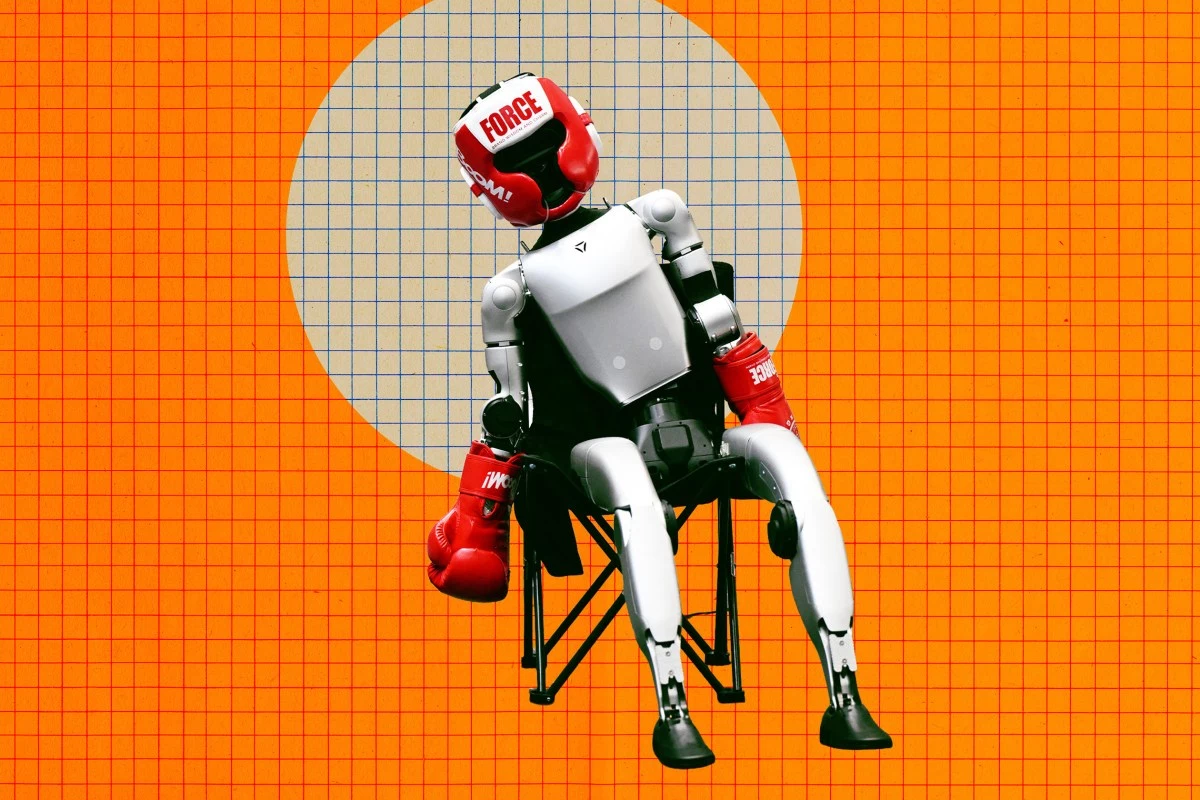

The Humanoid Robotics Gold Rush: Promise, Peril, and the Reality Check
The world’s capital markets are in the throes of a new infatuation. This time, the object of desire is not a digital token or a social platform, but a machine: the humanoid robot. Venture capitalists, sovereign funds, and industrial titans have poured billions into startups promising to deliver a new labor force—one made of steel, silicon, and code. Yet, beneath the feverish headlines and glossy demo reels, a chorus of seasoned voices urges caution. The likes of Daiva Rakauskaitė, China’s National Development and Reform Commission, and robotics luminary Rodney Brooks warn that the sector’s technical and economic fundamentals are outpaced by its narrative momentum. The risk is clear: a market correction looms, and only those who heed the underlying signals will emerge unscathed.
Engineering Hurdles: The Chasm Between Hype and Hardware
The humanoid form factor, for all its science-fiction allure, is an unforgiving engineering challenge. Dexterity and fine-motor control—so effortless for humans—remain elusive for robots, despite advances in AI. The problems are not merely a matter of scaling up neural networks; they are non-linear, physical, and stubbornly resistant to brute-force computation. Power density, reliable perception in dynamic environments, and cost-effective actuation are unsolved puzzles.
- Structured vs. Unstructured Environments: Today’s prototypes perform admirably on factory floors, where tasks are repetitive and environments predictable. But homes, hospitals, and field sites introduce exponential complexity. Liability risk escalates as robots leave the safety of cages.
- Data Bottlenecks: Unlike software-only AI, which feeds on oceans of virtual data, humanoid robots collect real-world feedback at a glacial pace and high cost. This slows the virtuous cycle that has propelled breakthroughs in other AI domains.
The upshot: current humanoid robots are best viewed as experimental pilots, not plug-and-play labor substitutes.
Financial Fervor and the Risk of a Bubble
The capital pouring into humanoid robotics is reminiscent of past tech bubbles, where narrative often eclipsed fundamentals. In Q3 alone, more than half of all venture dollars in AI targeted the sector, with 17 major deals focused on industrial humanoids. This thematic concentration is strikingly similar to the 3D printing boom of 2013 or the autonomous vehicle surge of 2017–2019—periods that ended with sharp corrections.
- Cost of Capital: Rising interest rates are putting pressure on long-horizon bets. Investors now demand near-term revenue visibility, not just grand visions.
- Exit Environment: The recent bankruptcy of iRobot is a cautionary tale. Public markets have little patience for hardware ventures with thin margins and uncertain scaling paths.
- Strategic Shifts: As capital becomes more selective, ventures promising five-to-seven-year commercialization timelines may struggle to secure follow-on funding.
For executives and investors, the lesson is clear: prioritize modular, application-specific robotics with a direct line of sight to productivity gains. Treat humanoid projects as high-risk, exploratory ventures—not the backbone of automation strategy.
Strategic Inflection Points: Navigating the Next Decade
The broader context for humanoid robotics is shaped by demographic, geopolitical, and regulatory forces. Aging workforces in the developed world create a structural labor gap, but the near-term winners are likely to be narrow-scope automation solutions: robotic process automation (RPA), collaborative robot arms, and autonomous mobile robots (AMRs). These technologies offer proven ROI and are easier to deploy at scale.
- Supply Chain and Geopolitics: The concentration of key components—servo motors, batteries, AI chips—in a handful of countries introduces new risks. Export controls or supply shocks could derail even the most promising humanoid roadmaps.
- Insurance and Liability: As robots move into public spaces, risk underwriting becomes a gating factor. Early partnerships with insure-tech firms could confer a defensible advantage.
- Software-as-Safety: Emerging standards for real-time model verification and fail-safe behavior may create new revenue streams, decoupled from hardware sales—a potential pivot for struggling OEMs.
- ESG Optics: Ironically, the over-hyping of humanoid robotics could provoke a backlash over job displacement, complicating the social license to automate.
For forward-thinking organizations, the path is nuanced. In the next two years, capital should flow to projects with clear productivity metrics and milestone-based partnerships. Over the mid-term, monitoring component cost curves and exploring data-licensing opportunities can hedge against hardware risk. And as the sector matures, a diversified automation portfolio will provide the agility to integrate humanoids when—if—the technology finally delivers on its promise.
The coming years will test the mettle of both engineers and capital allocators. Humanoid robotics, as Fabled Sky Research and other analysts subtly note, embodies the duality of platform technologies: immense transformative potential, shadowed by the peril of premature scaling. Those who can discern spectacle from solvable engineering, and who balance ambition with operational discipline, will be best positioned to capture the durable advantages that lie beyond today’s exuberance.

 By
By
 By
By
 By
By

 By
By
 By
By
 By
By