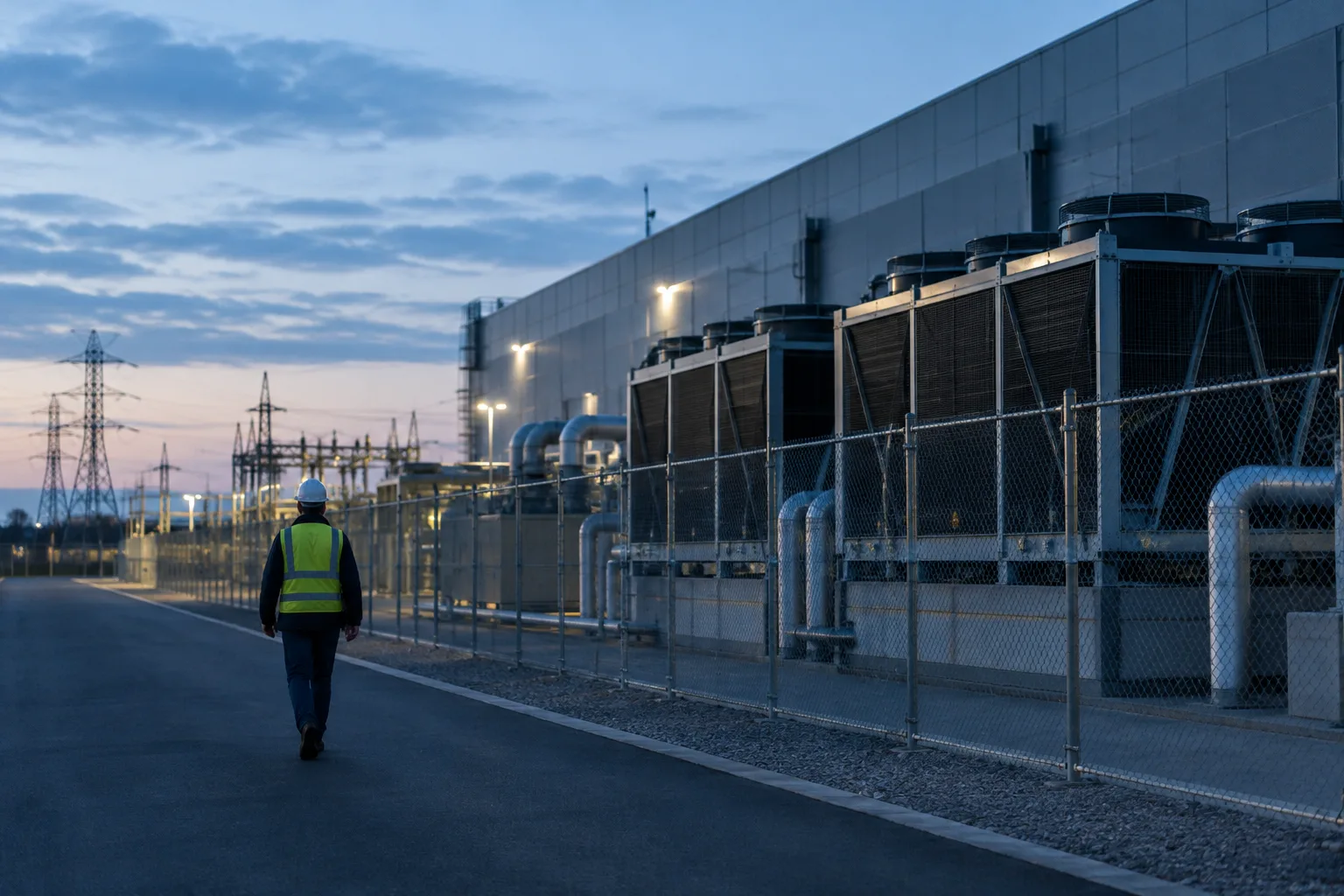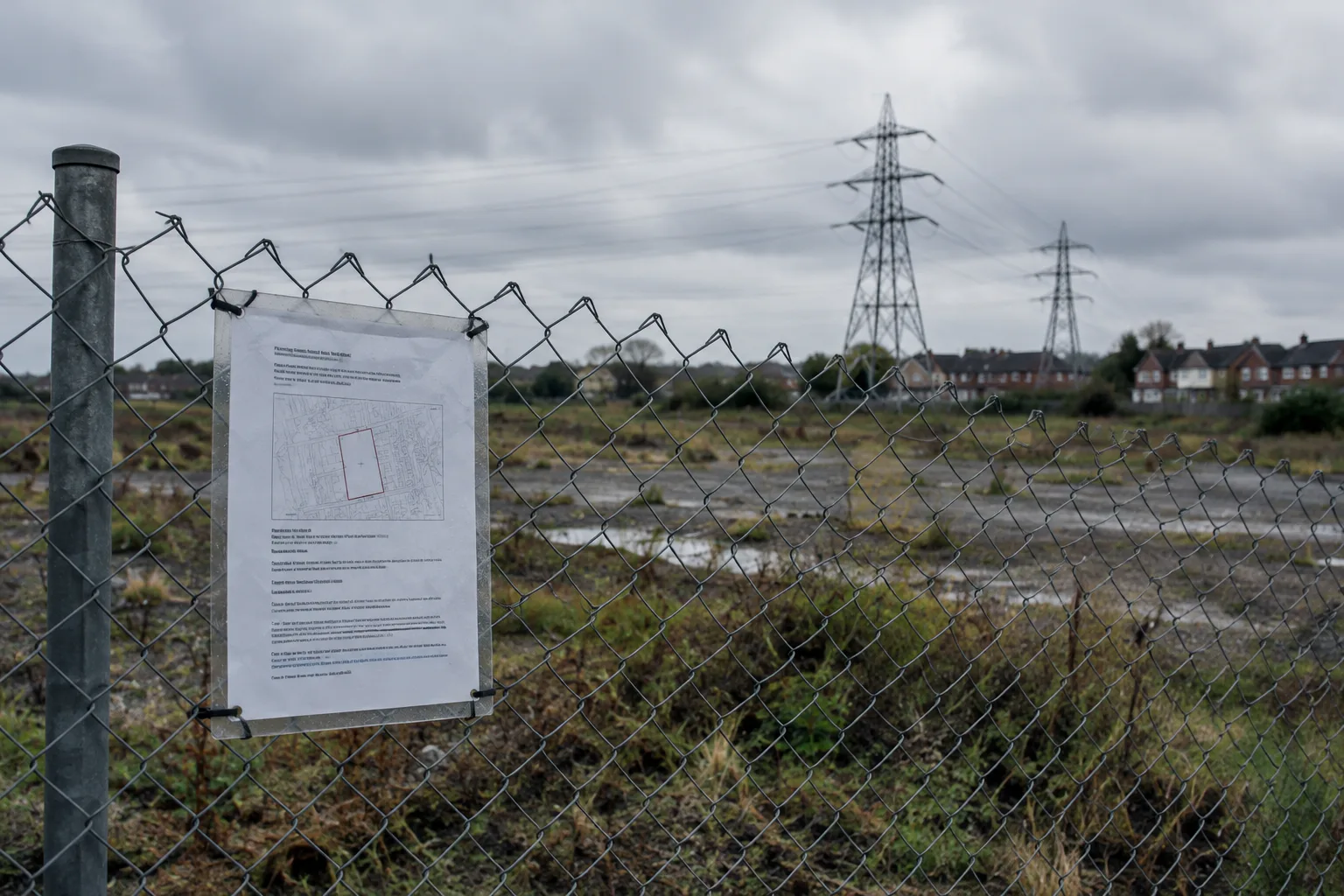

In a Guardian exclusive, the Sovereign AI Leadership taskforce — whose members include NVIDIA, Microsoft and Cisco — warned the UK government it has roughly 12 months to build public consent for new AI data centers before US-style local opposition starts to threaten construction. That matters because Britain is not short of AI ambition. It is trying to speed new capacity through AI Growth Zones, while Microsoft says it plans $30 billion (£23 billion) of UK investment between 2025 and 2028, including $15 billion for cloud and AI infrastructure.
The practical question for councils, residents and businesses is not whether more compute is useful. It is what a host community should insist on before it gives up land, power capacity, road space and political goodwill — and whether the promised upside survives after the ribbon-cutting.
Compute now depends on local consent
AI infrastructure used to be discussed as a national competitiveness issue. A new data center turns it into a local infrastructure decision. A site needs land, grid capacity, substations, backup generation, cooling, water or alternative cooling systems, fiber, construction labor and long-term customers. Residents and councils weigh those needs against noise, traffic, visual impact, energy demand, water use and the risk that an expensive facility becomes underused if AI demand or hardware economics change.
That is why the SAIL warning is more than lobbying theatrics. Its submission reportedly points to US projects that had permits but still ran into organized opposition. The taskforce argues that the deeper problem is distrust: communities do not automatically believe corporate or government promises, especially when electricity costs, environmental impacts and stranded-asset risk are hard to price up front.
For developers, this changes the supply chain. The scarce input is no longer just GPUs, capital or land. It is permission plus social license: the ability to secure power and planning approval without a backlash that stretches timelines, ties up construction capacity and sends costs higher.
The UK already has incentives on the table
The government is not starting from zero. Its AI Growth Zones guidance is intended to unlock investment in AI-enabled data centers and supporting infrastructure by improving access to power and planning support. Government policy says local authorities in designated areas will retain additional business rates generated by growth, with a policy paper estimating roughly £5 million to £10 million per site each year once sites are complete. The same policy framework contemplates electricity-cost reductions from April 2027 for qualifying zones, subject to legislation and project conditions.
That makes the SAIL proposal a fiscal and political question, not a branding exercise. The taskforce wants a national framework for local benefits — a “prosperity compact” — potentially including a larger local share of business-rate revenue or in-kind facilities, with an indicative contribution scaled to site size. But it has not published a standard formula, a site list or a costed estimate of what extra business-rate retention would mean for central government.
Microsoft’s own numbers underline why the industry wants speed. The company says UK generative-AI adoption reached 43.7% in the second quarter of 2026, second in the G7 and eighth globally, and says its UK commitment totals $30 billion over 2025 to 2028. Those are company-reported figures and commitments, not proof that every facility will be built on schedule or win local consent. The Guardian reports that Microsoft already has an Acton data center, another under construction in Newport, and wants several more facilities, but the public record does not settle the final sites, water demand, grid-connection dates or long-term employment totals for each proposed project.
What a credible host-community deal should contain
If a council or community is asked to host an AI data center, the test is whether the benefits are specific, durable and enforceable. At minimum, the deal should answer six questions.
- Who pays for enabling infrastructure? Grid upgrades, substations, water works, roads and site preparation can be funded by some mix of developer, utility, council, ratepayer or national taxpayer. That split should be explicit before planning consent becomes irreversible.
- What local revenue is actually new? Business-rate retention sounds attractive, but it may shift money between local and central government rather than create net new public value. Councils should ask how much stays local, for how long, and what tradeoff it creates elsewhere in the public finances.
- What jobs last beyond construction? A large site can create substantial building work and supplier demand, yet far fewer permanent operating jobs. Communities should push for guaranteed apprenticeships, training places and local procurement targets, not vague employment language.
- When do benefits arrive? If traffic, land-use change and power constraints show up early but local revenue appears only after completion, residents absorb the disruption before seeing any upside. Timing matters almost as much as headline value.
- How are power, water and backup systems governed? “Clean power” claims do not automatically answer local concerns about grid constraints, diesel backup generation, noise or water scarcity. Communities need site-level limits, monitoring and operating conditions.
- Who carries stranded-asset and cleanup risk? If a project is delayed, downsized, sold or underused, the community should not be left with the downside. Decommissioning obligations and change-of-ownership terms matter.
For businesses that may buy cloud or AI capacity, these questions are not just local politics. Permitting delays can affect where capacity is built, how quickly it becomes available and what it costs.
The hardest issue is who captures the upside
The industry case is straightforward: Britain wants more AI capacity, demand is rising, and delays can make scarce power and construction slots disappear. The public-interest case is harder. A host community is being asked to absorb infrastructure impacts so national AI strategy and global cloud platforms can move faster.
That does not make the answer no. It does mean the benefits cannot be generic. “Jobs and growth” is too loose when permanent headcount may be limited and the most valuable asset on the site could be its grid connection. If a project receives planning support, cheaper electricity, business-rate retention or other public help, communities will want proof that the return is measurable and durable.
The next year, if the SAIL taskforce is right about the timing, is therefore a contract-design window. The UK is not simply racing to attract more compute. It is racing to show that an AI data center can produce a local bargain strong enough to survive scrutiny from councils, utilities, taxpayers and the businesses that will ultimately rely on the capacity.

 By

 By
 By
 By

 By

 By

 By