


The AI Power Surge: Data Centers, Grid Strain, and the New Economics of Compute
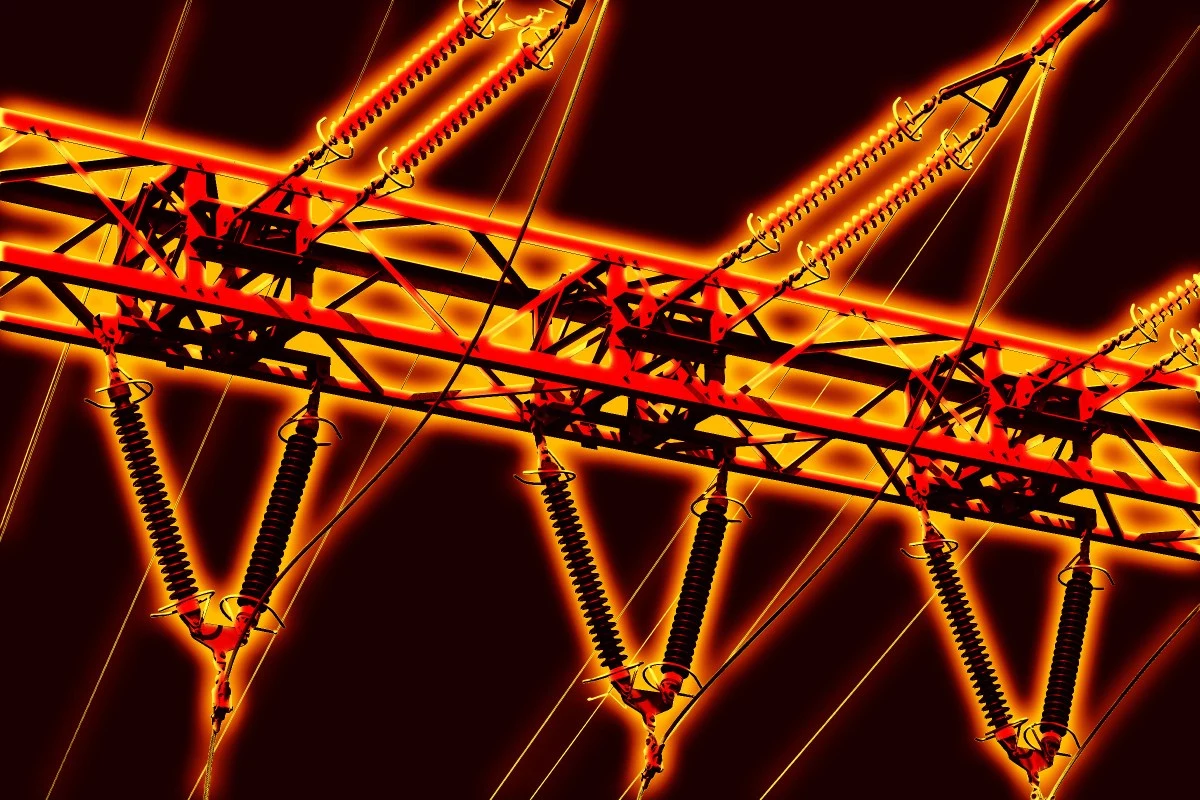
A silent revolution is flickering through the transmission lines of the American heartland. The rise of generative AI, once a curiosity of research labs, now pulses at the core of the world’s largest data centers—vast, humming fortresses whose appetite for electricity is outpacing even the boldest forecasts. PJM Interconnection, the steward of the largest U.S. wholesale power market, has sounded the alarm: AI-driven data center growth is accelerating grid load at nearly 5% annually, threatening rolling blackouts across 13 Mid-Atlantic states during heatwaves and cold snaps. The warning is not hypothetical. In Northern Virginia’s “Data Center Alley,” 153 hyperscale facilities now draw more power than several U.S. states combined, compressing a national dilemma into a single ZIP code.
When Silicon Ambition Collides with Grid Reality
The crux of the challenge is a paradox at the heart of technological progress. For decades, Moore’s Law promised that chips would become ever more efficient, but the voracious compute demands of modern AI models have leapfrogged those gains. Training a leading-edge generative model today can consume 10 to 50 times more electricity per rack than traditional cloud workloads. Water-cooled and immersion systems, designed to tame the heat, simply shift the burden—now local aquifers are under stress, entwining power and water scarcity in a new calculus for site selection.
This is not a transient blip. As independent analysts like ICF International project a 25% rise in U.S. electricity demand by 2030 (and a staggering 78% by 2050), the grid’s slow pace of modernization is exposed. PJM’s infrastructure, like much of North America’s, was built for predictable, steady industrial loads—not the unpredictable, spiking demand of “digital peaking plants” that train AI models in fits and starts. Regulatory bottlenecks abound: interconnection queues average five years, and renewable energy projects are stranded by transmission permitting delays. The result is a patchwork grid, increasingly reliant on aging gas peakers while new capacity lags behind.
Strategic Imperatives: From Latency to Load-Balancing
For executives in technology, utilities, and finance, the implications are as urgent as they are complex. The old playbook—find cheap land, low latency, and abundant fiber—no longer suffices. Now, long-term capacity rights and political goodwill are the new currency. Proactive co-investment with regional transmission organizations (RTOs) will be a prerequisite for future expansion, and voluntary curtailment proposals, once anathema to hyperscalers, may become unavoidable as public backlash mounts.
Financial officers face a new era of volatility: PJM’s capacity auctions are poised to embed scarcity premiums, and electricity costs could swing 20-30% over the next decade. Derivative hedges and direct procurement of renewable power purchase agreements (PPAs) will shift from ESG box-ticking to core cost-of-goods sold. Meanwhile, regulatory tightening is on the horizon, with county-level moratoria already appearing in Virginia and federal incentives potentially tied to peak-load mitigation or water-use intensity.
Innovation, too, must accelerate. CIOs are being called to pioneer sparse and quantized model architectures to slash FLOPs per kilowatt-hour, and to deploy AI-powered job schedulers that migrate non-urgent training to regions flush with renewable energy—think Nordic hydro or West Texas wind. In this new world, workload arbitrage may become as decisive a competitive edge as latency arbitrage once was in high-frequency trading.
The Geopolitical Stakes: Energy, AI, and Global Competition
The U.S. is not alone in this race. China’s vertically integrated utility model enables rapid deployment of coal-plus-renewable hybrids, feeding domestic AI parks at costs 15-20% lower than American rivals. Without a harmonized digital-industrial policy, the U.S. risks ceding ground in the global AI arms race—not because of a lack of talent or capital, but because of grid constraints and regulatory inertia.
The forward-looking scenarios are stark. In a baseline world, incremental reforms and peak pricing may keep blackouts episodic but manageable, with data center growth continuing as chip efficiency improves. In a more optimistic vision, breakthroughs in grid-scale storage—sub-$50/kWh iron-air or flow batteries—could shave AI’s peak load and render outages rare, with hyperscalers capturing early-mover advantage through equity stakes in storage OEMs. But in a stress case, federal carbon caps and local moratoria could stall a third of planned East Coast data centers, shifting investment to energy-secure regions and driving up the cost of AI compute.
The message for boardrooms is clear: the collision of exponential AI demand with linear grid expansion is not a distant risk—it is a present, material threat to business continuity, financial stability, and reputational standing. Energy strategy is now inseparable from digital strategy. Those who fail to adapt may find themselves not just outpaced, but unplugged.

 By
By
 By
By
 By
By
 By
By

 By
By
 By
By
 By
By







