
The U.S. data-center boom is becoming a governance story, not just an energy story. Reporting published Nov. 23 by The Associated Press, Capital B and the Pulitzer Center, alongside a new national study, found that data centers are disproportionately located in communities of color and that the permitting path often determines whether residents get a real chance to negotiate before a project is effectively locked in.
Why that matters for business is straightforward: AI and cloud operators need land, power and permits quickly. But faster siting can shift risk rather than remove it if residents learn about a project after approvals are in place, or if local governments later respond with moratoria, tougher zoning or political backlash. The practical question is not whether data centers are inherently good or bad. It is whether the value created by AI infrastructure is being shared with the communities that host the substations, roads, diesel backups and water demand.
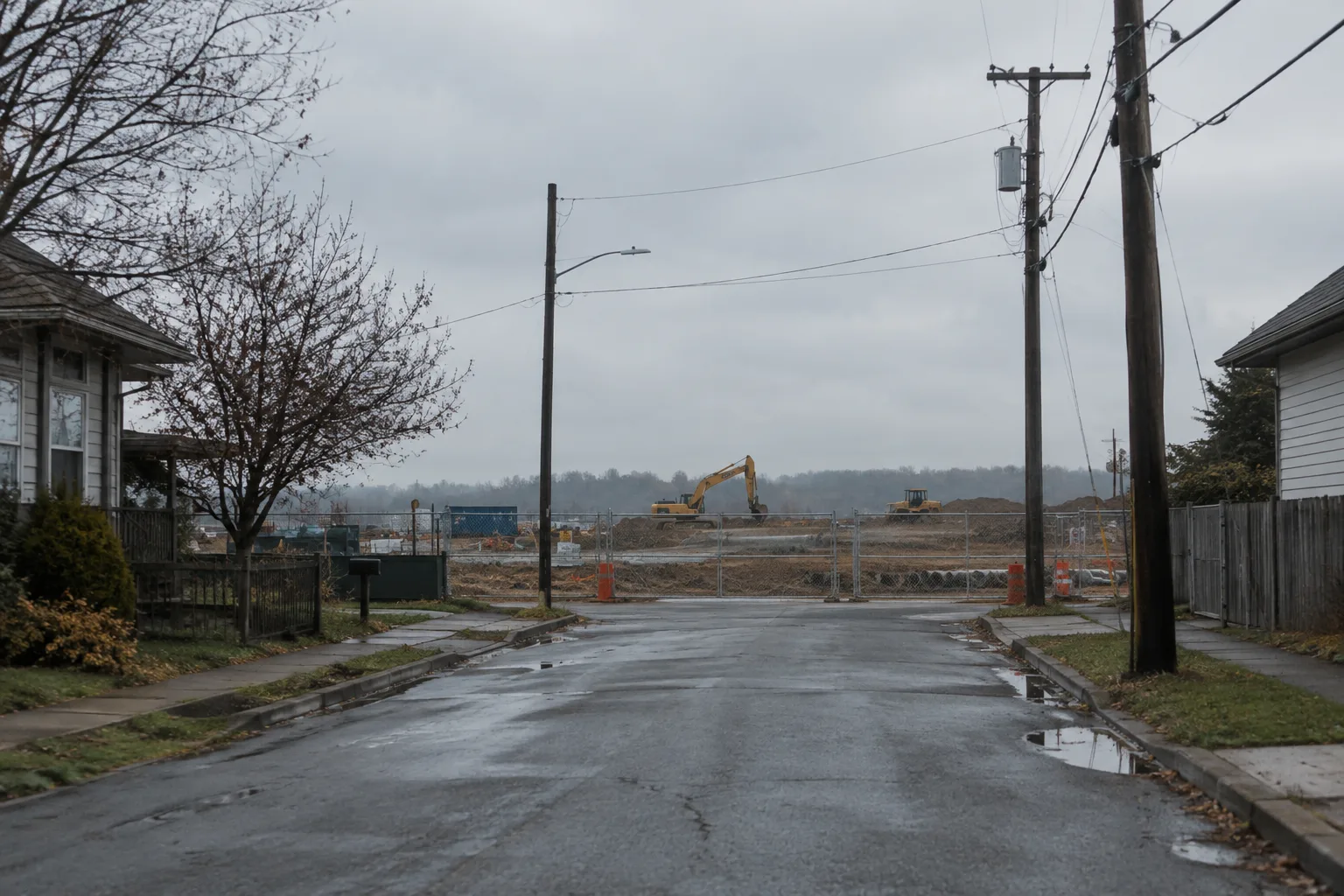
In Augusta, Georgia, the AP documented Project Eisenhower, a roughly $2 billion data center first authorized in 2022 without a public hearing. Construction began earlier in 2026. The closest neighborhood is about 67% Black, and residents learned about the project after approvals were already in place. Augusta later adopted a temporary moratorium on new data-center development, but the $2 billion project was not covered by that pause.
That local case matches a broader pattern described in the study *Redlining in the Age of AI*. Across more than 5,200 U.S. data centers that are operating, planned or under construction, and more than 81,000 census tracts, majority-Black neighborhoods had about 2.2 times the odds of hosting a data center as majority-white neighborhoods within the same state after accounting for income, density, education, land costs, proximity to major power lines and state-level effects. The pattern also appeared in majority-Hispanic and majority-Asian neighborhoods. The study compares locations rather than motives, so it does not show that any company intentionally targeted a community because of race.
Where the leverage disappears
The most important mechanism in the reporting is mundane but powerful: zoning procedure. If a project requires rezoning, residents usually get public notice, a hearing and a vote. If land is already zoned for industrial use, developers may be able to move through administrative review without that public forum.
That difference changes bargaining power. Hearings are where residents and local officials can press for buffers, noise limits, traffic plans, utility-cost allocation, emissions monitoring, local hiring commitments and community-benefit agreements. Without that step, a project may still be legal and technically suitable, but it reaches construction with fewer negotiated conditions and less public visibility.
The AP report included a North Carolina example that makes the point starkly. A project withdrew from a wealthier community that was about 65% white after residents organized against it, then moved to a county where the closest neighborhood was predominantly Black and median income was about one-third as high. County commissioners approved that project 6-1.
A Harvard-linked tool called Zoned Out adds another clue. In its dataset, communities that had a public hearing blocked a project 66% of the time, while communities without a hearing approved projects 80% of the time. Those numbers do not prove hearings alone determine outcomes; projects that go through different approval tracks may differ in other ways. But they show why developers, utilities and local officials treat the permitting path as more than paperwork.
Not every data center brings the same deal
One reason this issue can be misread is that “data center” covers very different business models. The United States has more than 5,000 such facilities and hundreds of billions of dollars in projects planned, but the benefits and burdens do not arrive in a standard package.
The study finds that the representative neighborhood hosting a large hyperscale campus — typically a single-operator facility associated with companies such as Amazon, Google or Meta — is about 65% white and 35% people of color and is more likely to receive larger tax or other economic benefits. Smaller co-location facilities, which serve multiple tenants and connectivity needs, are more common in denser communities of color and are associated in the study with fewer local economic benefits.
That split matters. A data center can bring construction work, supplier activity, property-tax revenue and some permanent operations jobs. It can also require major electricity demand, transmission upgrades, water, backup generation, land and roads, sometimes alongside tax incentives. If the communities more likely to host certain facility types are less likely to receive the richest tax base or employment upside, then the AI buildout is also a benefit-distribution problem.
It is also worth keeping categories straight. Not every data center in the national count is an AI facility, and the study does not quantify the full operating economics of every site. But during an AI-led expansion cycle, the geography of data-center siting is a practical proxy for who absorbs the local footprint of digital growth.
The new project scorecard for AI infrastructure
For residents, local officials and investors, the useful question is less “Do we want a data center?” than “Under what terms?” A credible project now needs answers to a short list of operational and financial questions:
- Who pays for grid, road and water upgrades?
- How will water use, diesel-generator operations, noise and air quality be measured and reported?
- How many permanent jobs are promised, what skills do they require, and how many are expected to go to nearby residents?
- What tax incentives apply, and are there clawbacks if hiring or investment targets are missed?
- Is there a binding community-benefit agreement?
- What reporting continues after opening, and what enforcement or appeal options exist if conditions are breached?
Those questions are not anti-growth. They are a way to price the real cost of “speed to power.” For operators, utilities, lenders, construction firms and enterprise customers, a project that looks faster because it avoided meaningful public participation may later prove slower and more expensive if it triggers litigation, stricter zoning, financing concerns or a loss of political support.
Developers do choose industrial and transmission-adjacent sites for legitimate technical reasons, and existing zoning can explain many administrative approvals. That is part of the story. The other part is that communities with less notice and less leverage have fewer chances to convert a global AI investment wave into local terms they can live with.
That is why the Augusta case and the national study matter beyond one neighborhood. The industry’s race for capacity is also a race for legitimacy. Operators that can show transparent safeguards and believable local value may end up with something even more important than a quick permit: a project durable enough to keep its social license after the servers turn on.

 By

 By
 By

 By

 By