


An AI startup founder takes aim at AAA gravity—by turning game development into a public experiment
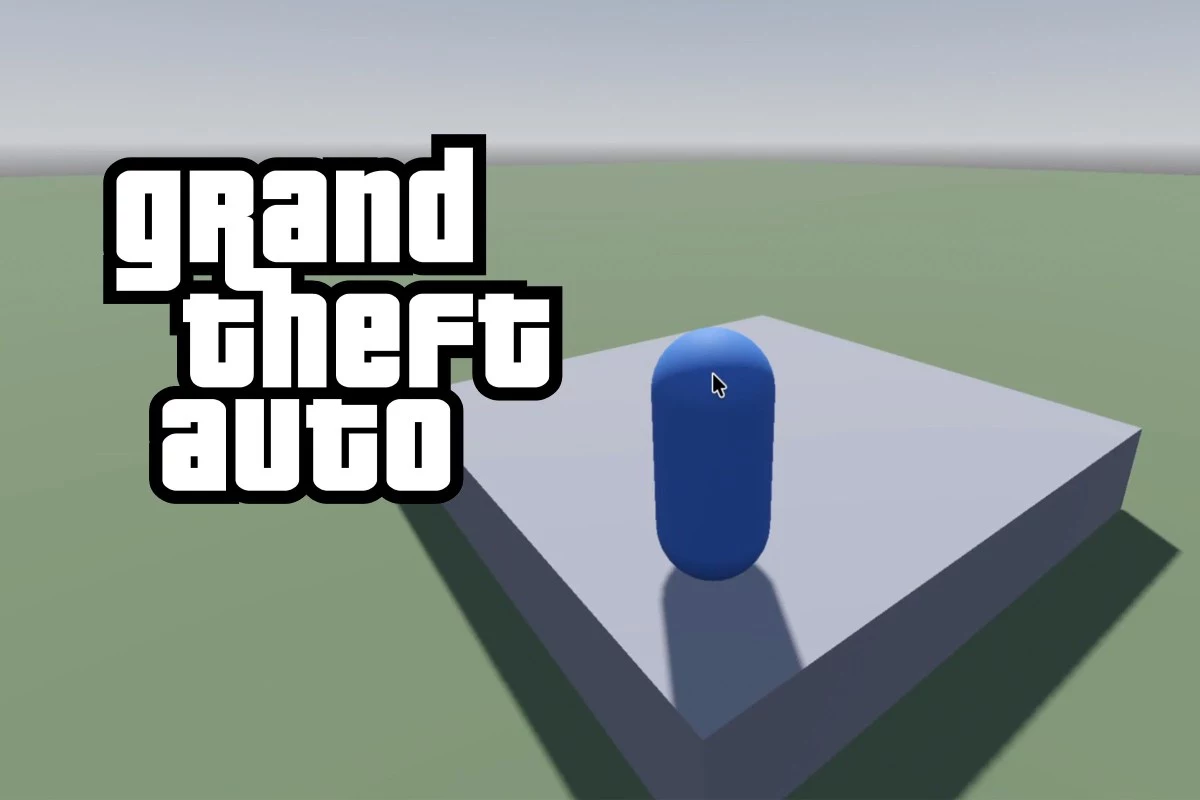
Ziwen Xu’s open-world gaming venture is less a conventional product announcement than a live demonstration of how generative AI could rewire the economics and cadence of game creation. Positioned—half earnestly, half provocatively—as a would-be rival to Rockstar’s *Grand Theft Auto VI*, the project uses Anthropic’s Fable model (a safety-constrained variant associated with Mytho) inside the Unreal Engine to generate an AI-driven avatar and early world behavior. Xu has also published code on GitHub, explicitly inviting developers, artists, and musicians to collaborate.
That combination—AI-first tooling + open-source coordination + a culturally loaded benchmark (GTA)—is what makes the story strategically significant. The footage itself reportedly shows a rudimentary environment, but the underlying message is sharper: if blockbuster development cycles stretch toward a decade, can a distributed community, amplified by generative models, produce “good enough” open-world play faster—and at radically lower cost?
The project also reads as a critique of the modern AAA reality: sprawling teams, ballooning budgets, and risk-averse production pipelines that often trade experimentation for predictability. Xu’s approach flips that equation, betting that iteration speed and community energy can compensate for missing polish—at least early on.
—
Inside the AI-first pipeline: promise, drift, and the hard limits of “autopilot” worlds
The technological headline is not simply “AI makes a game.” It is the attempt to push generative AI beyond isolated asset creation—textures, dialogue snippets, concept art—toward something closer to end-to-end world scaffolding, where models influence spatial layout, narrative flavor, and interactive behavior.
Key implications stand out:
- AI-augmented content pipelines are moving upstream. Instead of using AI to decorate a finished design, Xu’s experiment suggests AI may increasingly participate in *forming* the design—blocking environments, proposing scenes, and shaping moment-to-moment interactions. If this holds, it could compress pre-production, traditionally one of the most time-consuming phases of open-world development.
- Error modes remain structural, not cosmetic. The reported misstep—an AI-generated Florida setting drifting into a Los Angeles-like environment—sounds minor, but it’s emblematic of a deeper issue: context fidelity. Large models can “snap” to dominant patterns in training data, producing plausible outputs that are wrong for the intended locale, tone, or canon. In open-world games, where geography and cultural cues are part of the product’s identity, these failures are not edge cases; they are core risks.
- Human-in-the-loop is still the real engine. The more a game depends on coherent world logic—mission gating, economy balancing, systemic NPC behavior—the more oversight becomes indispensable. The near-term opportunity is not full automation; it is AI-assisted throughput: faster prototyping, quicker content variation, and accelerated testing cycles, with humans enforcing continuity and quality thresholds.
In other words, Xu’s prototype is best read as a stress test of generative AI’s reliability under world-building constraints, not a declaration that AI can replace a studio’s craft. The most valuable output may be the catalog of failures—drift, inconsistency, and bias—because those are precisely what future AI game pipelines must mitigate.
—
Open-source game development meets blockbuster expectations: a new cost curve, new incentives
Economically, the project highlights a widening gap between AAA cost structures and the emerging low-capex experimentation enabled by accessible engines and generative models. Traditional open-world blockbusters can require hundreds of millions in investment, long lead times, and complex vendor ecosystems. Xu’s model—public code, community contributions, and AI-assisted generation—suggests a different cost curve: lower upfront spend, higher iteration velocity, and a greater reliance on voluntary or reputation-driven labor.
If this approach matures, it could reshape several market dynamics:
- Downward pressure on “time-to-fun.” Players may become less tolerant of multi-year silence if community-driven projects demonstrate visible progress in public repositories and frequent playable builds. Even if the quality ceiling is lower, the transparency and cadence could become a competitive differentiator.
- New monetization surfaces around the core game. Open collaboration can spawn adjacent markets:
– custom asset and mod marketplaces
– Unreal plugins and AI tooling licenses
– specialized datasets and evaluation services for game-safe generation
– community-hosted servers and live-ops infrastructure
- A different kind of competitive disruption. The most plausible disruption is not that an open-source “GTA-like” dethrones Rockstar on cinematic polish. It’s that mid-tier studios and indies adopt AI-first pipelines to deliver expansive experiences at prices and timelines that reset consumer expectations—especially in an era of subscriptions, live-service updates, and continuous content drops.
This is also where the “vibe-coder” framing matters. A distributed collective can move quickly, but it can also fragment. Governance, roadmap discipline, and quality control become existential questions—particularly when the audience is primed to compare everything to a cultural juggernaut like GTA.
—
IP, reputation, and the next talent war: what incumbents and regulators will watch closely
Strategically, Xu’s venture sits at the intersection of intellectual property sensitivity, talent signaling, and AI governance.
On IP: a “GTA-like” project inevitably tests boundaries. Even without direct asset copying, the closer a project gets to recognizable trade dress—tone, city archetypes, mission structure—the more likely it is to attract scrutiny. The industry will be watching how IP holders respond when a project is both community-driven and AI-enabled, and whether new licensing or co-creation models emerge to channel that energy rather than litigate it.
On talent: the GitHub-first invitation is also a recruitment mechanism. Public AI game projects can function as portfolio accelerators, drawing engineers and creators who want to work at the frontier of generative pipelines. That creates pressure on established studios to modernize roles—blending narrative design with systems thinking, and pairing traditional art direction with model steering, evaluation, and safety constraints.
On reputation and trust: ambitious timelines and viral positioning can backfire if the deliverable remains a tech demo. In AI entertainment, credibility is increasingly tied to repeatable progress: playable builds, measurable improvements, and transparent limitations. The projects that endure will be those that treat AI not as a marketing shortcut, but as an engineering discipline—audited, iterated, and constrained toward coherent player experience.
Xu’s experiment may never rival GTA VI in spectacle, but it doesn’t need to. Its real significance is as a public, fast-moving case study in AI-driven game development, open-source collaboration, and the shifting economics of interactive entertainment—where the next competitive advantage may be less about who has the biggest budget, and more about who can iterate, coordinate, and learn the fastest.

 By
By
 By
By
 By
By

 By
By
 By
By

 By
By







