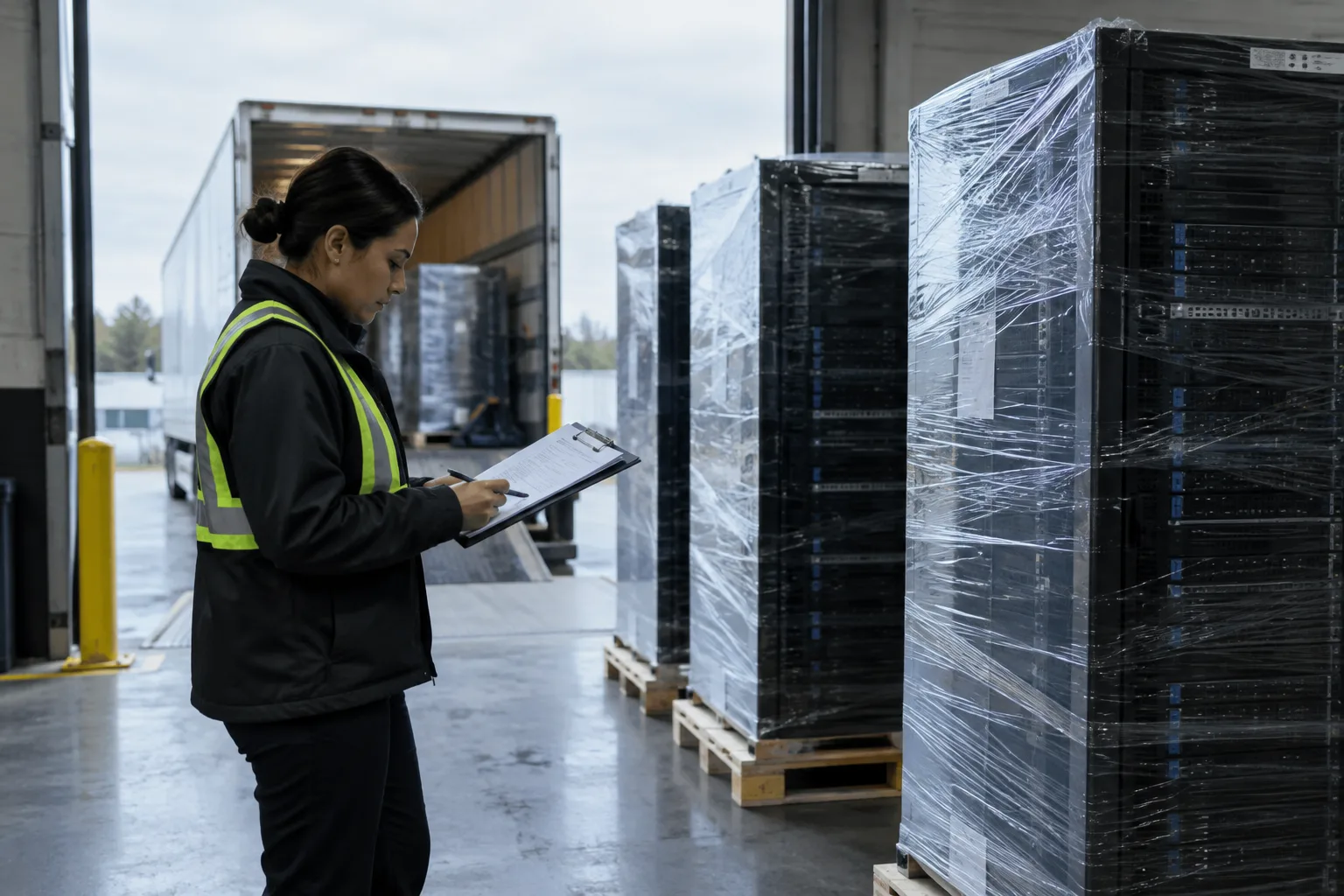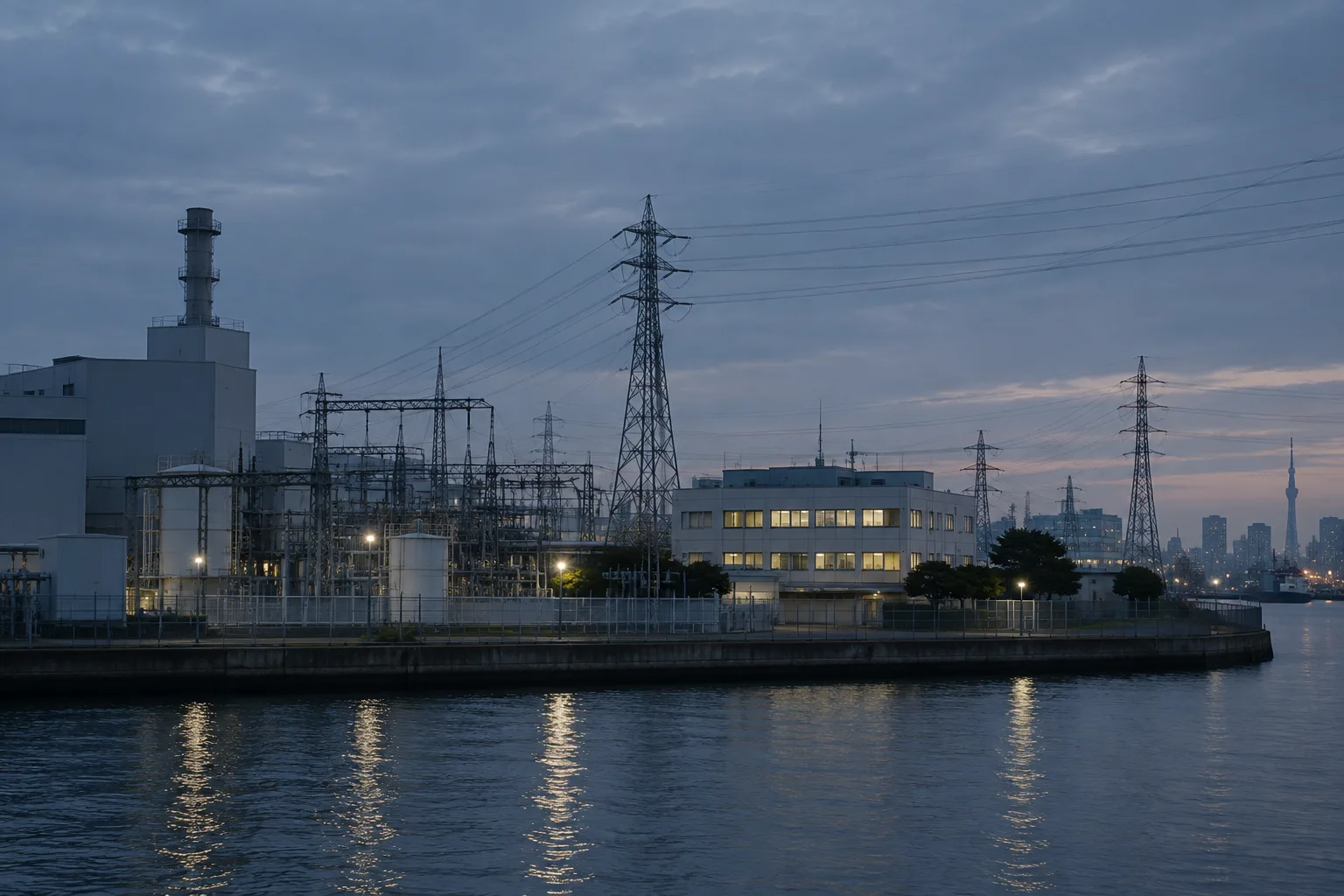

Reuters reported on November 27 that JERA, Japan’s largest power generator, is in talks with Anthropic, Meta, Amazon, Microsoft and Google about building data centers near power plants in the Tokyo area. That matters because the proposal is not just another campus announcement. It is a test of whether a utility can turn existing thermal power stations into a faster on-ramp for AI capacity by putting the computing load directly beside the generation asset.
The reader’s real question is simple: does this solve the cloud industry’s power bottleneck, or just move the constraint somewhere else?
Right now, the answer is that JERA may have found a credible way to cut one of the hardest delays in AI infrastructure — time to power — but the harder commercial and operational questions are still open.
What is actually on the table
The immediate news is a set of reported talks, not signed customer wins. Reuters, citing a recent interview with JERA Global CEO and Chair Yukio Kani and Nikkei reporting, said JERA is discussing projects with five major AI and cloud companies. JERA itself said its infrastructure partner RHAELM is responsible for marketing and had told the company it was speaking with multiple hyperscalers. None of the named companies announced a contract, and Reuters said they did not immediately comment.
The firmer piece of evidence is JERA’s October 1 release, which laid out a memorandum of understanding with Dell Technologies and RHAELM to build a standardized AI infrastructure model in Japan. The first planned site is at JERA’s Chiba Thermal Power Station. JERA says that project would be behind the meter, draw on capacity from an operating generation asset, and be supported by up to 400 megawatts of power. The company put expected capital deployment at more than $15 billion across land, power infrastructure, construction and AI compute, with a target to begin operations around 2028.
Those numbers are large enough to attract attention on their own. JERA says the Chiba project could become Japan’s largest single-site AI infrastructure deployment and one of Asia’s largest. It also says it generates about one-third of Japan’s electricity and supplies nearly all power consumed in the Tokyo metropolitan area. Data Center Dynamics added useful context: JERA operates more than 20 thermal power plants with combined capacity approaching 55 gigawatts, and the LNG-powered Chiba station has maximum output of about 4.38 GW. That tells investors and cloud buyers why JERA can plausibly assemble power at scale. It does not mean 400 MW has been sold, financed, or converted into working AI capacity.
Why utilities suddenly look like cloud landlords
The appeal of this model is timing. AI demand has collided with slow grid interconnection, substation limits, cooling constraints, network buildouts and the sheer complexity of putting power, land and compute in the same place on the same schedule. A behind-the-meter design changes the sequence. Instead of waiting for a conventional grid-connected campus to secure new power delivery, the developer places the data center beside a power plant and draws from that asset directly.
That does not remove the grid from the picture entirely, but it can cut one major source of delay. For a hyperscaler or model company, the attraction is earlier access to scarce capacity. For JERA, the opportunity is bigger than selling electricity. It can package land, generation, electrical systems and site development into an infrastructure product. Dell contributes rack-scale AI infrastructure, while RHAELM is positioned as the developer and delivery partner trying to standardize the design so it can be repeated at other sites.
That is why this story has broader significance than one possible campus outside Tokyo. It suggests a new division of labor in AI buildouts. Utilities stop being just power suppliers and become infrastructure developers and capacity allocators. Cloud companies stop treating power as a downstream procurement item and start anchoring industrial projects at the source.
The idea also fits Japan’s “Watt-Bit Collaboration” policy push, which aims to link electricity and telecommunications infrastructure more deliberately. If JERA can make the Chiba model work, it offers Japan a way to use existing industrial sites to attract AI investment faster than a purely grid-dependent development path might allow.
What co-location solves — and what it doesn’t
Putting servers next to a thermal plant is not the same as solving AI infrastructure.
It helps with speed to power. It does not make fuel risk disappear. Chiba is LNG-powered, and JERA’s own framing of the project emphasizes combining generation with LNG capabilities. That means the economics of the data center will still depend, directly or indirectly, on fuel exposure. The unanswered questions are the costly ones: who bears price volatility, how the power is priced, and whether customers are buying a premium for faster delivery.
Emissions are just as important. A behind-the-meter campus attached to gas-fired generation may be faster to build than a conventional alternative, but speed does not settle the carbon question. The public material does not specify an emissions plan, any offset structure, or how regulators and customers would assess the environmental profile of the load. For AI customers under pressure to show cleaner supply chains, that omission is material.
Then there is the common problem with megawatt headlines: a 400 MW power envelope is not the same thing as 400 MW of useful IT load. Power has to be shared across electrical losses, cooling and support systems, and the public documents do not specify the final IT load, chip mix, cooling design, water use, backup power or network route. Announced capacity can sound definitive long before the compute design is locked down.
Reliability is another unresolved issue. A cloud customer buying capacity at this scale will care about redundancy, outage planning, network diversity and how the site interacts with the wider grid. None of those details are yet public. Nor is there clarity on whether the project has all required permits, whether the 2028 target is binding, or how much of this model can be replicated at other JERA sites without competing with existing electricity demand.
The practical test for buyers and investors
The most useful way to read JERA’s move is as a speed-to-power experiment with meaningful upside and equally meaningful execution risk.
If JERA secures an anchor customer, closes financing and advances construction at Chiba, it will have shown that a utility can convert a power-plant site into a large AI campus on a timetable that hyperscalers find attractive. That would be valuable well beyond Japan, especially in markets where interconnection queues are now the pacing item.
But today’s story is earlier than that. The current evidence supports a large plan, a signed memorandum with Dell and RHAELM, and reported talks with major cloud and AI companies. It does not yet support the stronger claims investors often want to hear: that the capacity is booked, the economics are proven, the emissions path is settled, or the 2028 start is secure.
So the next markers matter more than the headline names in the talks. Watch for a definitive customer agreement, a financing close, construction and permitting milestones, equipment orders, and specific disclosures on cooling, network redundancy, emissions, pricing and utilization. Those are the points that will show whether co-locating AI with thermal generation is a durable infrastructure model — or a useful shortcut that works only as long as AI demand, hardware supply and capital all stay unusually strong.

 By
 By
 By

 By

 By