


An Associated Press report says the United States and China are moving from a broad AI rivalry toward something more organized: competing ecosystems for the chips, infrastructure, financing and governance that make AI usable at scale. That matters because the practical choice for governments and corporate buyers is no longer just which model to test. It is increasingly which stack of suppliers, cloud regions, data rules and standards they may be tied to later.
The real question is simple: if a country or company wants to source from both sides, can it still hedge? For now, yes – but hedging looks less like frictionless neutrality and more like managing two sets of dependencies at once. The public record still does not show that membership in either camp guarantees advanced chips, low-cost compute or model access. What it does show is that political optionality and operational optionality are no longer the same thing.
Kazakhstan shows why both camps are attractive
AP uses Kazakhstan because it makes the incentives unusually visible. In June, its AI minister went to Washington to join the U.S. group working on AI supply chains. Roughly three weeks later, he was in Shanghai for the ceremony that made Kazakhstan a founding member of China’s new initiative.
That Chinese initiative, the official WAICO account says, was established on July 16 by representatives from 29 countries and will be headquartered in Shanghai. Its stated purpose is international cooperation and global AI governance. Founding members cited in the official account include Kazakhstan, Laos, Pakistan, Russia and Indonesia.
On the U.S. side, Pax Silica is a State Department initiative launched in December 2025 to strengthen AI and supply-chain security across critical minerals, energy inputs, advanced manufacturing, semiconductors, AI and technology infrastructure. A June 26 State Department fact sheet said close to three dozen economies had signed a Joint Statement on AI Opportunity. The European Commission said its June 25 signature was a commitment to work with global partners on AI and supply-chain security.
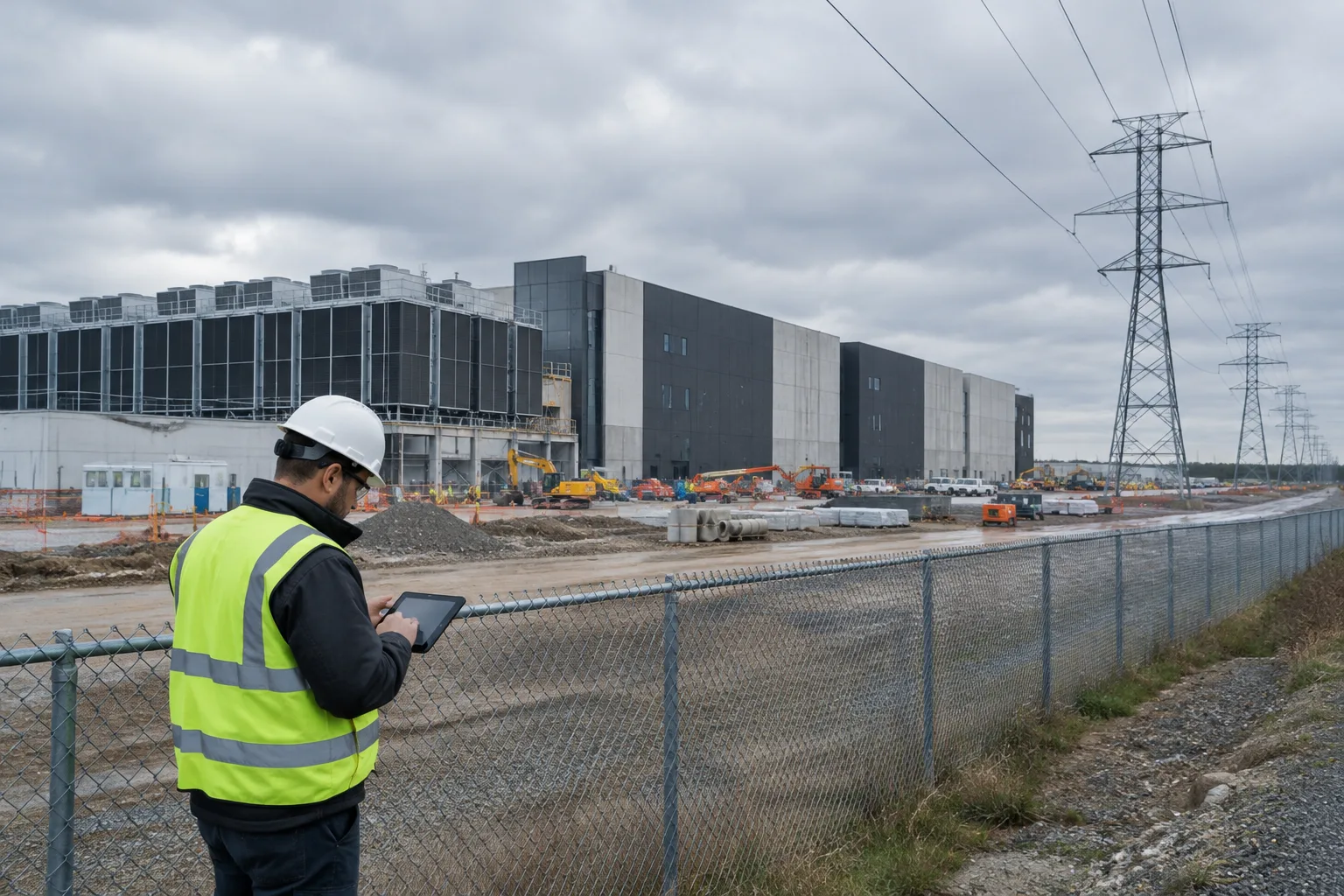
Kazakhstan has obvious reasons to keep a foot in both networks. AP reports that the country has about 21 million people, rich critical-mineral resources and cheap electricity – a useful combination in an AI economy that runs on power, land and hardware as much as on code. Earlier in 2026, its government signed an investment deal worth up to $10 billion involving NVIDIA to build a data-center valley. China, meanwhile, is already a major investor: AP says Chinese foreign direct investment in Kazakhstan hit a record $2.8 billion in 2025. AidData at William & Mary has also found that China has provided grants or loans for AI-related projects in at least 77 low- and middle-income countries.
For Kazakhstan, the appeal is not mysterious. The U.S. ecosystem is associated with more advanced chips and AI technologies. China’s is associated with more affordable open-source systems and financing for AI infrastructure. A country trying to industrialize quickly would like both.
The contest is over the whole stack, not just the model
That is why the word bloc can be misleading if readers hear only diplomacy. The meaningful unit of competition is the full technology stack: minerals and power, chip design and fabrication, networking, data centers, cloud platforms, foundation models, developer tools, data governance and standards.
A government can sign a cooperation document without receiving any guaranteed chip allocation or preferential cloud access. But once a data center is built around one accelerator and software stack, or a public service is integrated with one model family, the switching costs start to accumulate. They show up in procurement, cybersecurity review, data formats, observability tools, training and workforce skills.
That is the change hidden inside AP’s story. The immediate news is not a fresh treaty announced on Oct. 25. It is that the rivalry is taking a more operational form. Frameworks that sound broad and cooperative may still shape which vendors get used, which financing is available, where workloads can run and how easy it is to leave later.
Neither Pax Silica nor WAICO has been publicly presented as an exclusive anti-rival trade bloc. Pax Silica is framed by its organizers as supply-chain resilience and trusted cooperation. WAICO is framed by China as inclusive global AI governance. The harder question is what happens underneath those labels when export controls tighten, procurement rules harden or a member wants to combine U.S. hardware with Chinese-backed infrastructure and locally mandated data storage.
Why a dual-stack strategy gets expensive fast
For companies, the attraction of sourcing from both ecosystems is clear: better bargaining power, redundancy and access to different price-performance points. For governments, hedging can also preserve diplomatic room and reduce dependence on any one external provider.
But dual sourcing can create a second problem: duplicated complexity. Hardware availability may differ from country to country. Cloud services may be present in one market and absent in another. Data-residency rules may limit where training or inference can happen. Model licenses may allow one use case and restrict another. Public procurement or critical-infrastructure rules may disqualify suppliers that were perfectly acceptable in a private pilot.
Those frictions do not prove the world has already split into two airtight AI spheres. The evidence is more mixed than that. Kazakhstan is in both networks. France is pursuing its own model strategy through Mistral. India joined Pax Silica while remaining a major independent technology power. And open-source models can often move across borders more easily than chips or data can.
Still, open models do not erase the rest of the stack. An enterprise can download weights from many places, yet still be constrained by accelerator access, cloud region, security requirements or financing tied to a particular buildout. That is why hedging can work as a bridge strategy without being a stable end state.
Before you call it optionality, check these commitments
For buyers and policymakers, the practical due-diligence list is becoming more important than the diplomatic branding:
- Hardware access: Does a framework or vendor relationship translate into actual access to accelerators, networking gear and support, and under what export-control conditions?
- Cloud geography: Which cloud regions can legally and technically host the workload, and what changes if data must stay local?
- Model rights: Are the needed weights or APIs available for commercial, public-sector or regulated uses, and can they be fine-tuned on local data?
- Security and procurement: Which suppliers are acceptable for government or critical-infrastructure deployments, and who bears the cost of review if policy changes?
- Financing terms: Are loans, grants or investment packages tied to specific contractors, standards or long-term hosting arrangements?
- Exit cost: If a policy shock or supply disruption forces a switch, how expensive is migration in hardware, tooling, retraining and compliance work?
Until those answers are explicit, the most important divide is not rhetorical. It is economic. Countries and companies may still be able to benefit from both U.S. and Chinese AI ecosystems while the frameworks remain loose. But every server purchase, cloud contract and model integration narrows the range of easy moves later. The central risk in the emerging U.S.-China AI split is not that everyone must choose today. It is that many buyers may discover too late that they already chose in practice.

 By

 By

 By

 By


 By


 By