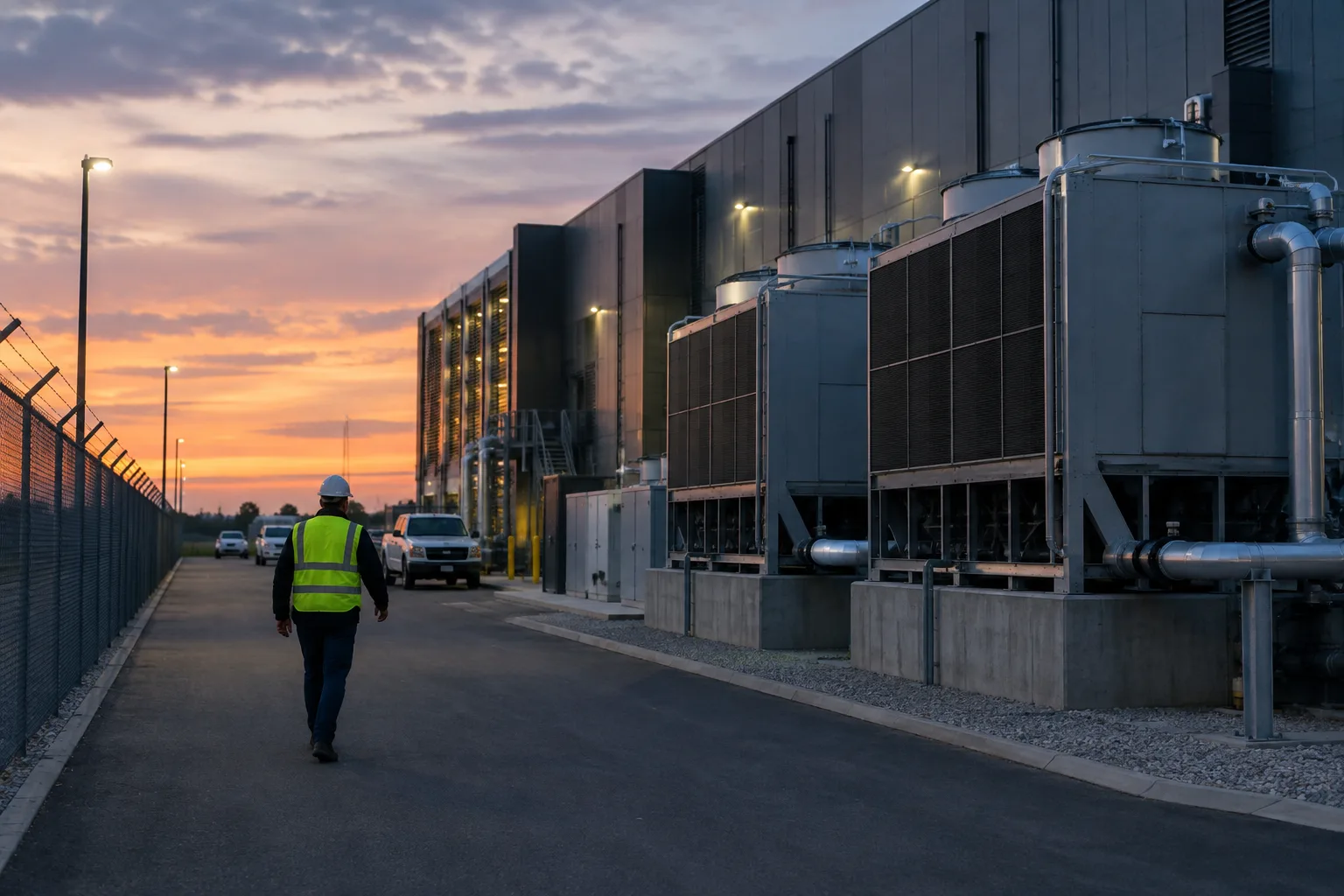

China’s push for AI self-sufficiency may be moving beyond chips and into the network fabric that makes large clusters work. According to the Financial Times, China’s State-owned Assets Supervision and Administration Commission has been surveying how widely Broadcom switches are deployed in state-controlled data centers, with two people familiar with the exercise saying preliminary findings could put Broadcom equipment at as much as 90% of the installed equipment in the facilities examined.
Why that matters is straightforward: high-end switching is not a side component in AI infrastructure. It is the system that moves data among servers, storage and accelerator clusters. If Beijing starts pressing state operators to buy domestic networking gear, the effect would reach into one of the most operationally sensitive layers of the data center.
The real question for readers is whether this is the start of a meaningful replacement cycle or mainly a procurement-pressure signal that takes years to show up in revenue. For now, it looks more like the second case. The reported survey matters because it could shape future buying, but the evidence available does not yet point to an immediate rip-and-replace program.
Why the switch layer matters now
Broadcom sells Ethernet switching silicon and platforms used in data-center and service-provider networks, including multi-terabit systems. In AI clusters, those switches help determine whether expensive compute can actually work as a coordinated system. Training and inference require enormous volumes of traffic to move predictably and fast; a weak network can turn a GPU investment into an underused asset.
That is what makes this report more than a niche procurement story. Much of the AI-sovereignty debate has centered on processors, especially restrictions around advanced accelerators. But the FT reported that Broadcom switches remain present in state-backed Chinese data centers even though Nvidia products have already been barred from those facilities. If that account holds, Beijing is now testing whether “domestic chips for domestic use” should apply to the connective tissue around AI systems, not just the processors inside them.
Domestic suppliers are clearly preparing for that opportunity. The FT identified Huawei, H3C Technologies and Ruijie Networks as potential alternatives or preferred vendors in Chinese procurement channels. Huawei’s September 19 AI data-center event, where it introduced Huawei-developed data-center networking products, underscores that local vendors are positioning for a larger share of AI infrastructure demand.
Inventory is not the same as a ban
The strongest new fact here is that a survey was reportedly taking place. The most quoted number — “up to 90%” — is more limited than it first appears. The reporting does not establish how many facilities were examined, which Broadcom products were counted, or whether the figure refers to switch units, ports, silicon content or some narrower subset of state-owned companies. Reuters, which republished the development, said it could not independently verify the FT report, and neither Broadcom nor SASAC responded to requests for comment.
That leaves an important distinction in place. An inventory exercise can be the prelude to policy, but it is not policy by itself. SASAC has the ability to influence state-owned enterprises through procurement guidance and preference signals without issuing a formal public ban or forcing operators to strip out existing hardware.
That difference matters because the commercial consequences diverge sharply depending on where the pressure lands. If the signal affects only new purchases in state projects, Broadcom’s installed base may remain intact for years while future share starts to erode. If it shapes refresh cycles, the impact arrives more gradually but reaches a wider portion of spending. Only a formal restriction with enforcement teeth would imply accelerated migration and a near-term disruption to incumbents.
The FT also reported that any policy would target state-controlled facilities rather than private data centers run by companies such as ByteDance and Alibaba, and that existing equipment would not necessarily be dismantled. That narrows the immediate scope. It also means investors and suppliers should be careful not to turn a state-sector survey into a claim about all Chinese data-center switching demand.
What would turn this into a real replacement cycle
The practical obstacle to fast substitution is not ideology; it is operations. Switching hardware sits between servers, racks, storage and accelerator clusters, and changing it can mean retesting software compatibility, telemetry, cabling plans, power budgets and performance under load. Procurement approvals and capital budgets add another layer of friction. Even where a domestic alternative is politically favored, it still has to be qualified in the specific environment where the cluster will run.
That points to three plausible paths from here.
The first is the lightest-touch outcome: informal domestic preference for new state-backed AI projects. In that scenario, Chinese vendors gain a better lane into future bids, pilot deployments and qualification programs, while Broadcom remains entrenched in the installed base. The business effect would show up first in order flow, not removals.
The second is a phased refresh. As state-controlled data centers expand AI capacity or replace aging equipment, procurement could gradually tilt toward Huawei, H3C or Ruijie without touching working systems mid-cycle. This is the most operationally realistic route if policymakers want domestic substitution without destabilizing live infrastructure. It would reduce Broadcom’s future share even while maintenance and interoperability keep existing systems in service.
The third is a formal restriction that forces accelerated migration. That would create the sharpest revenue risk for Broadcom and the biggest immediate opening for domestic vendors. It would also carry the highest integration risk for operators, because performance, power consumption, software tooling and reliability would need to be proven at scale. Nothing in the reviewed reporting shows that SASAC has issued written guidance of that kind.
For now, the useful indicators are more concrete than the headline percentage. Watch for written procurement rules, vendor-qualification decisions, interoperability work between switch gear and AI-cluster software, and evidence from customers on energy use and throughput. Those signals will say more about Broadcom’s China exposure than a survey snapshot whose denominator is still unclear.
The survey, if it leads anywhere, would mark a notable shift in AI industrial policy: from controlling the chips that do the computing to steering the network fabric that lets the computing happen. But until procurement rules harden and refresh cycles begin to move, this remains a story about leverage over future purchases more than one about tearing out what is already running.

 By
By
 By
By


 By
By
 By
By