
The “two-fer” recipe as a signal of how home cooking is being re-architected
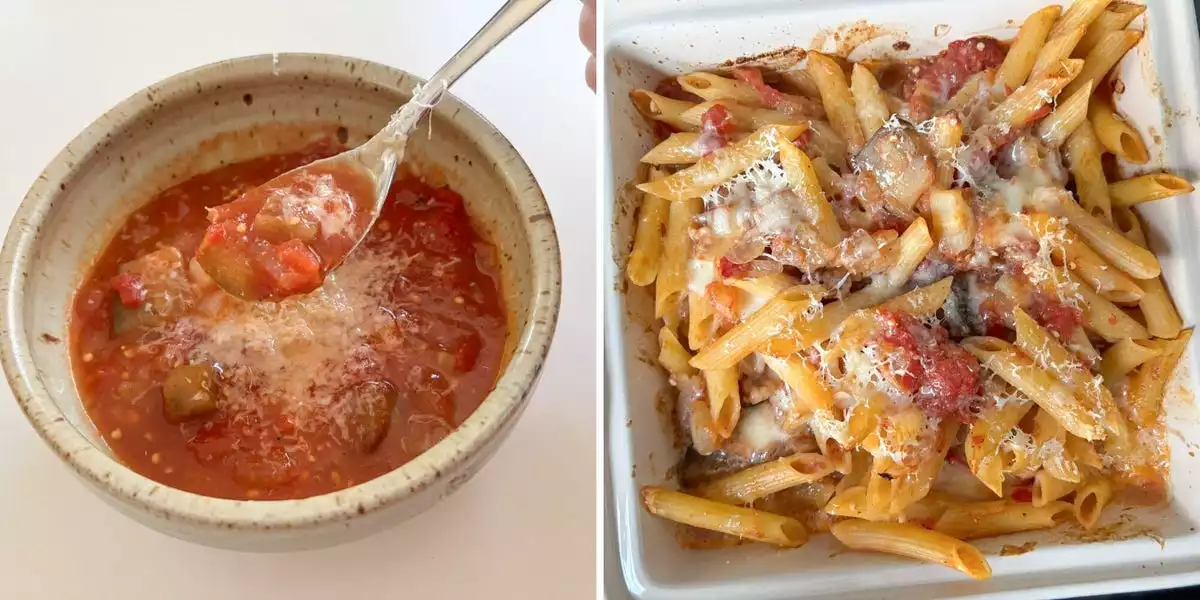
Paige Bennett’s experiment with Ina Garten’s “two-fer” concept—cooking a tomato-eggplant soup and then converting the leftovers into a cheesy baked pasta—reads like more than a clever weeknight hack. It captures a broader recalibration in consumer food behavior: households increasingly want meals that are modular, repeatable, and economical, without feeling repetitive.
At the center is a simple promise: one cooking session, two distinct outcomes. Bennett halved the original soup recipe yet still produced generous portions, then used the remaining soup as a ready-made flavor base for a fusilli gratin. That arc—cook once, eat differently twice—aligns with a growing “kitchen multiplier” mindset that has been gaining traction across grocery retail, meal kits, and food media.
Several forces make this approach especially resonant now:
- Inflation-aware meal planning: When food budgets are tight, consumers gravitate toward recipes that stretch ingredients across multiple meals while preserving a sense of variety.
- Time scarcity and cognitive load: The value isn’t only financial; it’s also about reducing decision fatigue. A planned second act for leftovers turns “What’s for dinner?” into a solved problem.
- Preference for flexible staples: Tomato, eggplant, pasta, and cheese are pantry-and-produce workhorses—ingredients that can be repurposed without feeling like compromise.
In business terms, “two-fer” cooking functions as a consumer-friendly version of value engineering: maximizing outcomes from a fixed set of inputs, while maintaining perceived quality.
Convenience technology meets “less gadget, more technique” cooking
Bennett’s choice to skip the food processor—opting instead for longer simmering to build texture and depth—highlights a subtle but important tension in the modern kitchen: automation versus simplicity. The food industry has spent years selling convenience through devices, apps, and smart appliances. Yet many home cooks still prioritize what Bennett implicitly optimized for: fewer tools, less cleanup, and reliable results.
This matters for product strategy because it reframes what “innovation” should mean in the kitchen. The winning experience is not necessarily the most connected or feature-rich—it’s the one that reduces friction. Bennett’s adjustments (rebalancing fennel, simplifying the workflow, relying on time and heat rather than machinery) underscore a consumer segment that wants:
- Low-tech optionality: Recipes that work with or without specialized equipment
- Cleanup minimization: Fewer components, fewer steps, fewer dishes
- Forgiving processes: Techniques that tolerate ingredient swaps and scaling (like halving a recipe) without collapsing flavor
For appliance makers and foodtech platforms, the implication is clear: the next wave of kitchen adoption may hinge less on novelty and more on interoperability, ease-of-clean design, and workflow intelligence. A blender that is hard to clean or a “smart” device that adds steps can lose to a pot, a spoon, and a longer simmer.
At the same time, Bennett’s behavior is precisely the kind of signal that AI-driven recipe platforms can learn from. Ingredient substitutions, scaling decisions, and leftover conversion patterns are data points that can train systems to recommend “base recipes” with pre-planned transformations—especially when paired with inventory awareness from grocery apps or smart pantry tracking.
Leftovers as an economic and sustainability lever, not an afterthought
The most commercially relevant aspect of the story may be how naturally the leftovers become an asset. The soup-to-pasta conversion reframes leftovers from “extra” into a deliberate intermediate product—a prepared component that reduces future cooking time and prevents waste.
This is where sustainability and economics converge. Household food waste remains a persistent problem, and solutions that feel effortless tend to outperform those that rely on guilt or discipline. Bennett’s satisfaction with the workflow—multiple meals, minimal extra labor—suggests why waste reduction can be positioned as convenience, not sacrifice.
For retailers and brands, this opens several practical pathways:
- Merchandising multipurpose ingredients: Promote versatile vegetables and pantry staples that naturally support second-use cooking (tomatoes, eggplant, olive oil, pasta, cheeses).
- Packaging for repurposing: Prepped produce (like pre-diced eggplant) or “recipe-ready” bundles can reduce prep barriers while encouraging full utilization.
- Content that sells the second meal: Recipes that explicitly include a leftover transformation can increase perceived value and reduce churn for meal-kit subscriptions.
There are also supply chain implications. If more households adopt modular meal habits, demand may tilt toward ingredients with strong “secondary life” potential—items that can move from soup to sauce to bake without waste. That could subtly reshape forecasting models, promotional calendars, and even private-label strategy, favoring flexible staples over niche, single-use products.
Where “meal multipliers” could take food media, grocery, and AI-assisted cooking next
Bennett’s experience illustrates why “two-fer” recipes are likely to proliferate: they map neatly onto consumer priorities—value, variety, simplicity, and sustainability—while offering clear monetization opportunities for platforms and brands.
Expect the concept to evolve in ways that are increasingly systematized:
- Modular culinary ecosystems: Digital publishers and meal-planning services can package “base recipe + transformation paths,” turning a single cooking session into a structured multi-day plan.
- AI-powered leftover management: Recipe assistants can move beyond suggesting dinner ideas to predicting leftover volumes, recommending repurposing options, and auto-generating shopping lists that complete the second dish.
- Partnerships across content and hardware: Co-designed experiences—recipes optimized for specific cookware, appliances engineered for low-clean workflows—could become a premium segment in direct-to-consumer channels.
What makes the “two-fer” approach strategically compelling is its quiet alignment with the moment: it respects constrained budgets, reduces waste without preaching, and delivers the kind of practical delight that keeps consumers cooking at home. In a market crowded with novelty, the most disruptive idea may simply be a recipe designed to live twice.

 By
By
 By
By
 By
By
 By
By

 By
By
 By
By