
A creator-brand rupture that rewrites the rules of golf media partnerships
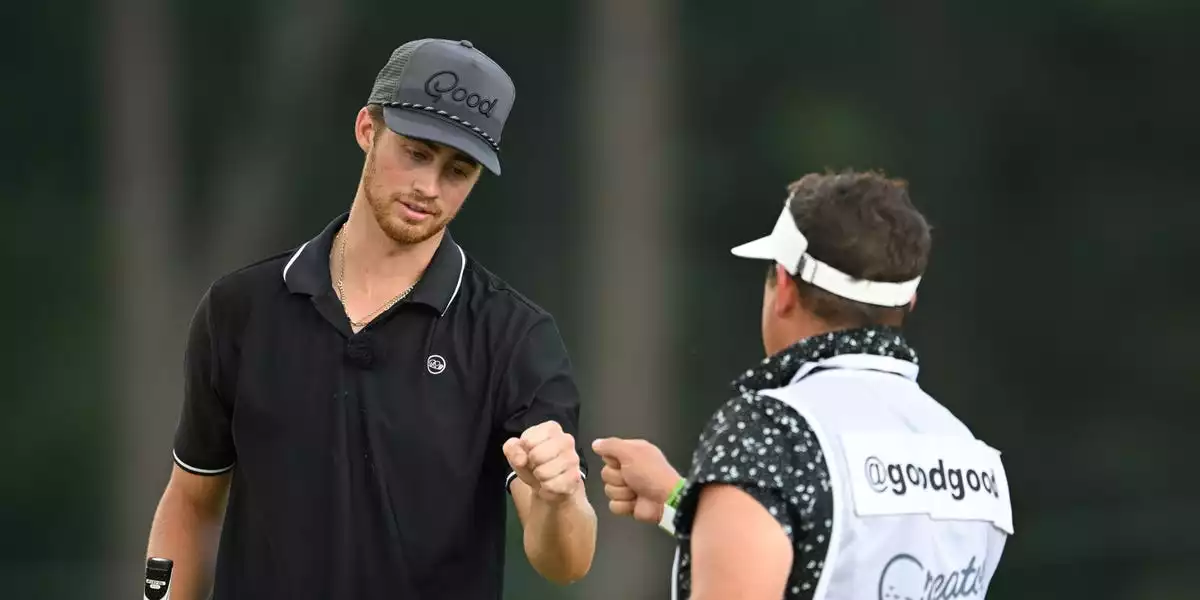
Good Good’s rise—built on YouTube-native storytelling, personality-driven golf entertainment, and a fast-expanding merchandise engine—has been a case study in how creator-led brands can scale into mainstream commerce. That trajectory has now been sharply disrupted by a reputational crisis tied to an advertisement produced in partnership with Callaway that was widely condemned as misogynistic and suggestive of violence against women.
The market reaction was immediate and instructive. Callaway terminated the collaboration, Dick’s Sporting Goods delisted Good Good products, and the channel withdrew from title sponsorship of an upcoming PGA Tour event. Internally, two marketing staff were dismissed—an action that signals urgency, but also raises questions about where accountability truly sits in a modern creator enterprise: with individual employees, on-camera talent, executive leadership, or the governance system that allowed the creative to clear publication.
For brand partners, the episode reinforces a hard truth: influencer marketing is no longer a “lighter-weight” channel. When a creator brand reaches Good Good’s scale—millions of subscribers, retail distribution, and marquee golf affiliations—its content becomes enterprise risk, not merely social content. The speed of partner exits suggests that sponsors and retailers are operating under a “reputational contagion” model: distance quickly, communicate values clearly, and avoid prolonged ambiguity that could implicate them in the controversy.
Governance, not virality, is the new competitive moat in the creator economy
The most consequential takeaway may be structural rather than cultural. Digital-first organizations often retain startup-like creative velocity—fast ideation, minimal gatekeeping, and a bias toward publishing. That approach can be commercially powerful until it collides with the expectations of public-facing consumer brands, national retailers, and regulated sponsorship environments.
This incident exposes what many partners increasingly view as a non-negotiable: formal creative governance. Traditional advertisers typically route campaigns through legal review, brand safety checks, and executive sign-off. Many creator organizations still rely on informal approvals, tight inner circles, or post-hoc corrections. At Good Good’s current scale—especially after a reported $45 million funding round and the appointment of a new president—those informal systems look less like agility and more like operational immaturity.
Competitively, the timing is unforgiving. Golf content is crowded with emerging golf-lifestyle channels and athlete-led media ventures that can credibly promise advertisers a safer environment. The opportunity for rivals is not only to capture audience attention, but to win the next wave of sponsorship dollars by offering:
- Stricter ad review and compliance workflows
- Clearer community standards and escalation paths
- More inclusive on-screen representation and brand positioning
- Retail-ready professionalism that reduces partner risk
In that sense, Good Good’s challenge is not simply to regain goodwill; it is to prove it can operate like the kind of company its partnerships imply it already is.
Revenue shock, valuation pressure, and the pivot toward direct-to-consumer resilience
The commercial impact is likely to be felt across multiple lines of business. Sponsorships and retail partnerships tend to deliver both revenue and legitimacy—especially in sports categories where equipment brands and major retailers act as gatekeepers. Losing Callaway and Dick’s Sporting Goods is therefore not just a hit to near-term income; it risks weakening the brand’s broader negotiating power with other manufacturers, distributors, and event partners.
From a financial perspective, the crisis introduces three immediate pressures:
- Revenue disruption and cash-flow uncertainty as terminated agreements remove predictable income streams
- Higher cost of future partnerships, as brands price in risk through stricter terms, morality clauses, or reduced guarantees
- Investor scrutiny and valuation sensitivity, particularly after a large growth round that likely assumed continued partner expansion and retail momentum
This is where monetization strategy becomes decisive. Creator brands that rely heavily on sponsorships can find themselves exposed when brand safety concerns emerge. The most viable counterweight is a stronger direct-to-consumer (DTC) posture—subscriptions, proprietary merchandise, and ticketed live experiences—where the creator controls distribution and margin. Yet DTC is not a simple escape hatch: it depends on sustained audience trust, and reputational damage can reduce conversion rates even when view counts remain stable.
Audience composition adds another layer. Pre-crisis indicators suggested Good Good was cultivating a broader base, including an emerging female audience segment. Post-scandal sentiment reportedly shows a meaningful decline in favorability among women, creating a strategic dilemma: how to rebuild inclusivity and credibility without triggering backlash from a core audience that may resist overt repositioning.
Platform dynamics, AI brand safety, and the long road back to sponsor confidence
YouTube’s ecosystem can amplify both growth and penalties. Even when a controversy does not trigger formal platform enforcement, advertiser filters and brand safety systems can reduce monetization, limit ad desirability, or dampen algorithmic distribution if a channel becomes associated with high-risk content categories. For a business built on reach and engagement, any downshift in discoverability compounds commercial strain.
At the industry level, this episode is likely to accelerate adoption of AI-enabled creative screening—tools that flag violence, hate speech, discriminatory language, or culturally sensitive themes before publication. Brands already use such systems in programmatic advertising; the next frontier is applying them to influencer and creator workflows, where “authenticity” has historically been treated as incompatible with heavy compliance. Increasingly, the market is signaling the opposite: authenticity is welcome, but unvetted authenticity is expensive.
For Good Good, recovery will likely hinge on whether it can demonstrate credible change through actions that partners can audit, not just apologies audiences can debate. The most durable path typically includes:
- Transparent governance: documented review processes, clear accountability, and escalation protocols
- Inclusive co-creation: partnerships with female golf creators and women’s sports initiatives that are sustained, not performative
- Data-driven reengagement: using first-party subscriber insights to tailor content, rebuild trust, and stabilize conversion
The broader creator economy will keep growing—brands still want the engagement traditional advertising struggles to deliver. But the Good Good crisis underscores the new baseline: as creator businesses become real businesses, they inherit real-world expectations. The next era of influencer marketing will reward not only the most entertaining channels, but the ones built to withstand the moment when entertainment becomes a headline.

 By
By
 By
By

 By
By
 By
By

 By
By