
Fear as a disciplined operating system in venture capital
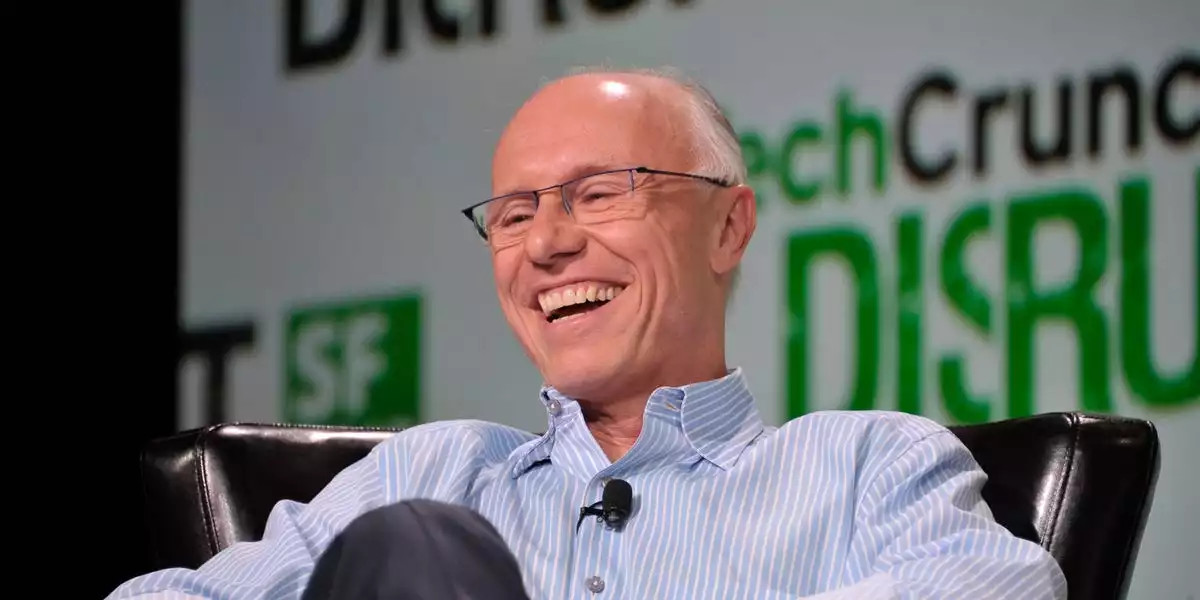
Doug Leone’s candid admission—that fear, not pure ambition, has been the central driver of his career—cuts against the mythology that often surrounds elite venture capital. In a sector that lionizes conviction and celebrates the swagger of “founders and funders who see the future,” Leone’s framing is more austere: the real engine is a persistent fear of irrelevance, managed and converted into action.
His now-notable anecdote—choosing a Novocaine-free dental procedure to avoid a visibly numb face at a crucial meeting—works less as a stunt than as a compact metaphor for how he has approached professional stakes. The message is not masochism; it is control under pressure, the willingness to absorb short-term discomfort to protect long-term credibility. In venture investing, where reputational trust and timing can matter as much as capital, that mindset becomes a strategy.
From a business psychology standpoint, Leone’s posture suggests a useful inversion: risk-taking can be a product of anxiety properly harnessed, not merely optimism. That matters because the venture industry’s failure modes often stem from the opposite—overconfidence, narrative intoxication, and the tendency to mistake momentum for inevitability. Leone’s “fear-first” lens implies a more calibrated approach:
- Fear as an early-warning system: a prompt to question assumptions before markets do.
- Fear as anti-complacency: a forcing function for continuous learning and sharper diligence.
- Fear as reputational discipline: a reminder that credibility is fragile, especially in downturns.
In an era of rapid platform shifts—cloud, mobile, crypto, and now generative AI—this kind of constructive apprehension can be interpreted as a governance tool: not paralysis, but structured vigilance.
Personal resilience as institutional brand equity for Sequoia Capital
Leone’s trajectory—living in his car after a 1993 divorce, then rising to become managing partner at Sequoia Capital—is not simply a personal redemption arc. It has become part of the firm’s cultural narrative and, by extension, its competitive positioning. In venture capital, where differentiation is notoriously difficult (many firms have money, networks, and pattern recognition), story becomes strategy.
By publicly foregrounding vulnerability—homelessness, anxiety about staying relevant, and the emotional mechanics behind decision-making—Leone adds an element that founders often seek but rarely hear from top-tier capital: psychological realism. For entrepreneurs navigating existential uncertainty, such candor can signal a partner who understands that building companies is not only technical and financial, but deeply human.
This matters for Sequoia’s brand in at least three ways:
- Founder affinity and deal flow: Authentic narratives can attract founders who value rigor without performative bravado.
- Cultural coherence: A firm’s internal standards—intensity, preparation, accountability—gain legitimacy when leaders explain the lived experiences behind them.
- Trust under volatility: During market resets, founders remember who speaks plainly about risk, fear, and endurance.
Leone’s emphasis on a “deep and secure need to remain relevant” also reframes success as a continuous negotiation with obsolescence, not a permanent arrival. That framing aligns with how technology cycles actually work: leadership is temporary unless renewed.
Returning as a “low-level analyst”: reinvention amid the AI investment cycle
Leone stepped down at age 65 in 2022, then returned in 2023 as a self-described “low-level analyst” focused on AI investments. The optics are striking: a veteran of venture capital’s highest tier publicly adopting the posture of an apprentice. Yet the move reads less like theater and more like an acknowledgment of the moment. AI is not just another sector; it is a general-purpose capability that is rewriting product boundaries, labor economics, and competitive moats.
For senior investors, the challenge is credibility. In AI—especially foundation models, agentic systems, and enterprise deployment—authority is earned through current understanding, not past wins. Leone’s return signals a broader shift in leadership norms: the prestige model (“I’ve seen it all”) is giving way to the continuous learner model (“I must requalify”).
Strategically, this stance can improve investment quality in an overheated market. AI cycles tend to produce:
- Narrative-driven valuations that outrun real adoption
- Tooling proliferation with thin differentiation
- Moat ambiguity, where distribution and data advantages are contested
A senior figure willing to operate as an analyst is, implicitly, a bet on epistemic humility—the idea that the best edge may come from asking better questions, not delivering louder predictions. For founders, it also signals a partner who may be more willing to engage at the level that matters: model constraints, deployment friction, security, compliance, and measurable ROI.
Venture capital’s expanding interface with Washington and crisis governance
Leone’s participation in the Trump administration’s COVID-19 reopening task force highlights another dimension of modern venture capital: the growing expectation that prominent investors can function as rapid-response economic advisers during systemic shocks. This is not purely altruistic; it reflects a structural reality. Technology firms and venture-backed companies increasingly sit at the center of supply chains, labor markets, healthcare tooling, and national competitiveness.
The implication is that venture capital is no longer only a private-market allocator of risk. It is also, at times, an intermediary between innovation ecosystems and public institutions. For firms, that creates both opportunity and scrutiny:
- Opportunity: earlier visibility into regulatory trajectories and national priorities (AI governance, biosecurity, semiconductor policy).
- Scrutiny: heightened reputational exposure and questions about influence, accountability, and conflicts.
Leone’s broader message—fear of irrelevance as a motivator—lands here as well. In a world where AI policy, antitrust, and national security considerations increasingly shape market outcomes, remaining relevant may require fluency not only in technology and capital, but also in public policy and institutional trust.
What emerges from Leone’s remarks is a portrait of elite performance that is less about fearlessness than about fear metabolized into preparation—a model of leadership that treats relevance as earned daily, and treats reinvention not as a phase, but as the job.

 By
By

 By
By

 By
By
 By
By

 By
By