
An anniversary menu that turns comfort food into a growth lever
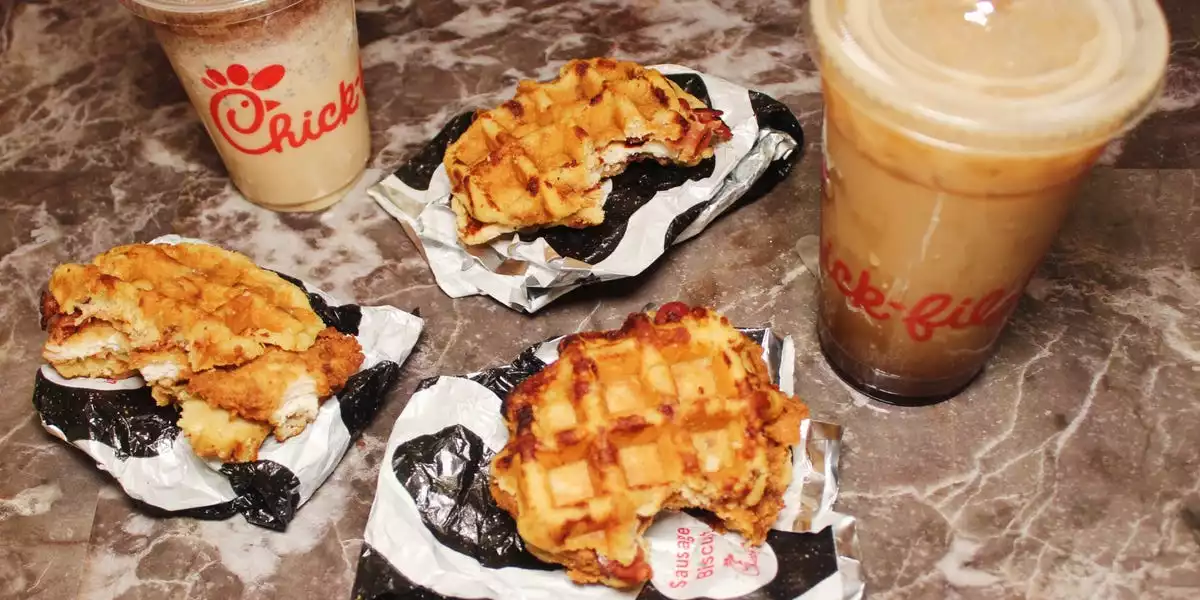
Chick-fil-A’s 80th anniversary “nostalgia” menu is more than a celebratory limited-time offer (LTO); it is a tightly engineered commercial experiment built around two of America’s most culturally resonant comfort-food cues: chicken-and-waffles and s’mores. Rolled out nationally from August 24, the promotion introduces five items designed to be instantly legible to consumers and highly shareable online:
- Chicken & Waffles Sandwiches in three variants: original, spicy, and grilled, served on maple-flavored waffles with bacon, honey butter, and syrup
- S’mores Milkshake and S’mores Frosted Coffee, featuring marshmallow syrup, chocolate shortbread, and graham-cracker crumbles
- Pricing positioned as an “elevated treat,” roughly $7.99 to $9.39, signaling indulgence rather than everyday value
The early market signals—strong social-media engagement, extended wait times, and generally favorable reviews—suggest the brand has successfully converted an anniversary moment into measurable demand. Yet the feedback also underscores a familiar LTO tension: when novelty meets scale, execution consistency becomes the product. Critiques around waffle sogginess or sweetness balance are not merely taste preferences; they are operational and formulation variables that can determine whether an LTO becomes a repeatable platform or a one-off spike.
From a business and technology perspective, the menu reads like a case study in how modern quick-service restaurants (QSR) monetize emotion—nostalgia—while using digital systems to manage risk, throughput, and brand perception.
Data, mobile ordering, and real-time sentiment as the new product pipeline
In today’s QSR environment, national menu launches rarely begin in the kitchen. They begin in the data. Chick-fil-A’s ability to deploy a nostalgia menu at scale implies a development process shaped by transaction patterns, loyalty behavior, and social listening—a feedback loop that increasingly resembles consumer-tech product management.
Several dynamics are likely at play:
- Data-driven concept validation: Chicken-and-waffles and s’mores are not obscure culinary bets; they are high-recognition flavor “anchors.” The more nuanced decision is *format*: sandwich construction, sweetness level, and ingredient pairing. This is where regional testing and iterative refinement (often via A/B-style pilots) can reduce the risk of a national rollout.
- Mobile and loyalty ecosystem amplification: LTOs are uniquely effective at driving app opens, mobile ordering, and loyalty engagement, because scarcity creates urgency. Viral user-generated content (UGC)—photos, first-bite videos, reaction posts—functions as a performance channel that can outperform paid media in both credibility and cost efficiency.
- Real-time sentiment analysis as operational intelligence: When customers complain about sogginess, they are describing a variable that can be measured and managed: hold times, packaging venting, syrup placement, and assembly sequencing. Brands with mature analytics can translate social chatter into actionable adjustments faster than traditional market research cycles.
This is where the “technology” in food retail becomes tangible. The modern LTO is not just a marketing event; it is a live, instrumented experiment where digital ordering data, store-level throughput metrics, and public sentiment can converge into rapid iteration—sometimes within days, not quarters.
The operational challenge: waffles in a high-throughput QSR system
If the menu’s emotional appeal is straightforward, the operational complexity is not. Introducing waffles into a chicken-centric production line raises questions that go to the heart of QSR execution: temperature control, texture preservation, and assembly speed.
Waffles are particularly unforgiving at scale because they have a narrow window between “fresh” and “compromised.” Add syrup, honey butter, and bacon, and the system must manage multiple texture states simultaneously—crisp, warm, melty, and moist—without slowing the line.
Key operational considerations include:
- Workflow redesign: Waffles require distinct preparation and holding protocols. Even small deviations can create the exact issues reviewers cite—softening, structural breakdown, or uneven sweetness distribution.
- Equipment standardization and training: National consistency depends on uniform equipment performance and repeatable procedures. The more components an item has, the more it tests training quality and station choreography.
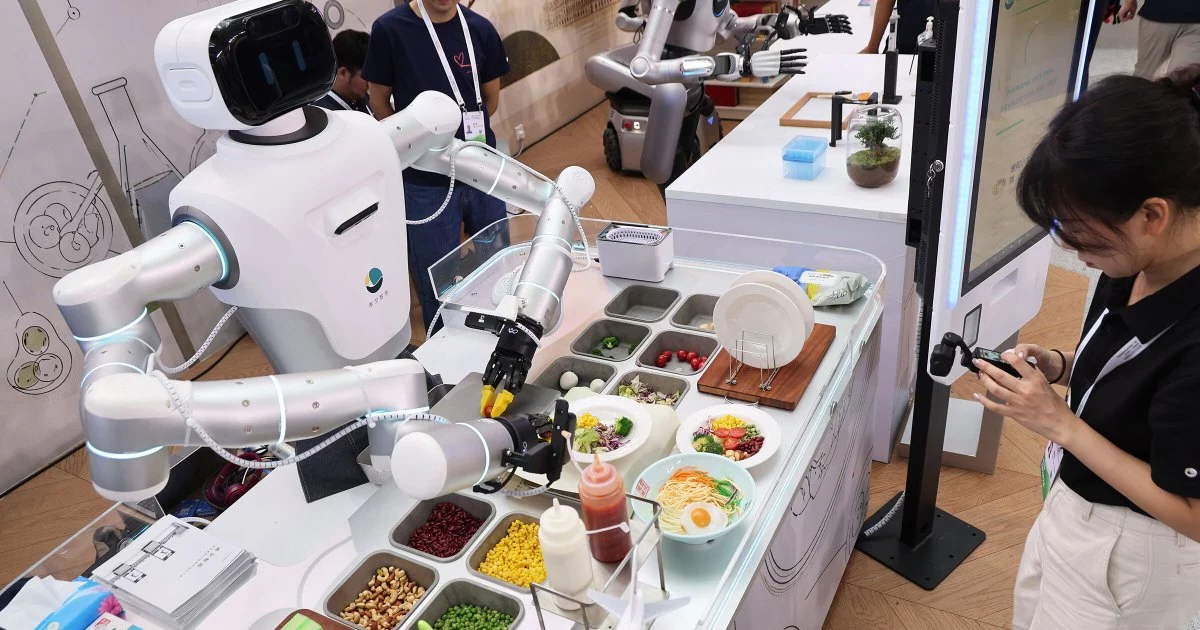
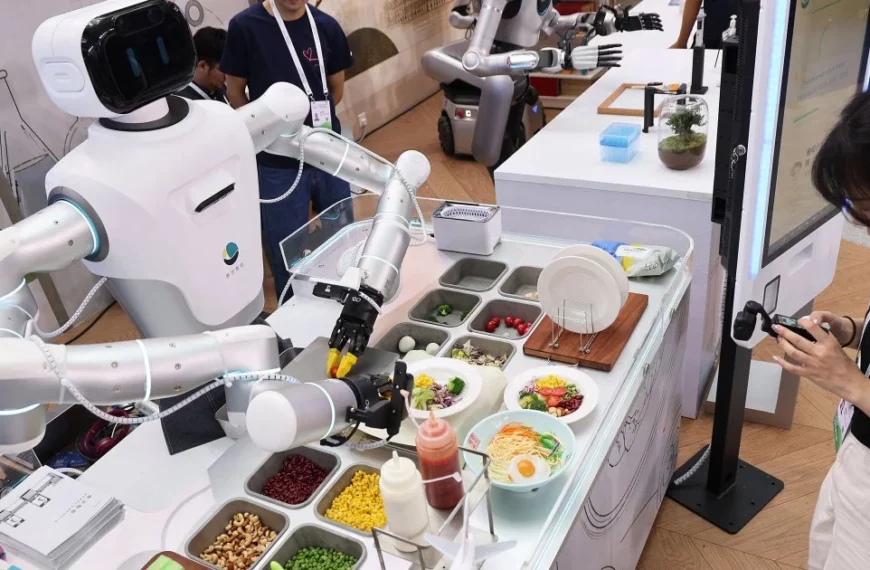
- Automation as a future hedge: As QSR menus become more modular and customizable, the case strengthens for automation in dispensing, timing, and assembly, especially for temperature-sensitive or multi-component builds.
The strategic takeaway is that LTO innovation is increasingly constrained not by creativity, but by operational physics. The brands that win are those that can translate novelty into repeatable throughput without eroding the guest experience.
Pricing, brand strategy, and why nostalgia is resonating now
At $7.99–$9.39, Chick-fil-A’s anniversary items sit in a deliberate middle ground: high enough to support premium ingredients (bacon, honey butter, specialty syrups), but accessible enough to remain an impulse purchase. In an inflation-aware consumer environment, this is a subtle but important positioning choice. The offer functions as a “small luxury”—a controlled indulgence that feels justified even when discretionary budgets tighten.
Strategically, the nostalgia menu reinforces Chick-fil-A’s brand equity in several ways:
- Innovation within brand guardrails: The chain is not reinventing itself; it is remixing familiar American comfort foods in a way that remains family-friendly and broadly approachable.
- Differentiation through playful unpredictability: Limited runs of unexpected mash-ups create competitive distance. They are difficult to copy quickly at scale, especially when execution requires supply-chain coordination and operational discipline.
- Supply-chain maturity as a competitive moat: Sourcing maple waffles, marshmallow syrup, and specialty inclusions at national volume—without destabilizing freshness or logistics—signals a supplier network built for rapid, high-demand cycles.
For business and technology leaders, the deeper signal is that nostalgia is no longer just a creative theme—it is an economic and behavioral instrument. It can lift traffic, raise average check, and generate organic media, but only if the digital feedback loop and store-level execution are strong enough to protect product integrity. Chick-fil-A’s anniversary menu shows how modern QSR growth is increasingly engineered at the intersection of emotion, data, and operations—and how quickly consumers will reward, or penalize, the details.
 By
By
 By
By
 By
By
 By
By
 By
By