
When cosmic ambition meets capital markets reality
Leopold Aschenbrenner’s rise and rapid unraveling reads like a parable for the current AI investment cycle—one where narrative velocity can outpace both engineering constraints and fiduciary discipline. At 24, the founder of the hedge fund *Situational Awareness* drew attention in San Francisco circles by asserting that near-term AI breakthroughs would make the purchase and colonization of entire galaxies—the Milky Way and Andromeda included—an almost routine commercial undertaking. The pitch was framed as destiny and romance: he reportedly vowed to “secure a galaxy” for his spouse, Avital Balwit of Anthropic, turning an interstellar claim into a personal brand amplifier.
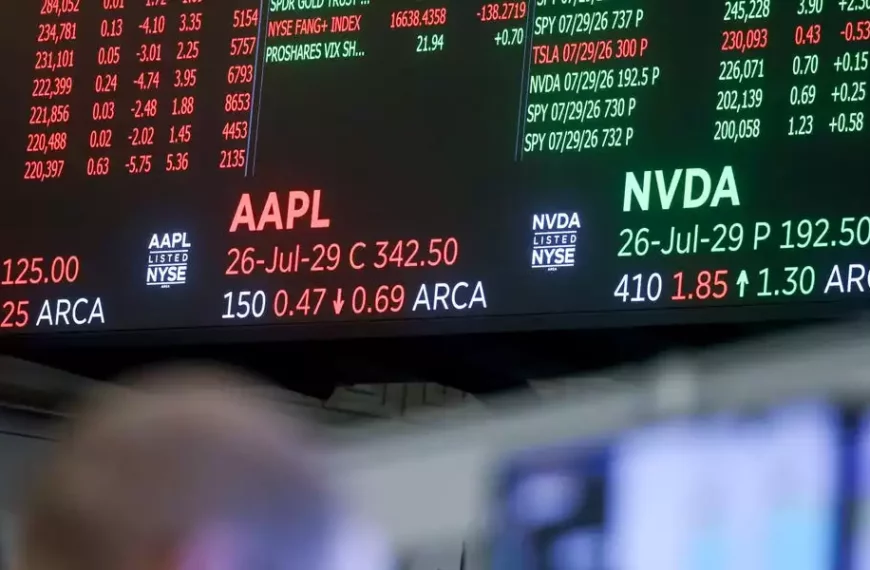
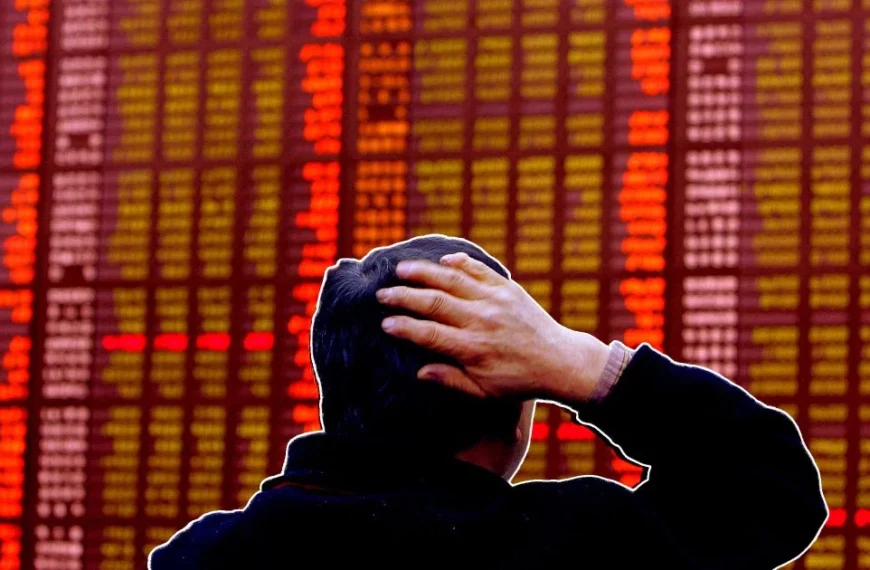
Yet the market’s verdict arrived quickly. The fund reportedly lost more than two-thirds of its assets, driven by highly leveraged bets tied to AI equities and a thesis that legacy software would be structurally impaired. An SEC probe followed, and a fire-sale of assets to Citadel punctuated the collapse. The episode is not merely a curiosity about extravagant futurism; it is a case study in how AI hype, leverage, and concentrated positioning can interact to produce abrupt financial failure—especially in a higher-rate environment that punishes fragility.
This is also why the story resonates beyond one fund. It sits at the intersection of generative AI exuberance, Silicon Valley’s cultural appetite for “world-shaping” claims, and the institutional reality that capital markets ultimately demand cash flows, risk controls, and credible time horizons.
AI as a “resource multiplier” thesis—and where physics still refuses to negotiate
Aschenbrenner’s underlying premise reflects a familiar strain of AI maximalism: that advanced AI becomes a generalized “resource multiplier,” enabling near-limitless optimization across compute, energy, materials, and logistics—eventually collapsing scarcity itself. In its most expansive form, this logic implies that once intelligence is cheap and abundant, the rest of the universe becomes an addressable market.
The problem is not that AI-driven productivity gains are implausible; it is that the leap from software intelligence to interstellar industrial capacity requires breakthroughs that sit outside today’s AI stack. Even if AI accelerates discovery, it does not eliminate the need for hard constraints to yield:
- Energy: Galaxy-scale expansion presupposes energy abundance far beyond current grids; fusion remains unproven at commercial scale, and renewables face storage and transmission bottlenecks.
- Materials and manufacturing: AI can propose novel compounds, but scaling them depends on fabrication, supply chains, and capital-intensive industrialization.
- Propulsion and travel time: No existing AI architecture implies faster-than-light travel or practical relativistic propulsion; physics and engineering remain gating factors.
- Compute supply chains: The near-term bottleneck for AI is still semiconductor fabrication, advanced packaging, and data center power density, all exposed to geopolitical and logistical risk.
At the same time, grand visions can have real second-order effects. They pull forward investment, attract talent, and accelerate toolchains—sometimes productively. The danger is misallocation: capital can flood into “AI-only” narratives while underfunding adjacent deep-tech domains (advanced manufacturing, energy systems, aerospace engineering) that would be prerequisites for any meaningful space industrialization. In other words, AI may be an accelerator, but it is not a substitute for the rest of the technological stack.
Leverage, concentration, and the fragile mechanics of an AI-only portfolio
The fund’s collapse underscores a more immediate lesson: financial engineering can turn thematic investing into a binary wager. Leveraged exposure to high-valuation AI names, paired with shorts against “legacy” software, expresses a worldview in which incumbents are destined to lose and AI-native firms are destined to win—quickly. That is a compelling story in a keynote; it is a hazardous assumption in a portfolio.
Two misreads stand out.
- Incumbent adaptability: Mature software firms often have durable distribution, embedded workflows, and diversified revenue streams. Many can integrate AI features faster than expected because they already own customer relationships and data pipelines.
- Adoption curves and monetization lag: Even when AI capability improves rapidly, enterprise rollout, compliance, procurement cycles, and ROI validation move more slowly. Markets can reprice faster than businesses can transform.
When leverage is layered on top of those uncertainties, drawdowns become self-reinforcing. Margin calls, liquidity constraints, and forced selling can turn a thesis error into a structural failure—especially when many market participants crowd into similar exposures. The broader implication for AI investing is uncomfortable but necessary: the most dangerous risk may not be technological—it may be positioning.
Regulation, governance, and the next phase of AI capital formation
The reported SEC probe is a signal of where oversight is heading as AI becomes a dominant investment theme. Regulators are increasingly attentive to:
- Disclosure quality around concentrated thematic strategies
- Leverage and stress testing, particularly where volatility and correlation can spike
- Scenario analysis that distinguishes plausible adoption paths from narrative-driven tail events
This matters because the AI capital cycle is entering a more disciplined phase. Elevated interest rates raise the cost of leverage and reduce tolerance for “infinite upside” stories that lack near-term resilience. Meanwhile, geopolitical realities—especially U.S.–China competition in chips and AI infrastructure—make supply chains and localization strategies central to any credible forecast. Add ESG and AI governance expectations (model audits, ethics frameworks, incentive alignment), and the market is clearly asking for operational rigor, not just visionary rhetoric.
Aschenbrenner’s “galaxy-for-my-wife” motif also reveals something subtler: romance as marketing can be extraordinarily effective in attention markets, but it can blur the line between inspiration and investable reality. Silicon Valley has long rewarded audacity; capital markets reward audacity only when it is paired with risk controls, time-bound milestones, and falsifiable assumptions.
The enduring takeaway is not that ambitious visions should be mocked or suppressed. It is that the AI era will increasingly separate those who can translate ambition into measurable progress and resilient portfolios from those who mistake narrative scale for inevitability—and discover, abruptly, that physics and finance both enforce their own forms of gravity.

 By
By
 By
By
 By
By

 By
By
 By
By