
A pivotal leadership reset inside Netflix’s advertising engine
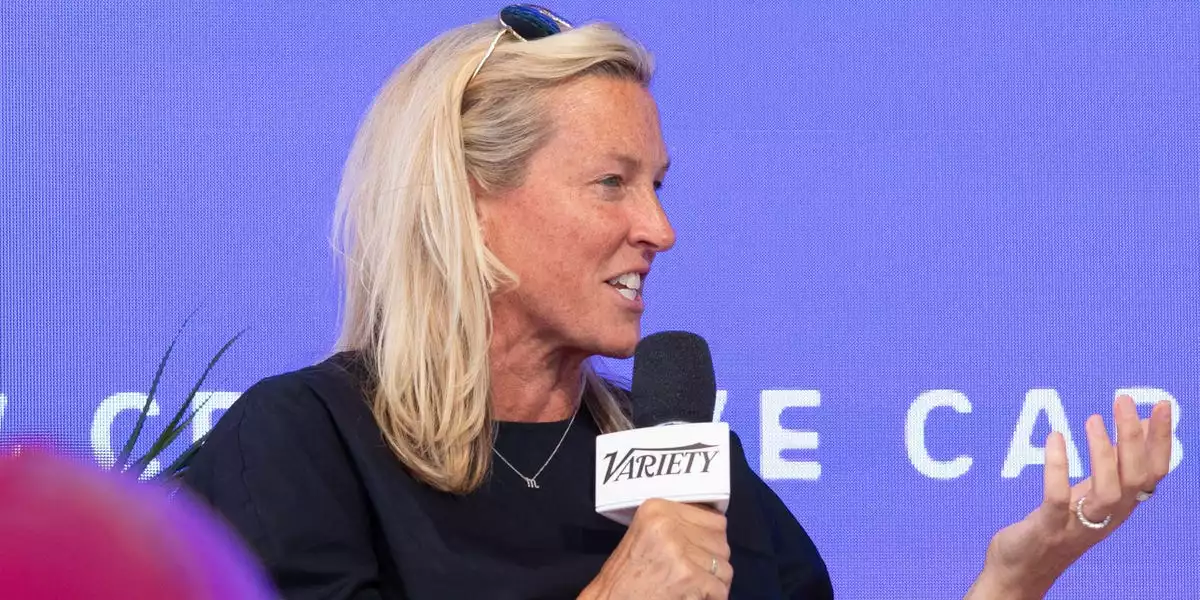
Netflix’s decision to part ways with Jon Whitticom, the executive credited with building much of its early advertising technology and product foundation, lands at a sensitive moment for the company’s business model evolution. The message from Advertising President Amy Reinhard—framed around alignment, trust, and collaborative culture rather than strategic disagreement—signals that this is less about *whether* Netflix should pursue advertising and more about *how* that pursuit is operationalized inside a company known for high autonomy and exacting performance expectations.
In the near term, Marc Heneghan will lead the Ads Product organization while Netflix searches for a permanent successor. That interim arrangement matters: ads product leadership sits at the intersection of engineering, measurement, sales enablement, and viewer experience. Any friction at that junction can ripple outward—into release timelines, partner integrations, and the confidence advertisers place in Netflix as a scaled, predictable platform.
This transition also arrives as Netflix leans harder into advertising as a growth lever, reportedly targeting $3 billion in ad revenue this year. With a large share of new ad-tier subscribers choosing lower-priced plans, the company is effectively trading some subscription ARPU for broader reach—and betting it can recapture value through higher-yield monetization, better targeting, and premium formats.
Building a modern streaming ad stack: where product, data, and trust collide
Whitticom’s departure highlights a core reality of streaming advertising: building a “best-in-class” ad stack is not a single engineering project but a continuous negotiation among data governance, marketplace dynamics, and user experience. Netflix is operating in a fragmented ecosystem where advertisers expect the conveniences of programmatic buying, yet regulators and consumers demand restraint and transparency in data use.
Key technological pressure points now come into sharper focus:
- Ad-tech platform maturation and reliability
Netflix must fuse first-party viewership signals with scalable buying channels while maintaining uptime, pacing accuracy, and brand safety. In streaming, small gaps—latency in decisioning, weak identity resolution, or limited real-time optimization—can translate directly into lower yield and reduced repeat spend.
- Hybrid partnerships as strategic leverage
Netflix’s integrations with Google and The Trade Desk suggest a pragmatic approach: retain control over premium inventory and audience intelligence while tapping external demand and measurement rails. The next ads product leader will need to manage a complex roadmap of:
– API and workflow integrations
– Data clean room strategies
– Measurement interoperability and attribution expectations
– “Header-bidding analogues” and auction design choices that influence CPMs
- Privacy-first monetization as a competitive differentiator
As global privacy rules tighten, Netflix’s advantage may hinge on proving it can monetize without eroding trust. Approaches such as on-device modeling, differential privacy, and clearer opt-in frameworks are no longer theoretical—they are becoming prerequisites for durable ad businesses, especially for platforms with household-level viewing data.
In practical terms, Netflix’s ads product organization must deliver two outcomes simultaneously: advertiser-grade performance and transparency, and viewer-grade restraint. That dual mandate is difficult even with stable leadership; during a transition, it becomes a test of organizational cohesion.
The economics behind the urgency: ARPU defense, margin expansion, and competitive compression
The strategic rationale for Netflix advertising is straightforward: U.S. subscriber growth is maturing, engagement is harder to expand indefinitely, and price increases risk churn. Advertising offers a way to grow revenue without relying solely on subscription expansion.
If Netflix reaches its $3 billion advertising target at healthy CPMs, the impact could be meaningful—potentially lifting profitability by hundreds of basis points depending on sell-through, infrastructure costs, and content amortization. That matters in an era of persistent content spend inflation and intensifying competition for premium programming.
Yet the market is not standing still. Netflix is entering a crowded ad-supported streaming field where Disney+, Hulu, Warner Bros. Discovery, and others are pushing ad tiers aggressively. That creates two structural challenges:
- Feature parity and price pressure
As targeting, frequency capping, and measurement become table stakes, differentiation shifts to execution quality and unique inventory.
- The premium question: why pay more for Netflix?
Netflix will likely need to justify premium pricing through distinctive formats and outcomes, such as:
– Shoppable and interactive ads that shorten the path to purchase
– Dynamic creative optimization tied to content context
– High-impact sponsorships around tentpole moments and live programming
Macro conditions add another layer of uncertainty. Advertising budgets tend to track economic sentiment; a softer economy can quickly shift spend from brand to performance channels, or delay upfront commitments. In that environment, Netflix’s ability to offer flexible packages, self-serve buying, and yield optimization becomes central to hitting revenue goals.
Live sports, creator content, and the emerging “Netflix network” thesis
Netflix’s exploration of live sports and creator-driven content is not merely a programming experiment—it is an advertising architecture challenge. Live events and creator ecosystems introduce new monetization primitives: real-time sponsorships, contextual placements, commerce integrations, and event-driven audience spikes that advertisers value disproportionately.
If Netflix executes well, the company could move toward a broader “network” model where advertising is not an add-on but a connective tissue across formats. That would also deepen the industry’s ongoing shift toward streaming–programmatic convergence, where streaming inventory increasingly behaves like addressable television, and TV buying increasingly resembles digital auctions.
Several non-obvious implications follow:
- Walled garden dynamics, reimagined
Netflix sits between closed and open models: it owns premium data and inventory, yet must interface with programmatic demand. A successful hybrid could influence how legacy media companies modernize their own stacks.
- Measurement as a content financing tool
As Netflix improves ad measurement, it may be able to link sponsorship and campaign outcomes more directly to content performance—creating new ways to underwrite programming with clearer ROI signals.
Ultimately, the leadership change is a reminder that Netflix’s advertising ambition is now operationally central, not experimental. The next ads product leader will be judged on a deceptively simple standard: grow revenue without compromising the viewing experience or the trust that makes Netflix’s audience so valuable in the first place.

 By
By
 By
By
 By
By
 By
By
 By
By
 By
By

 By
By