
New York’s AI data center moratorium signals a new phase of “compute governance”
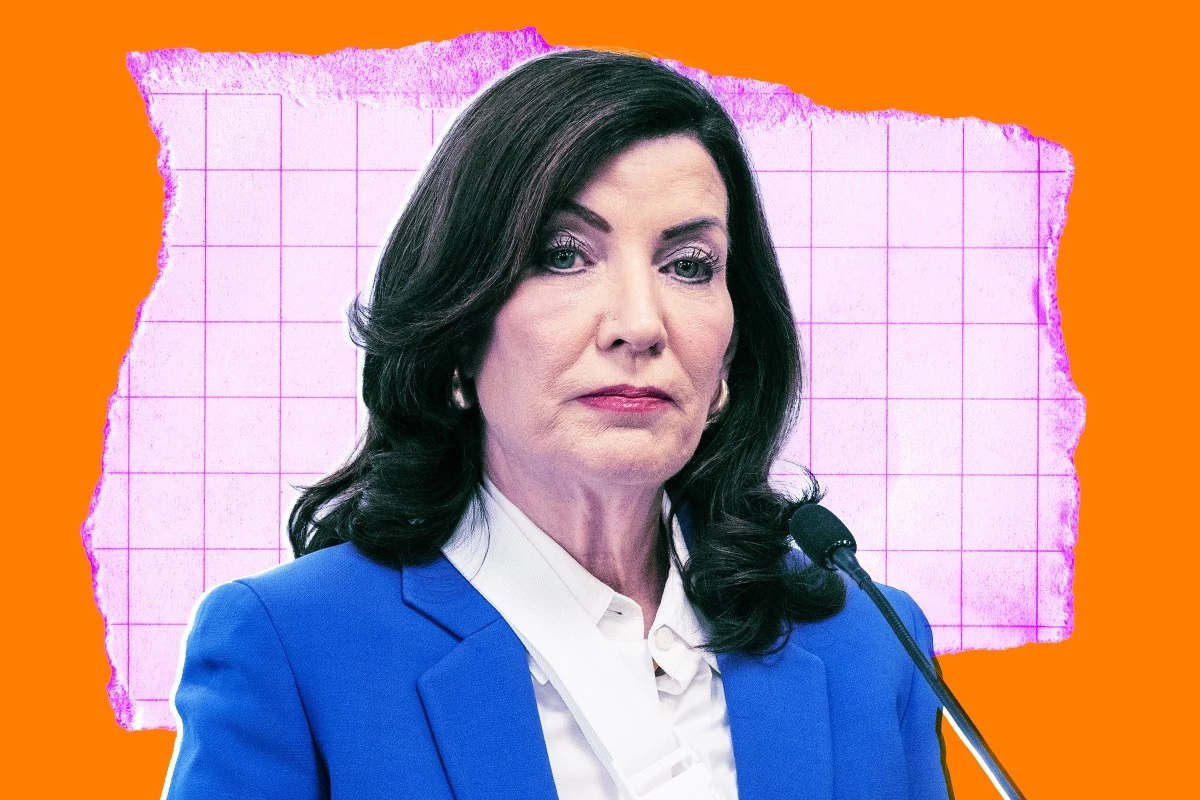
Governor Kathy Hochul’s one-year moratorium on new AI-oriented data centers in New York State at or above 50 megawatts (MW) is more than a permitting pause—it is an early marker of how U.S. states may begin governing the physical footprint of artificial intelligence. By directing the New York Department of Public Service to prepare a comprehensive environmental impact statement—covering air quality, water impacts, and energy consumption—the state is effectively reframing AI infrastructure from a purely economic development asset into a regulated industrial load with community-level externalities.
The policy choice is also notable for what it is *not*. Hochul’s executive action diverges from a parallel State Senate proposal by raising the threshold from 20 MW to 50 MW and removing requirements such as local infrastructure funding mandates and third-party audits. That calibration matters: it narrows the moratorium to the largest facilities—those most likely to stress transmission capacity, water systems, and local air quality—while leaving room for smaller builds and modular expansions that can stay below the trigger.
For business and technology leaders, the practical takeaway is clear: AI’s next bottleneck is increasingly regulatory and infrastructural, not algorithmic. The question is no longer whether demand for compute will rise, but how quickly jurisdictions will insist that compute growth be reconciled with grid constraints, water availability, and local political consent.
The infrastructure reality: power density, water intensity, and grid friction
Modern AI workloads—especially training and large-scale inference—are driving data center design toward denser compute clusters and higher utilization profiles. That translates into a resource signature that states and municipalities can no longer treat as background noise.
Key technical pressures behind New York’s move include:
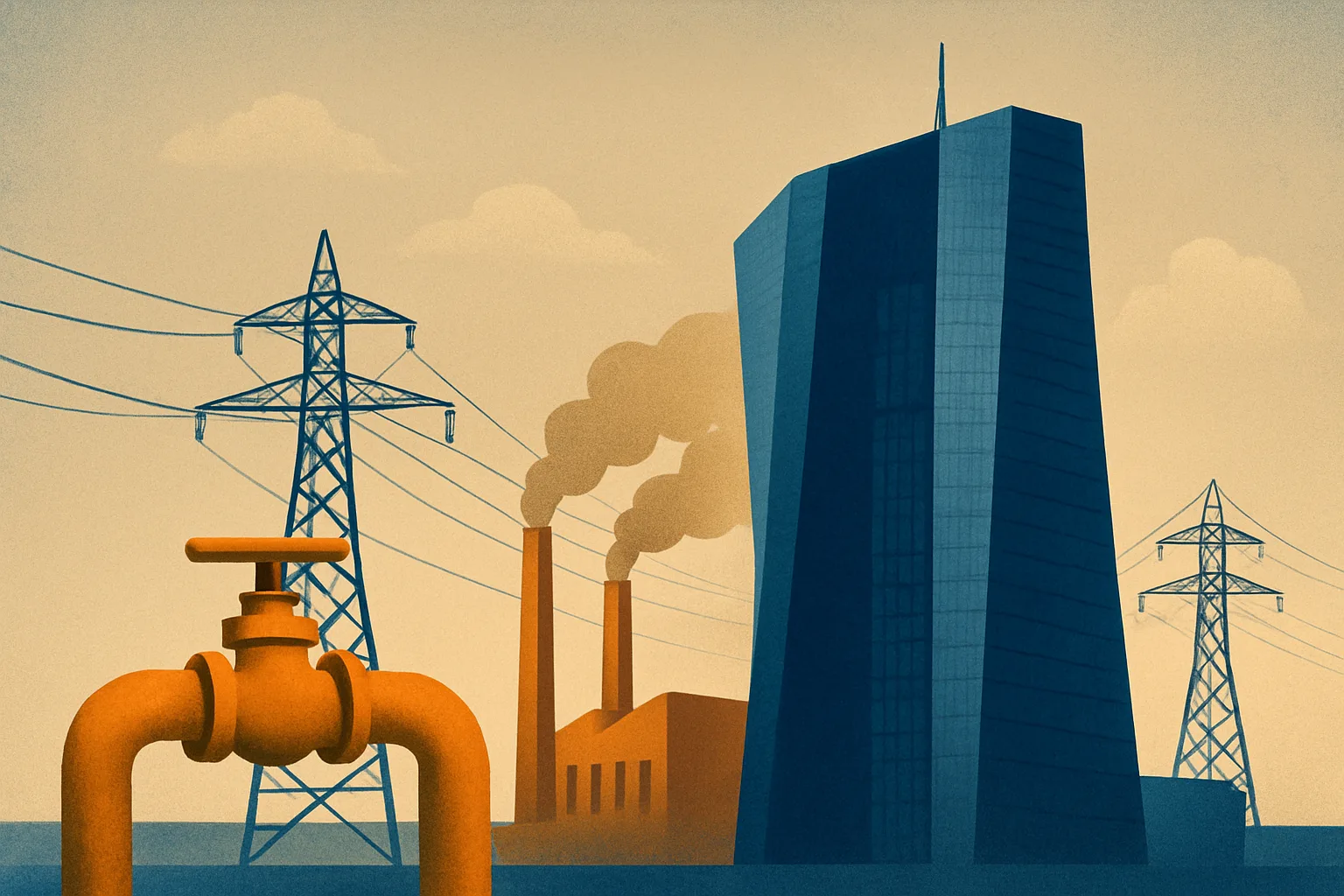
- Electricity demand at industrial scale: AI-oriented facilities can draw hundreds of megawatts in aggregate across campuses, with sharp peaks that complicate grid operations and capacity planning.
- Cooling and water consumption: Many large sites require millions of gallons of water for cooling, raising concerns about watershed stress, thermal discharge, and competition with municipal needs.
- Local environmental impacts: Backup generation, construction activity, and upstream power generation can create measurable air-quality and emissions implications—especially in regions where marginal electricity supply is still fossil-heavy.
By setting the moratorium threshold at ≥50 MW, New York is implicitly pushing operators toward efficiency and mitigation technologies that reduce the political and environmental cost of scale. Expect intensified focus on:
- Higher PUE targets (power usage effectiveness) and tighter operational controls
- Liquid cooling and immersion cooling, which can improve thermal performance at high rack densities
- Closed-loop or reduced-water cooling designs, including reuse and advanced heat exchangers
- Waste-heat recovery, potentially feeding district heating or adjacent industrial processes
- AI-driven workload orchestration, shifting non-urgent compute to off-peak windows to smooth demand
Just as importantly, the moratorium buys time for utilities and regulators to address a structural mismatch: data centers can be planned and financed faster than transmission lines can be permitted and built. That gap is increasingly the arena where AI growth meets its most stubborn constraints.
Capital, politics, and the emerging geography of “jurisdictional arbitrage”
A statewide pause—especially the first of its kind—inevitably reshapes investment flows. The immediate risk is jurisdictional arbitrage: capital and projects migrate to neighboring states or international markets with looser thresholds, faster interconnection queues, or more predictable permitting. Over time, that can create uneven regional outcomes—some areas becoming compute hubs while others become “data center deserts,” even if they have strong fiber connectivity or proximity to enterprise customers.
New York’s approach also illustrates the political economy now surrounding AI infrastructure. The moratorium aligns with a broader Democratic effort to address progressive voter concerns ahead of the 2026 midterms, while the party simultaneously navigates the gravitational pull of AI-industry campaign contributions and internal tensions between:
- Pro-tech moderates, who emphasize jobs, tax base, and innovation leadership
- Environmental and community advocates, who emphasize emissions, water use, and local quality-of-life impacts
For utilities and ratepayers, the economics are equally complex. A pause can reduce near-term pressure on electricity prices by slowing capacity additions that require expensive upgrades. Yet it can also create stranded-asset risk if utilities accelerated planning or procurement to serve large loads that are now deferred. The policy’s real impact will hinge on how regulators treat cost recovery, interconnection commitments, and long-lead grid investments during the moratorium window.
Strategic playbook for operators, cloud providers, utilities, and investors
The moratorium is a forcing function: it pushes stakeholders to treat sustainability and grid alignment as first-order design constraints rather than after-the-fact compliance tasks.
Data center operators are likely to respond by:
- Reworking site selection toward jurisdictions with clearer pathways for large-load interconnection
- Accelerating modular architectures that can scale in increments below regulatory thresholds
- Investing earlier in on-site energy strategies (storage, demand response, renewables PPAs) to reduce grid friction
Cloud and AI service providers face a competitive positioning shift. If New York constrains mega-builds, providers may:
- Expand in alternative regions while maintaining smaller edge capacity near New York enterprise demand
- Market “green compute” and auditable sustainability attributes to customers with ESG and regulatory obligations
- Deepen partnerships with renewable developers and storage operators to secure firmed clean power
Utilities and grid operators may use the pause to modernize planning:
- More rigorous integrated resource planning that treats data centers as flexible loads where possible
- Dynamic pricing and load flexibility programs that reward operators for smoothing peaks
- Co-development of battery storage hubs near existing data center clusters to reduce congestion and improve reliability
Investors and private equity will likely reprice risk in high-regulation states and shift attention toward enabling layers:
- Cooling technology vendors, power optimization software, and energy management platforms
- Water efficiency systems and closed-loop cooling infrastructure
- Heat reuse, carbon accounting, and compliance tooling that turns regulation into a product feature
New York’s moratorium does not end AI infrastructure expansion; it changes the terms under which expansion earns a social license to operate. The states that thrive in the next wave will be those that can translate environmental scrutiny into predictable rules—creating a market where efficient, grid-aware, water-responsible compute becomes not just permissible, but bankable.


 By
By

 By
By
 By
By
 By
By

 By
By