
A deregulatory pivot at the moment nuclear is scaling again
The U.S. Nuclear Regulatory Commission’s (NRC) proposed deregulatory measures arrive at a consequential inflection point: a renewed push to expand nuclear power as part of U.S. decarbonization and energy-security strategy. With new large reactors, life-extension projects, and advanced designs such as small modular reactors (SMRs) moving through development pipelines, the credibility of the regulatory system becomes more—not less—central to the sector’s long-term viability.
At the heart of the debate is whether the NRC’s evolving posture represents streamlining without sacrificing safety, or a structural shift that could dilute the very safeguards that have underwritten nuclear’s “social license to operate” for decades. Critics argue the package is not merely procedural optimization; it is a rebalancing of priorities toward speed, cost reduction, and industrial certainty—potentially at the expense of radiation protection, environmental review rigor, and public participation.
Three elements stand out for their systemic implications across safety management, environmental governance, and market confidence:
- Eliminating the ALARA principle (“as low as is reasonably achievable”) for radiation exposure
- Reworking fee recovery and oversight funding, deepening reliance on industry payments
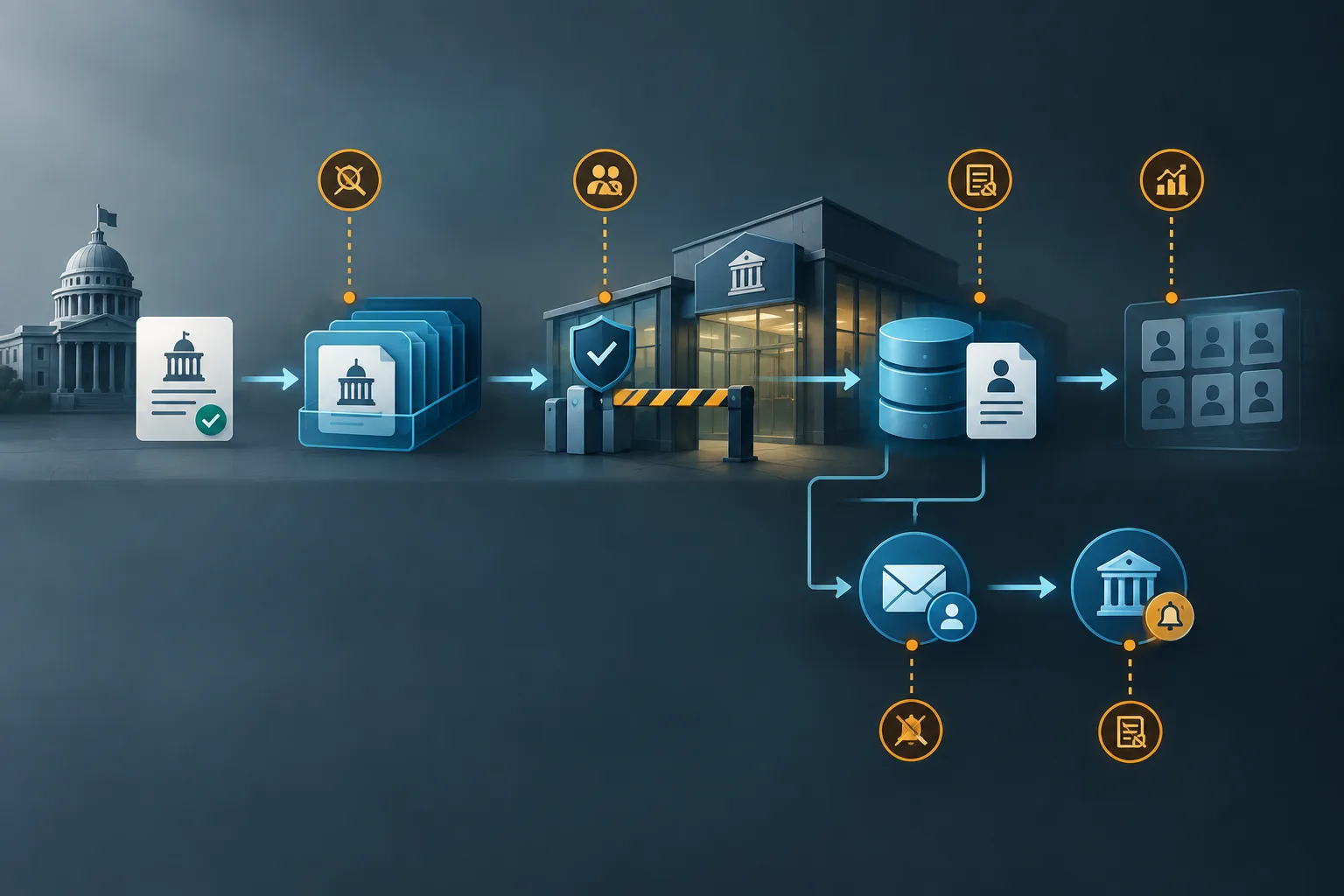
- Rolling back NEPA-related procedures, including reduced draft environmental reviews and constrained public input
Simultaneously, the Department of Energy’s move to relax radiation-exposure limits for nuclear workers adds a parallel pressure vector—suggesting a broader federal tilt toward accelerated deployment, even where worker protection norms have historically been conservative by design.
ALARA and the meaning of “acceptable risk” in nuclear operations
ALARA has long functioned as more than a compliance checkbox. In practice, it embeds a continuous-improvement ethic into radiation protection—pushing operators to reduce exposures and releases even when they are already below numeric limits. Removing ALARA changes the logic of oversight from “keep reducing risk where feasible” to “stay under the threshold,” a shift with real operational consequences.
From a safety culture standpoint, ALARA acts as a management discipline: it encourages investment in better shielding, improved work planning, enhanced monitoring, and iterative process refinement. Without it, the incentive structure can become more transactional—meeting minimum requirements rather than pursuing incremental gains. That distinction matters most in environments where risk is cumulative, probabilistic, and shaped by human factors.
The concern is not that operators will suddenly ignore safety; rather, that marginal safety investments—the upgrades that prevent small issues from becoming systemic—become easier to defer when schedules tighten and budgets are scrutinized. In complex plants, especially those with aging components or first-of-a-kind designs, latent degradation and procedural drift are rarely dramatic at first. They accumulate.
Key downstream effects analysts will watch include:
- Inspection and maintenance prioritization under tighter timelines
- Worker exposure management when throughput becomes a dominant metric
- Design trade-offs in advanced reactors, where cost and manufacturability compete with redundancy and containment conservatism
In parallel, loosening worker exposure limits risks signaling that labor is a variable to be optimized rather than a constraint to be protected—an approach that can reverberate through training rigor, staffing levels, and the willingness to pause work when conditions degrade.
NEPA rollback and the economics of public trust
Environmental review is often framed as “delay,” but in nuclear it also functions as risk discovery and legitimacy-building. NEPA processes—especially draft reviews and public comment—surface local knowledge, force documentation discipline, and create a record that can either stabilize projects or expose vulnerabilities early enough to correct them.
Reducing draft environmental reviews and curtailing public input may shorten timelines, but it also raises the probability of later-stage disruption:
- Litigation risk increases when stakeholders feel excluded or when the administrative record appears thin.
- Community opposition can harden, particularly in regions where nuclear projects intersect with water use, waste transport, or emergency planning concerns.
- Investor uncertainty grows when permitting becomes politically fragile rather than procedurally robust.
For capital markets, the issue is not ideological—it is actuarial. Nuclear projects are defined by long lead times, high fixed costs, and sensitivity to delays. Any policy shift that increases the chance of court challenges, reputational shocks, or post-approval redesign can translate into higher cost of capital, more restrictive lending terms, and elevated insurance scrutiny. Even if deregulation reduces near-term compliance costs, it can increase the tail risk that financiers price aggressively.
This is where ESG dynamics become commercially material. Utilities and corporate power buyers increasingly evaluate not just carbon attributes, but governance quality and operational integrity. A perception—fair or not—that U.S. nuclear expansion is being “fast-tracked” by weakening safeguards could complicate contracting, public communications, and long-term demand certainty for nuclear-generated electricity.
Regulatory capture concerns and the strategic stakes for U.S. nuclear leadership
The NRC’s funding structure—where licensees fund the regulator—has long been defended as pragmatic. Yet it also creates an enduring tension: an oversight body dependent on the industry it oversees must work harder to demonstrate independence, especially when policy shifts align with industry preferences for faster licensing and reduced procedural friction.
If the public narrative consolidates around “regulatory capture,” the damage is not confined to domestic politics. It affects U.S. positioning in global civil nuclear markets, where safety credibility is a competitive asset. The United States seeks to advance SMRs and next-generation designs as exportable solutions for decarbonization and energy security. That ambition depends on the perception that U.S. governance sets a high bar—technically rigorous, transparent, and resilient to political swings.
A diluted domestic standard may yield short-term throughput, but it risks undermining:
- International confidence in U.S. reactor technology and oversight norms
- Soft-power credibility in nuclear cooperation agreements and safety diplomacy
- Long-horizon project bankability, where stable regulation is as valuable as engineering
The nuclear sector’s central paradox is that speed ultimately depends on trust. If deregulatory measures weaken confidence in radiation protection, environmental review integrity, or regulator independence, the resulting backlash—legal, political, financial, and social—can slow deployment more effectively than any procedural requirement ever did. The next phase of U.S. nuclear growth will be shaped not only by how quickly projects can be approved, but by whether the institutions approving them remain broadly believed.

 By
By
 By
By

 By
By
 By
By

 By
By
 By
By