
Tianwen-2 and Kamo’oalewa: a precision encounter that tests the limits of autonomy
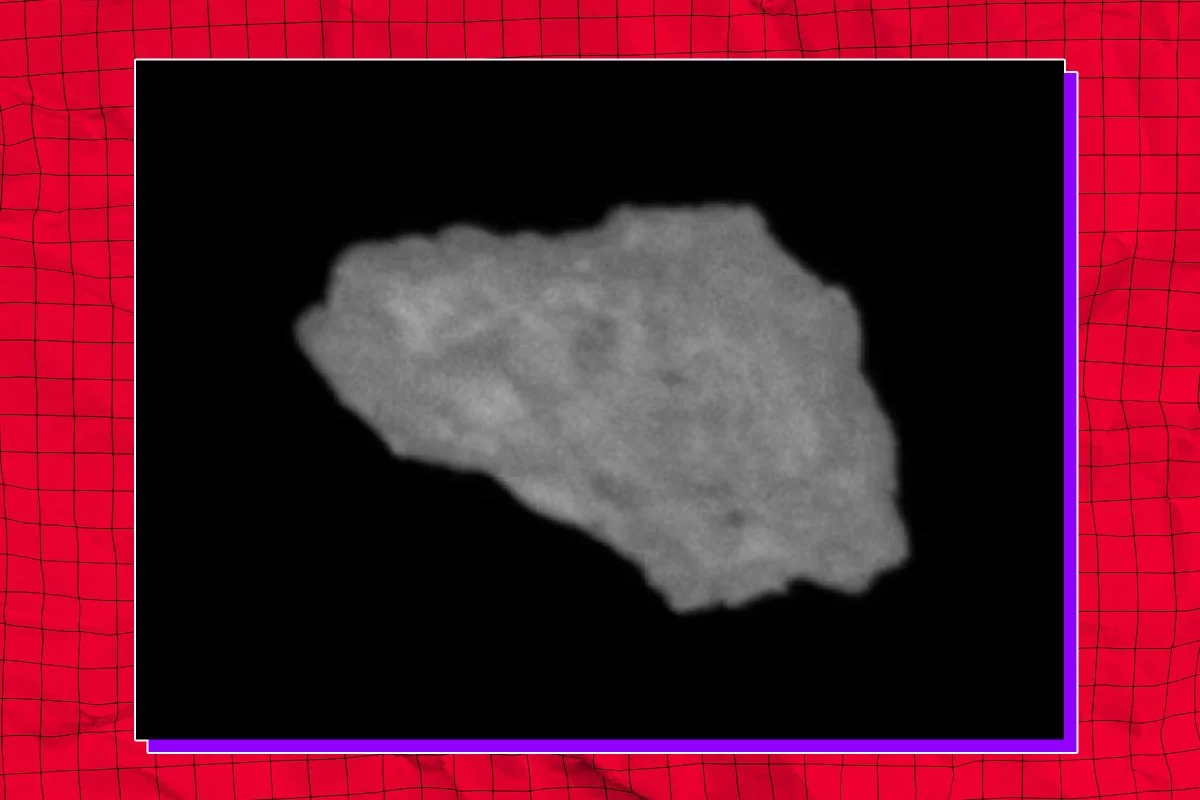
China’s Tianwen-2 mission is now operating in the most unforgiving of laboratories: close proximity to Kamo’oalewa, a tiny, fast-spinning quasi-moon only a few dozen feet across. After a 400-day, roughly 620-million-mile transit since its May 2025 launch, the spacecraft has narrowed the gap to about 12.5 miles, entering a phase where guidance errors are measured not in kilometers but in moments—because the target completes a rotation in around 30 minutes.
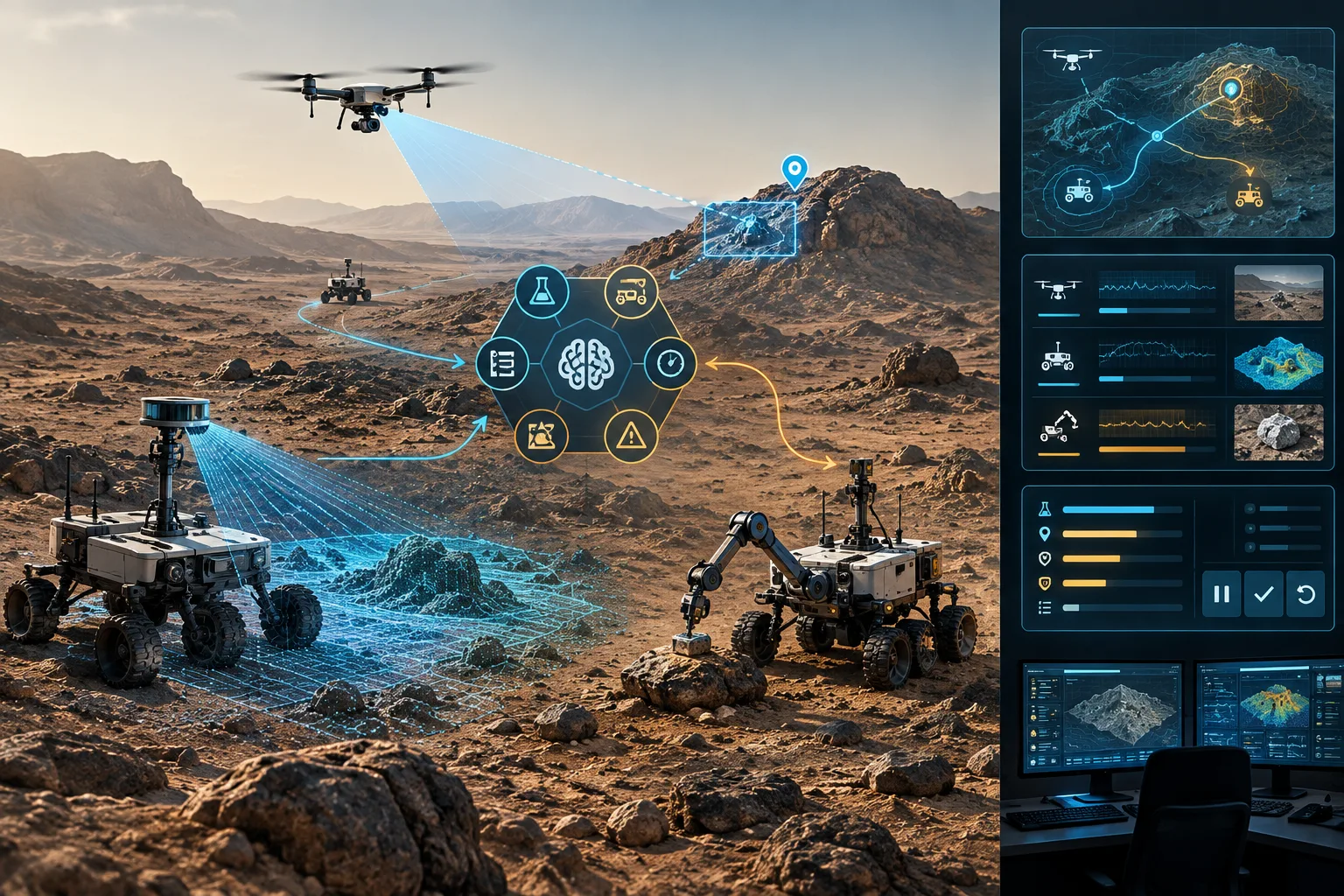
For spaceflight engineers, this is not merely a navigation challenge; it is a stress test of real-time autonomy. A small body with weak gravity and rapid spin offers few stable reference points, and sunlight, shadowing, and surface irregularities can confound optical tracking. The mission’s next year of reconnaissance and sampling attempts will therefore be read as a proxy measure of how far China’s deep-space stack has matured—particularly in computer vision, thruster modulation, and fault-tolerant decision-making when communication delays make joystick-style control impossible.
If Tianwen-2 returns material successfully, China would become the third nation to retrieve asteroid samples, joining Japan (Hayabusa/Hayabusa2) and the United States (OSIRIS-REx). That milestone matters scientifically, but it matters just as much industrially: sample return is a systems-integration feat where propulsion, robotics, autonomy, communications, and materials engineering must all work at once, under conditions that cannot be fully replicated on Earth.
The “anchor-and-attach” bet: ultrasonic drilling as a new sampling paradigm
The mission’s most closely watched innovation is its attempt to move beyond brief contact sampling toward a more secured interaction: “anchor-and-attach” alongside “touch-and-go.” The headline detail—use of an ultrasonic drill during a secured docking maneuver—signals a deliberate push into a more mechanically demanding regime, where the spacecraft must manage contact forces without bouncing off the surface or destabilizing its attitude.
This approach implies several technological leaps with broad downstream relevance:
- Microgravity contact dynamics at high spin: Matching a rotating body’s motion while maintaining station-keeping requires advanced guidance, navigation, and control (GNC) tuned for rapid updates and uncertain surface properties.
- Anchoring mechanics and vibration control: Anchors, actuators, and damping systems must handle unpredictable regolith behavior, minimizing recoil and preventing tool chatter—problems familiar to terrestrial drilling, but amplified in microgravity.
- Onboard autonomy and contingency handling: With deep-space latency, Tianwen-2 must detect anomalies (poor anchoring, unexpected tilt, dust plumes) and respond locally, elevating the importance of event-driven control architectures.
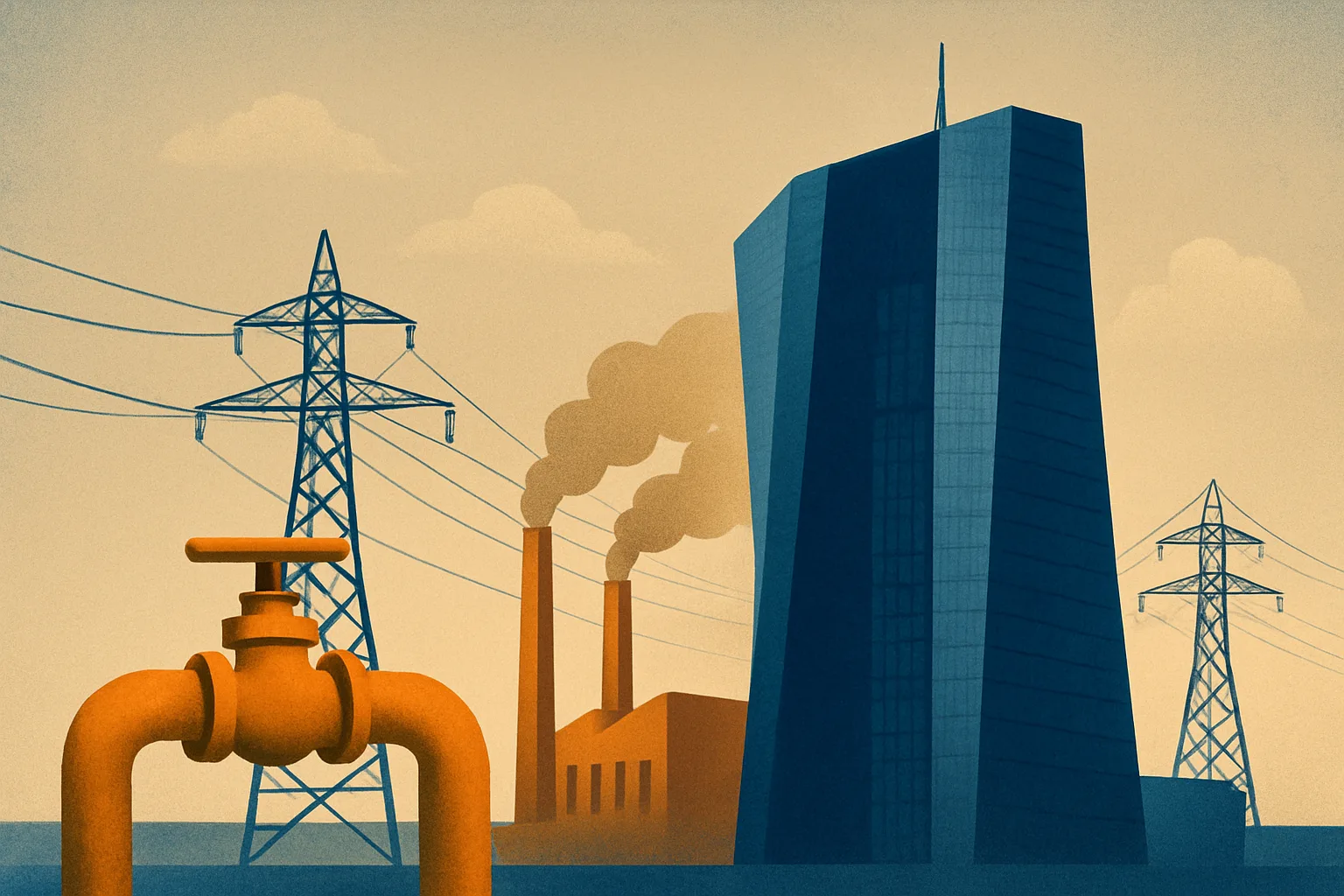
The non-obvious business angle is that ultrasonic drilling and stabilized attachment are not purely “space” technologies. They map onto Earth-based needs in precision subsurface exploration, including next-generation geothermal drilling, advanced mining, and potentially carbon sequestration well development—domains where reducing wear, improving control, and extracting cleaner samples can translate into real cost reductions.
Industrial and capital-market signals: supply chains, talent, and the long arc of space resources
Tianwen-2 also functions as an industrial audit. A nearly two-ton deep-space probe draws on advanced composites, propulsion components, ultraprecise sensors, space-grade electronics, and high-gain communications—and it does so at a level of integration that tends to reveal whether a country’s supply chain is merely capable or genuinely competitive.
A successful sampling campaign would likely accelerate three economic dynamics:
- Ecosystem scaling and private capital pull-through: Demonstrated capability reduces perceived technical risk, making it easier for domestic space-tech startups—robotics, sensors, autonomy software—to attract investment and win procurement.
- R&D stimulus and workforce signaling: High-visibility missions reliably strengthen the STEM pipeline, while also justifying larger budgets for navigation algorithms, miniaturized instruments, and manufacturing quality systems.
- Resource modeling with market implications: Asteroid mining remains speculative, but real samples refine models of off-Earth composition—especially for nickel, platinum-group metals, and other critical-mineral analogues relevant to batteries, hydrogen infrastructure, and advanced electronics.
For executives tracking the space economy, the key is not to over-rotate on near-term asteroid extraction, but to recognize how sample return de-risks adjacent capabilities: in-space robotics, autonomous rendezvous, and high-reliability manufacturing. Those are monetizable well before any commercial resource return becomes plausible.
Strategic gravity: space governance, dual-use realities, and the emerging architecture race
Tianwen-2’s proximity operations around Kamo’oalewa arrive amid a broader buildout: China’s Tiangong space station, reusable-launch ambitions, and a growing cadence of deep-space missions. Together, these form an integrated narrative of a spacefaring power moving from episodic achievements to repeatable infrastructure.
That trajectory carries strategic weight in three directions:
- Geopolitical signaling and soft power: Matching—and potentially surpassing—capabilities demonstrated by NASA’s OSIRIS-REx and JAXA’s Hayabusa2 strengthens China’s standing in international forums shaping norms for exploration and resource rights, including debates at COPUOS.
- Dual-use technology considerations: High-precision GNC, autonomous robotics, and resilient communications are inherently dual-use, with clear relevance to missile guidance, surveillance, and remote operations—ensuring that technical success will be interpreted through a security lens as well as a scientific one.
- Decoupling and standards competition: As Western and Chinese space-tech ecosystems diverge, alliances and procurement networks may increasingly form around compatible standards for navigation protocols, satellite interoperability, and deep-space communications.
For the global business and technology community, Tianwen-2 is best understood as a demonstration of operational credibility: the ability to navigate, attach, drill, and retrieve in a dynamic microgravity environment. If China executes these steps reliably, it will not just add a sample capsule to a museum shelf—it will validate a toolkit for the next decade of orbital servicing, lunar logistics, and autonomous industrial operations beyond Earth, reshaping competitive assumptions in the space economy and the technologies that increasingly depend on it.

 By
By
 By
By
 By
By
 By
By



 By
By