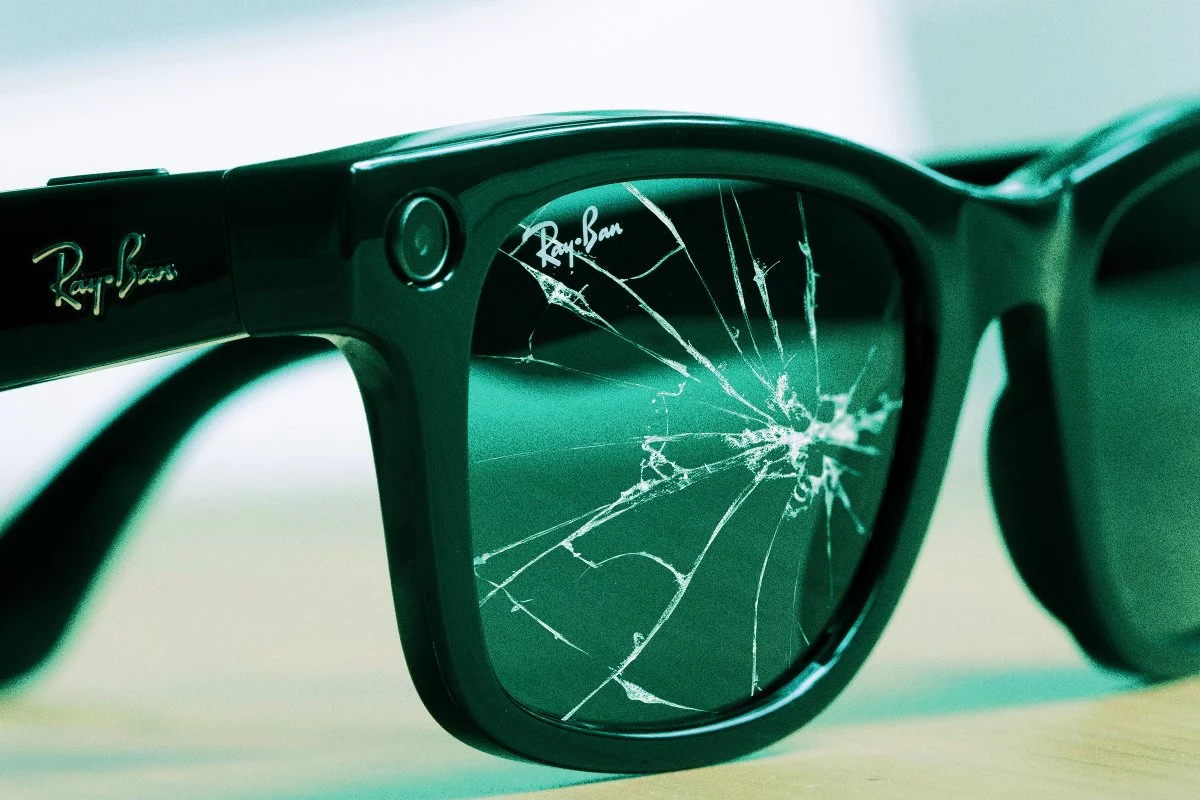

Meta’s AI smart glasses: a mainstream product colliding with a trust crisis
Meta’s latest AI-enabled smart glasses have done what earlier wearable experiments—most notably Google Glass—struggled to achieve: they have moved from novelty to visible consumer adoption. That traction, amplified by celebrity marketing and Mark Zuckerberg’s repeated assertion that smart glasses could eventually supplant smartphones, signals a serious strategic bet on ambient computing—devices that are always available, context-aware, and increasingly capable of interpreting the world in real time.
Yet the same design premise that makes smart glasses compelling—hands-free capture paired with AI—also makes them socially combustible. Reports of influencers covertly filming women without consent and monetizing the footage, sometimes escalating into extortion, have pushed the product into a reputational storm. The “pervert glasses” label, however crude, reflects a broader public discomfort: when a camera is placed at eye level and worn continuously, the line between personal convenience and pervasive surveillance becomes uncomfortably thin.
The result is a market paradox. Meta is proving there is demand for AI wearables, while simultaneously demonstrating how quickly social acceptance can collapse when the technology’s misuse becomes the headline. Some owners reportedly avoid wearing the glasses in public or attempt to conceal them—an early indicator that adoption may be constrained not by hardware capability, but by the wearer’s fear of social sanction.
Edge AI, facial recognition, and the new privacy battleground
Technologically, Meta’s glasses represent a meaningful step toward on-device AI and edge processing, where capture and inference can occur locally rather than being continuously streamed to the cloud. In principle, edge computing can reduce privacy risk by limiting data exposure. In practice, the privacy outcome depends on implementation details that consumers and regulators increasingly demand to be explicit, verifiable, and enforceable.
The looming flashpoint is facial recognition. Even the prospect of real-time identification—whether enabled by default or offered as an add-on—changes the ethical profile of the device. A camera that records is one thing; a camera that can identify, categorize, and potentially track is another. This is where “AI smart glasses” shift from a consumer gadget into a biometric instrument, triggering stricter legal scrutiny and a higher bar for consent.
Key technical and governance questions now define the product’s trajectory:
- Is biometric functionality opt-in, and can it be independently audited? Trust hinges on whether facial recognition is modular, user-controlled, and demonstrably constrained.
- Where does data live, and for how long? “Local-only” claims matter less without clear retention policies, deletion guarantees, and protections against silent uploads.
- Are recording indicators unambiguous and hardware-enforced? Software icons can be spoofed or ignored; visible LEDs, mechanical shutters, and unmistakable cues are harder to circumvent.
- Can the device respect context? Features like geofencing, “privacy zones,” or restricted modes in sensitive locations could become baseline expectations rather than premium add-ons.
Meta’s broader roadmap—sensor fusion, depth mapping, eye tracking, and eventual augmented reality overlays—raises the stakes further. Each additional sensor expands the device’s ability to infer not just what is seen, but what is attended to, how long, and with what emotional or behavioral signals. That is a powerful interface for productivity and personalization, but also a potent substrate for abuse if safeguards are treated as a policy layer rather than a hardware-embedded architecture.
Market momentum versus brand liability: the economics of reputational drag
From an economic standpoint, smart glasses are positioned as a multi-billion-dollar category over the next several years, driven by the convergence of wearables, AI assistants, and AR. Meta’s early scale—if sustained—could translate into meaningful advantages: faster iteration cycles, richer developer ecosystems, and lower unit costs through manufacturing volume.
But the same momentum can amplify downside risk. A privacy lawsuit and persistent negative narratives can create a compounding “reputational drag” that shows up in tangible business metrics:
- Higher customer acquisition costs as marketing must overcome skepticism rather than simply explain features
- Increased insurance and liability exposure for both the manufacturer and enterprise buyers deploying the devices
- Chilling effects on partnerships with retailers, venues, and platforms wary of being associated with non-consensual recording
- Spillover risk across product lines, where distrust in smart glasses bleeds into perceptions of Meta’s VR headsets and social platforms
Competitive dynamics sharpen this tension. Rivals such as Snap, Google, Apple, and a long tail of AR startups can position themselves as privacy-first alternatives, using conservative feature sets and stronger visible safeguards as differentiation. In markets where trust is the gating factor—schools, healthcare environments, workplaces, public venues—restraint may become a competitive advantage rather than a weakness.
The strategic fork: privacy-by-design, enterprise verticals, and regulatory alignment
Meta’s challenge now is not merely to defend a product—it is to define the norms of an emerging interface category. The company’s most credible path to durable growth runs through privacy-by-design that is legible to ordinary bystanders, not just to policy teams. That means shifting from “trust us” assurances to mechanisms that are difficult to bypass and easy to understand in the moment.
Several strategic moves stand out as both commercially pragmatic and socially stabilizing:
- Standardized, universally recognized recording signals (bright LEDs, audible cues, mechanical shutters) that reduce ambiguity in public spaces
- Third-party audits and verifiable privacy claims, creating a compliance narrative that regulators and consumers can validate
- Verticalized enterprise variants with restricted recording modes, clearer governance, and demonstrable ROI in field service, manufacturing, and healthcare
- Regulatory anticipation aligned with the EU AI Act and evolving U.S. privacy frameworks, treating compliance as a product feature and a market-access moat
The deeper issue is cultural: society has not yet agreed on the etiquette of always-on, face-level cameras—especially when paired with AI. Meta’s glasses are forcing that negotiation in real time. The companies that win this category will not be those that merely miniaturize hardware or improve battery life; they will be the ones that make consent, transparency, and accountability feel native to the device—so wearing smart glasses becomes socially ordinary rather than socially suspect.

 By
By
 By
By

 By
By
 By
By

 By
By