
A high-profile equity gift reframes youth savings as national infrastructure
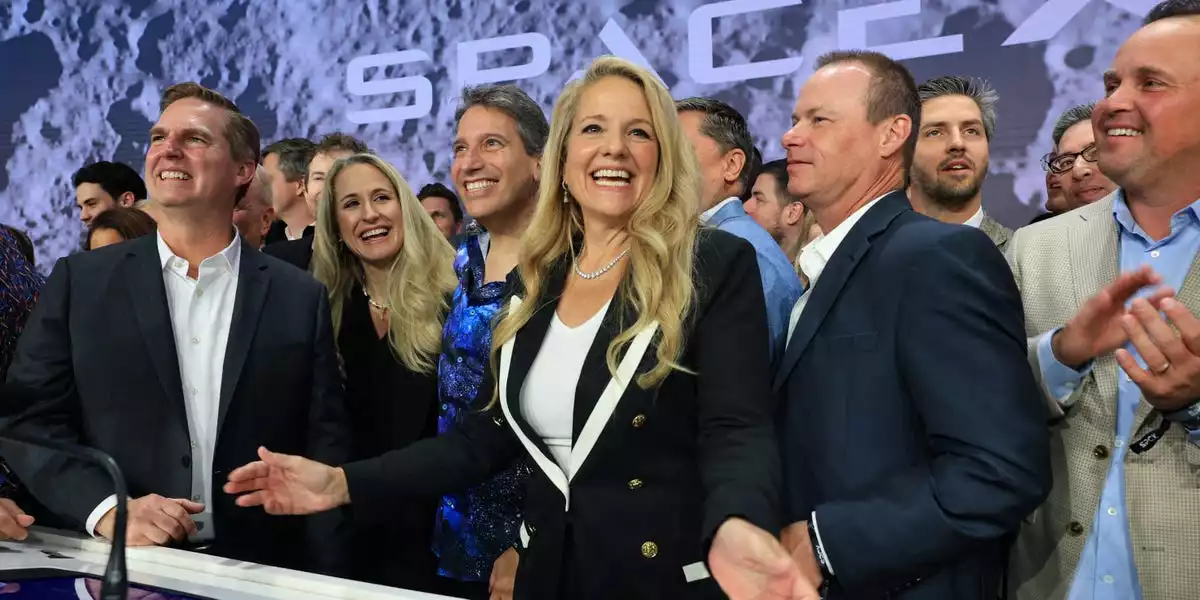
Gwynne Shotwell, SpaceX’s president and COO, and her husband have stepped into the center of a fast-evolving experiment in American savings policy: the Invest America “Trump Accounts” program. Their pledge—one share of SpaceX stock for each of more than two million children, largely ages 11–17 from lower-income households in central Texas—is notable not only for its scale, but for its instrument. At an estimated $160 per share, the donation could approach $320 million, placing it among the more consequential equity-based philanthropic gestures tied to a federal financial inclusion initiative in recent memory.
The timing matters. Invest America, enacted under a recent Republican tax and spending law, provides a $1,000 Treasury deposit for every child born between January 1, 2025 and December 31, 2028, with funds maturing into a retirement-style account at age 18. Shotwell’s contribution targets older children—those who may not benefit from the birth-year deposit window—effectively creating a parallel on-ramp for adolescents who are closer to college, training, or early workforce decisions.
This is also a story about how modern corporate philanthropy is changing shape. Rather than writing a conventional check, SpaceX leadership is using private-company equity—a choice that preserves cash, ties the gift to the company’s long-term trajectory, and implicitly links social outcomes to the performance narratives that surround high-growth technology firms.
The emerging public–private blueprint: Treasury seed money, corporate amplification
Invest America is structured as a hybrid: government establishes the baseline deposit, and private actors expand the impact through matching or supplemental contributions. Shotwell’s gift lands alongside a growing roster of corporate commitments, including:
- Michael and Susan Dell’s $6.25 billion pledge
- Micron’s $250 million donation
- Deposit-matching commitments from BlackRock, Intel, and JPMorgan Chase
Taken together, these moves point to a broader shift: youth savings and long-term financial security are being treated less like discretionary charity and more like workforce and competitiveness policy—a domain where corporate balance sheets, public incentives, and human-capital strategy increasingly intersect.
For policymakers, the appeal is clear. A Treasury-funded seed deposit is politically legible and administratively scalable; corporate matching reduces the fiscal burden while signaling private-sector buy-in. For companies, the logic is equally pragmatic: supporting youth accounts can be framed as economic mobility, skills development, and future labor supply—all while strengthening relationships with regulators and local communities.
SpaceX’s participation is particularly instructive because it demonstrates how late-stage private tech companies can deploy equity as a social instrument. If more firms follow, the market may see the rise of philanthropic share allocations, donor-advised structures holding private stock, and new governance playbooks for valuation, transfer restrictions, and disclosure—especially when gifts are large enough to attract public scrutiny.
Aerospace talent, STEM access, and the quiet economics of “grow-your-own” pipelines
Beyond the politics and the headline number, the donation is best understood as a bet on human capital formation—and on the idea that financial inclusion can be an accelerant for STEM participation. Targeting adolescents in lower-income communities addresses a specific bottleneck: the years when students make pivotal choices about coursework, college applications, vocational pathways, and first jobs—often under acute financial constraints.
In sectors like aerospace, advanced manufacturing, and semiconductors, the talent challenge is not abstract. As launch cadence and satellite deployment scale, and as the broader space economy expands, companies face persistent pressure to recruit engineers, technicians, software specialists, and operations talent. Programs that combine savings with a sense of mission can function as a subtle but powerful pipeline mechanism—particularly when the donor is a company whose brand is synonymous with frontier technology.
Several implications stand out:
- Earlier financial agency can widen STEM participation. Even modest account balances can change the perceived feasibility of community college, certification programs, or four-year degrees.
- Geographic targeting can reshape regional labor markets. Central Texas is already a magnet for tech and manufacturing; youth-account capital may reinforce that trajectory by increasing local readiness for technical careers.
- Diversity outcomes may improve over time. If the program reaches students historically underrepresented in aerospace and engineering, the long-run workforce composition could shift—an operational advantage in a sector where talent scarcity is chronic.
The mechanism also aligns with a broader corporate trend: treating workforce development as a multi-decade investment, not a quarterly hiring problem. Savings accounts, matched deposits, and equity gifts are slow-moving tools—but they are designed to compound, much like the industries they aim to staff.
Political optics, governance questions, and what executives should watch next
The announcement arrives amid a visible political subplot: former President Trump publicly pressed Elon Musk to participate, despite earlier tensions over EV subsidies and mandates. Musk has remained publicly silent, while Shotwell’s move delivers tangible alignment with the initiative without requiring the CEO to become the face of it. From a corporate governance perspective, that separation is meaningful: it allows SpaceX to engage with a federal program while limiting reputational spillover tied to partisan dynamics.
For executives and investors, the more durable questions are structural:
- How will regulators treat large-scale private-stock philanthropy? As equity donations grow, scrutiny may increase around valuation fairness, insider considerations, and transfer mechanics.
- What happens to cap tables and secondary markets? Even if a $320 million donation is modest relative to SpaceX’s valuation, repeated share-based giving across the private-tech sector could introduce new complexity in ownership structures.
- Will “stakeholder capitalism” become operational rather than rhetorical? The combined commitments from Dell, Micron, and major financial institutions suggest a coordinated model where social mobility is framed as an input to productivity, innovation capacity, and national competitiveness.
Shotwell’s donation ultimately reads less like a one-off act of generosity and more like a signal: the next era of workforce strategy may be financed through blended instruments—public seed capital, corporate matching, and equity-based giving—built to compound over a generation. If that model holds, the most consequential outcome won’t be the headlines around a single donor or political prompt, but the normalization of youth savings as a pillar of America’s technology and industrial pipeline.

 By
By
 By
By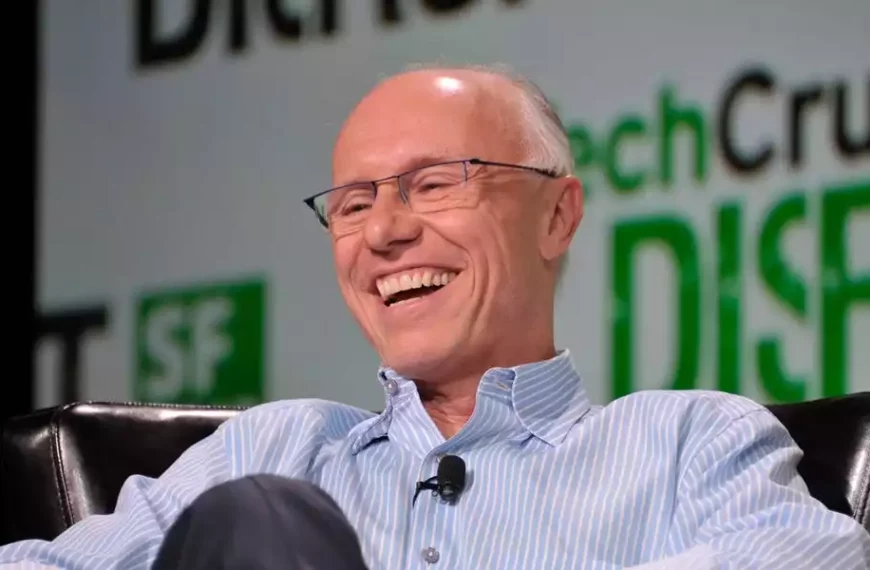

 By
By

 By
By