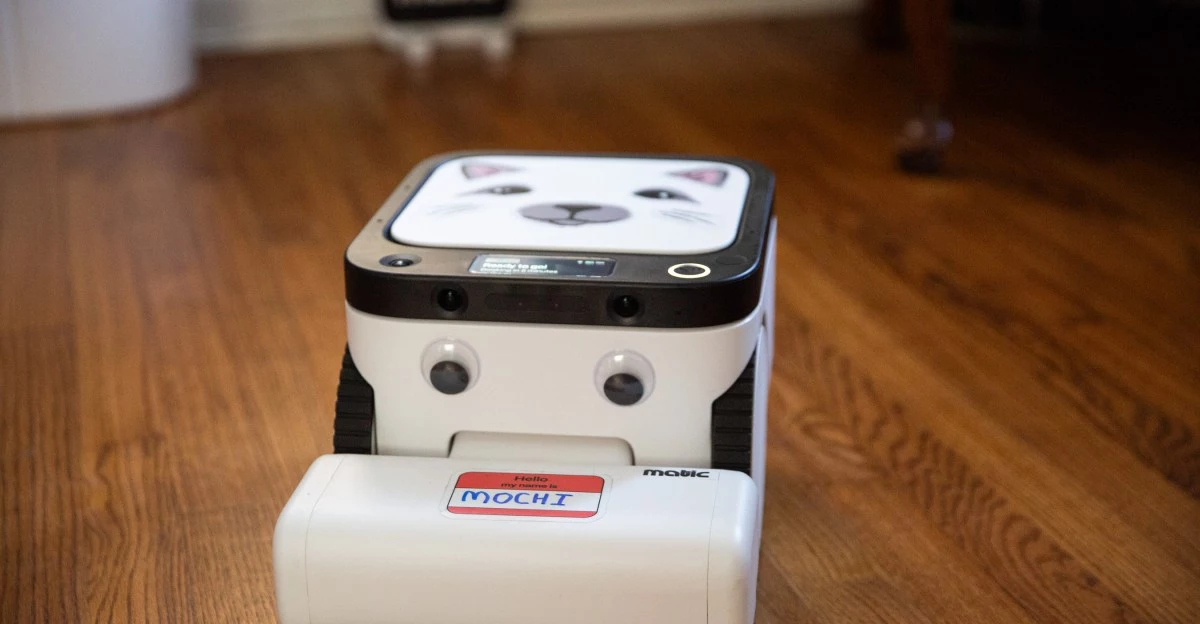

A premium cleaning robot finds its moment—just as costs force a new price ceiling
Matic’s rapid rise in the robot vacuum market underscores a broader shift underway in home robotics: consumers are increasingly willing to pay for reliability, low-maintenance design, and privacy-forward engineering, not just raw suction power or app features. Positioned as a hybrid vacuum-and-mop system, Matic has differentiated itself with a combination that is deceptively hard to execute well—quiet operation, “human-like” navigation, and a self-cleaning roller mop that reduces the day-to-day friction that often turns smart appliances into chores.
That momentum now collides with a familiar macro reality. Matic plans to raise its price from $1,245 to $1,495 on September 9, attributing the move to a tenfold increase in key component costs, including memory. In a category where consumers are trained to expect frequent discounts and aggressive competition, a $250 step-up is significant. Yet the company is pairing the increase with a set of confidence-building incentives for direct buyers: free shipping, a year’s supply of replacement bags (valued at $96), and an expanded return window from 60 days to six months.
This is not merely a promotion—it reads as a strategic attempt to preserve conversion rates while signaling product maturity. A six-month return policy implicitly invites buyers to test the robot across seasons, shedding cycles, and real household variability—conditions that typically expose weaknesses in navigation and maintenance design.
Engineering choices that prioritize edge intelligence, privacy, and lower upkeep
Matic’s product thesis is clear: reduce complexity where it matters most for consumers—maintenance, connectivity dependency, and the “babysitting” burden common in robotic cleaning. Several design decisions stand out as both technically and commercially consequential.
Key technology differentiators include:
- Integrated vacuum-and-mop architecture
Rather than leaning on bulky multi-function docks and separate wet/dry subsystems, Matic’s combined approach aims to reduce part count, failure points, and service complexity. The self-cleaning roller mop is especially notable because mopping systems often degrade in performance when residue accumulates or when cleaning routines are inconsistent.
- Local mapping and on-device data storage
Matic’s choice to store mapping data locally enables offline operation and materially improves the privacy posture of the device. In an era of heightened scrutiny around cloud-connected IoT products, this “edge-first” approach reduces exposure to:
– cloud outages and latency
– account lockouts or service changes
– data retention ambiguity and breach risk
For privacy-conscious households—and for jurisdictions shaped by GDPR, CCPA, and emerging data sovereignty norms—local storage is becoming a product feature with regulatory and reputational value.
- Navigation and AI path planning that appears operationally mature
Early user reports citing only two navigation hiccups over six months in a multi-story home with pets and heavy rugs suggest robust real-world performance. The remaining edge cases—such as transitions on high-pile carpets—are precisely the kind of issues that can often be improved via software updates, reinforcing the importance of a software-defined roadmap even in a hardware-led category.
Collectively, these choices position Matic less like a gadget and more like an appliance: something expected to work quietly, repeatedly, and without constant intervention.
Price increases, semiconductor volatility, and the economics of “premiumization” in home robotics
The stated driver behind Matic’s price increase—dramatically higher component costs—reflects a persistent reality in consumer electronics: supply chains may have stabilized compared to peak pandemic disruption, but pricing volatility remains, particularly for memory and specialized components. Geopolitical risk, constrained capacity, and shifting demand patterns can all amplify cost swings. For smaller or scaling hardware companies, these shocks are harder to absorb without passing costs through to consumers.
Matic’s response is notable for how it blends pricing power with risk reduction. The bundled consumables and extended return window function as purchase friction reducers, effectively reframing the higher price as a more protected decision. It also nudges buyers toward direct-to-consumer purchasing, where the company can defend margins by avoiding marketplace fees and capturing first-party customer data.
This dynamic also speaks to a larger market trend: premiumization of residential robotics. As the category matures, differentiation is moving away from spec-sheet escalation and toward lived experience:
- quieter cleaning that can run during work calls or at night
- fewer interventions (less untangling, fewer rescues, less dock maintenance)
- better handling of pets, rugs, thresholds, and multi-level homes
- stronger privacy guarantees and offline resilience
At nearly $1,500, Matic is competing not only against other robot vacuums, but against a consumer’s broader “time-buying” budget—meal kits, laundry services, smart home upgrades, and other convenience technologies. In that context, the company’s emphasis on low maintenance and dependable navigation becomes a direct economic argument: fewer minutes spent managing the robot increases the value of automation.
Competitive stakes: privacy-first positioning and the emerging consumables playbook
Matic’s local-storage model creates a meaningful contrast with cloud-heavy rivals. As regulators and consumers grow more skeptical of always-connected devices, edge computing in consumer IoT is shifting from an engineering preference to a market differentiator. Offline capability also expands the addressable market to homes with unreliable broadband—an underappreciated constraint in many regions.
Meanwhile, the inclusion of a year’s replacement bags hints at a familiar strategy from other appliance ecosystems: recurring consumables revenue. Even if positioned today as a limited-time incentive, it previews a future where robot makers increasingly monetize through:
- consumables subscriptions (bags, rollers, filters)
- extended warranties and priority support
- predictive maintenance and parts replacement programs
If Matic can sustain performance while scaling supply-chain resilience, it may find opportunities beyond premium homes—such as boutique hospitality, small offices, and light commercial settings where quiet operation and minimal supervision are operational advantages rather than lifestyle perks.
The immediate question for the market is whether consumers will accept a higher price in a competitive category. The longer-term question is more structural: whether the next phase of home robotics will be defined less by cloud features and dock theatrics, and more by edge intelligence, privacy-by-design, and appliance-grade reliability—the attributes Matic is betting its brand on as it steps into a higher pricing tier.

 By
By
 By
By


 By
By
 By
By