
Weird Al’s “no” as a signal in the AI marketing era
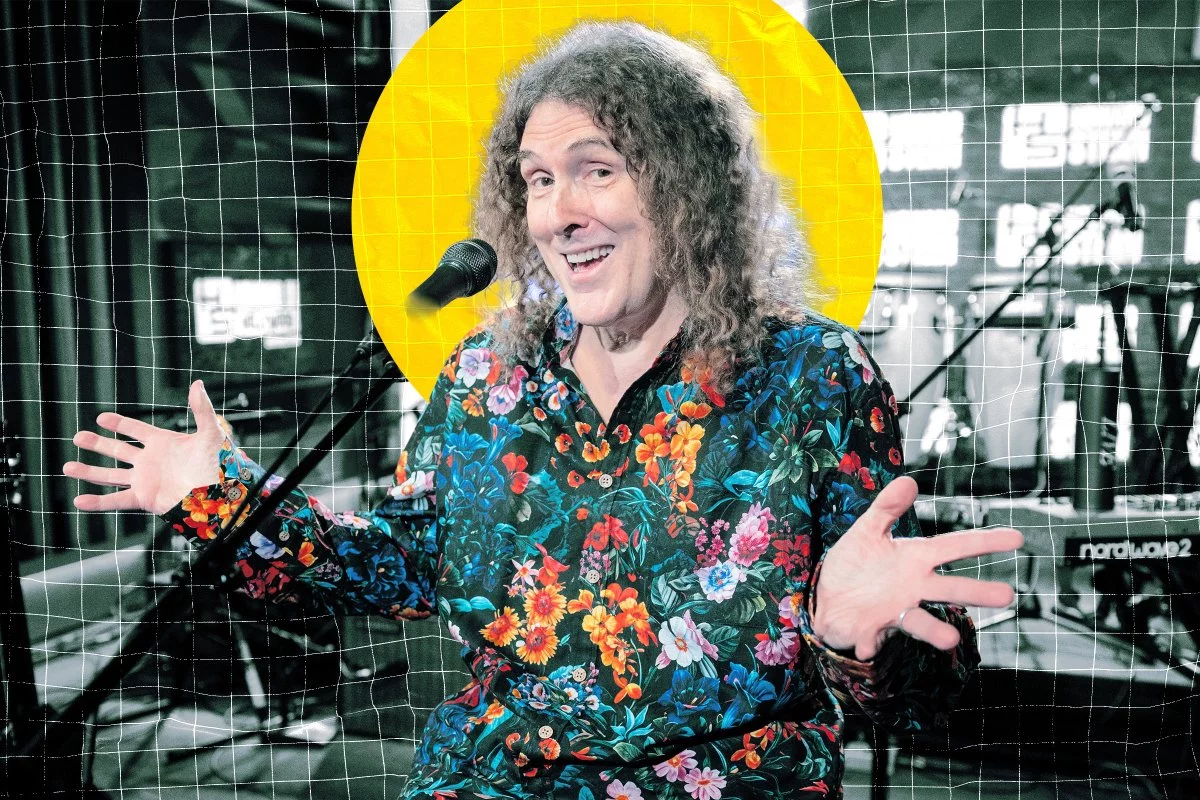
Alfred “Weird Al” Yankovic’s decision to decline a lucrative commercial for AI-powered business software—explicitly because it relied on artificial intelligence—lands as more than a celebrity anecdote. It reads like a cultural barometer. By saying he didn’t want to become “the poster boy for AI,” Yankovic framed the choice as a matter of personal integrity rather than price, and in doing so highlighted a widening gap between AI investment momentum and public comfort with AI’s societal footprint.
For brands, the episode underscores a subtle but important shift: celebrity endorsement is no longer a frictionless shortcut to legitimacy in emerging technology. In a climate shaped by algorithmic anxiety, data privacy concerns, and job displacement fears, a famous face can just as easily amplify skepticism as it can accelerate adoption. Yankovic’s refusal also contrasts with recent high-profile promotions of other contentious innovations—cryptocurrency campaigns and prediction-market endorsements among them—where reputational blowback has often outlasted the initial awareness spike.
The deeper takeaway is not that celebrity marketing is “over,” but that AI is becoming a category where authenticity and governance matter as much as visibility. When a trusted public figure opts out on principle, it forces a question that many enterprise buyers and regulators are already asking: *What exactly is being sold—software capability, or a story meant to outrun scrutiny?*
The AI trust deficit meets a peak-hype market cycle
AI’s business trajectory remains steep. Global spending is projected to exceed $500 billion in 2024, and enterprises continue reporting productivity gains from automation and generative models. Yet the market’s financial confidence coexists with a trust deficit that is unusually persistent for a technology wave this well-capitalized.
Several factors are converging:
- Opacity and “black-box” decision-making: Many AI systems still struggle to explain outcomes in ways that satisfy compliance teams, customers, and regulators.
- Bias and fairness concerns: High-profile failures in hiring, lending, and content moderation have made “responsible AI” a baseline expectation rather than a niche preference.
- Workforce displacement anxiety: Even when AI is positioned as augmentation, the lived experience in many sectors is cost pressure and headcount reduction.
- Intellectual property and data provenance disputes: Generative AI’s training data and output ownership remain contested, creating legal and ethical uncertainty.
This is also a familiar moment in the technology “hype cycle.” AI is entering a phase reminiscent of blockchain and crypto’s 2017–2018 crest: rapid adoption narratives, aggressive marketing claims, and an expanding gap between what the technology can reliably do and what the messaging implies. In that environment, celebrity endorsements can become accelerants—driving attention quickly—but they also raise the stakes. If the product underdelivers, or if the public perceives the campaign as glossing over risks, the backlash tends to be louder precisely because a celebrity was used to validate it.
Yankovic’s stance is notable because it reflects a growing instinct among public figures to treat AI not as a neutral tool, but as a values-laden category—one where participation itself signals endorsement of broader implications.
Brand equity, reputational risk, and the limits of star-powered persuasion
For AI vendors and enterprise software companies, the business question is not whether celebrity endorsements generate awareness—they often do—but whether that awareness converts into durable trust for complex, high-stakes products. In B2B technology, adoption is typically driven by procurement scrutiny, security reviews, and measurable ROI. A celebrity can open the door, but they rarely close the deal.
The reputational calculus is becoming sharper:
- Amplified downside risk: A single high-profile rejection or misaligned endorsement can trigger social-media amplification of distrust, turning a marketing asset into a reputational liability.
- Short-term lift vs. long-term credibility: Celebrity campaigns may spike impressions, but they can also create the perception of “selling hype,” especially if the AI claims are broad or vague.
- Stakeholder capitalism pressures: Investors, ESG advocates, enterprise clients, and regulators increasingly expect documented commitments—privacy safeguards, fairness metrics, auditability—not just polished messaging.
In this context, Yankovic’s refusal functions as a reputational mirror. It suggests that some celebrities now view AI endorsements as potentially identity-defining in a way that traditional software ads were not. That matters because modern brand equity is partly built through association: if the public is ambivalent about AI’s societal effects, then “AI spokesperson” can become a contested role rather than a universally positive one.
The implication for marketing leaders is clear: star power cannot substitute for governance. If anything, it heightens the demand for proof.
How AI companies can market for trust: transparency, expertise, and measurable outcomes
The strategic response is not to retreat from ambitious marketing, but to recalibrate what “persuasion” looks like in AI. The most resilient playbooks are shifting from spectacle to substance—away from “AI magic” and toward verifiable performance, controls, and accountability.
Practical moves technology leaders are increasingly adopting include:
- Elevating transparency and measurability
– Publish third-party audit results, privacy impact assessments, and fairness evaluations where feasible.
– Anchor claims in metrics: time saved, error rates reduced, compliance improvements, and documented ROI.
- Diversifying influence beyond celebrities
– Pair visibility with credibility: industry analysts, CIOs, security leaders, and operators who can speak to deployment realities.
– Use validated case studies and reference customers to demonstrate repeatable outcomes.
- Embedding ethics into endorsement decisions
– Create an internal endorsement framework that includes technology maturity thresholds and data-governance commitments.
– Involve legal, risk, and ethics teams early—especially as regulatory regimes like the EU AI Act and emerging U.S. guidance reshape acceptable claims and practices.
- Investing in demand-side AI literacy
– Workshops, pilots, and interactive demos can reduce fear and confusion more effectively than broad celebrity-driven messaging.
Yankovic’s “no” ultimately spotlights a market truth: AI adoption is becoming a trust transaction. Companies that treat marketing as a substitute for accountability may win attention, but they risk losing legitimacy. The brands that endure will be the ones that can explain—not just proclaim—what their AI does, how it’s governed, and why stakeholders should believe it deserves a place in critical business decisions.
 By
By
 By
By

 By
By
 By
By