

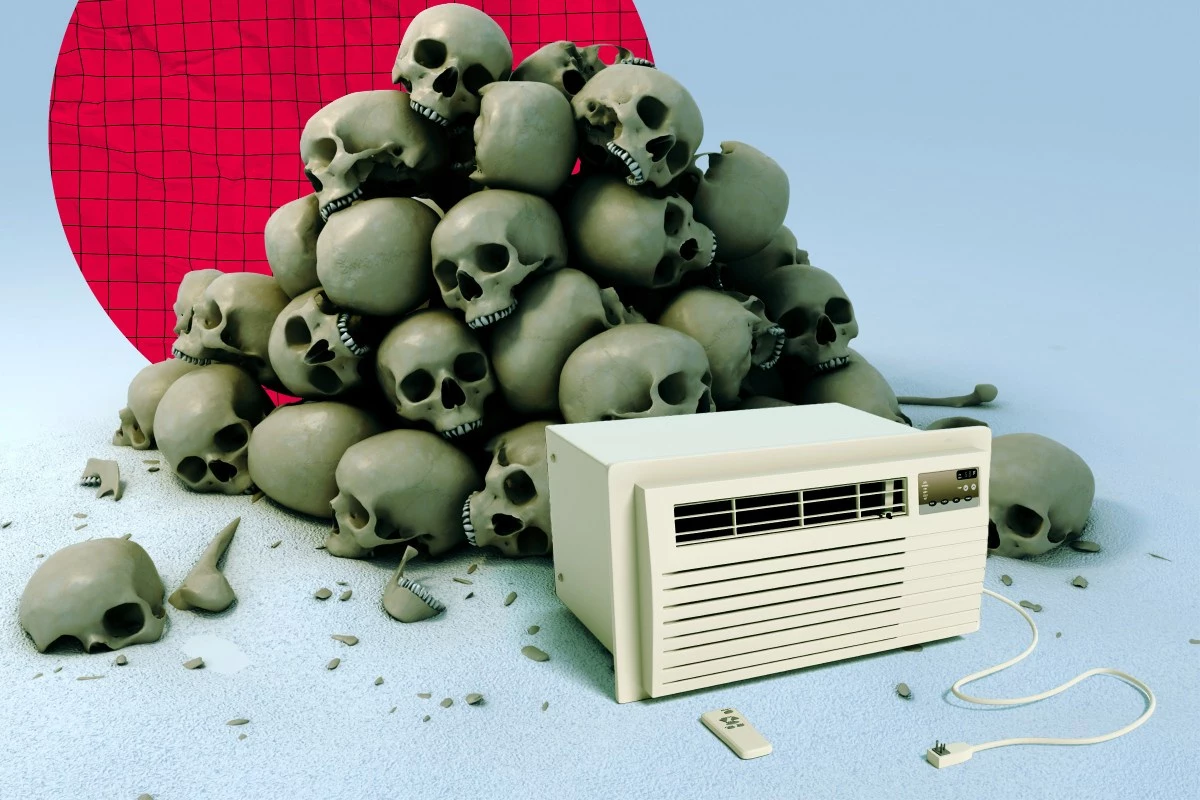

A Paris–U.S. air-conditioning clash that reveals a larger climate ledger
The recent rhetorical sparring between Paris municipal leaders and U.S. commentators over air conditioning is less a culture-war sideshow than a sharp illustration of the next phase of climate politics: adaptation is no longer optional, yet the tools of adaptation can deepen emissions, inequality, and geopolitical friction.
Paris Deputy Mayor Emmanuel Grégoire’s characterization of individual air-conditioning units as a “scourge” reflects a distinctly European urban logic—dense, historic building stock; constrained streetscapes; and a policy preference for collective infrastructure and passive design over millions of privately owned compressors. Deputy Mayor Audrey Pulvar’s rebuttal to U.S. mockery, meanwhile, points to an uncomfortable arithmetic: the United States’ cooling-heavy lifestyle carries a large carbon footprint, especially during summer peaks when grids lean on marginal fossil generation.
Yet the exchange also exposes a deeper truth: no major economy speaks from a position of historical innocence. France’s cumulative emissions—roughly 40 billion tonnes of CO₂ historically—underscore that today’s climate virtue signaling sits atop centuries of industrial advantage. The argument, then, is not whether cooling is legitimate. It is how to scale cooling without locking in a high-emissions future—and who pays for the transition.
Key tension points emerging from this episode include:
- Adaptation vs. mitigation: cooling saves lives during heatwaves, but conventional AC can amplify warming through electricity demand and refrigerant leakage.
- Individual choice vs. system design: decentralized units are easy to deploy quickly; systemic solutions are cleaner but slower and capital-intensive.
- Equity vs. optics: wealthy cities can debate aesthetics and norms; poorer regions face lethal heat without viable cooling access.
Cooling as critical infrastructure—and a growing emissions driver
Air conditioning is rapidly becoming what broadband became in the 2000s: a baseline enabler of productivity, health, and economic participation. But it is also a material climate variable. Individual AC units and conventional HVAC systems account for about 7% of global electricity use and roughly 3.2% of global emissions, and global AC growth is projected to contribute around 0.05°C of additional warming by 2050—a nontrivial increment in a world straining to hold the line on the Paris Agreement.
The business and technology implications are immediate:
- Peak-load economics are becoming the story. In the United States, summer AC demand can drive emissions on the order of 150 million tonnes of CO₂—comparable to the annual emissions of a mid-sized industrial nation—while pushing distribution networks toward overload. This is not merely a generation problem; it is a grid capacity and resilience problem, with rising risks of brownouts and politically sensitive reliability failures.
- Real estate is being repriced around heat. Investors are increasingly treating cooling adequacy, operational carbon, and retrofit feasibility as underwriting variables. Heatwaves are also feeding into insurance repricing, with higher claims tied to health impacts, equipment failure, and building stress—pressuring landlords and asset managers to modernize HVAC and building envelopes.
- The “cooling gap” is an economic drag. Low-income countries face severe heat exposure without the infrastructure or financing to deploy cooling at scale. The result is a compounding penalty: reduced labor productivity, worse health outcomes, and constrained growth—an inequality loop that climate diplomacy has not fully resolved.
The technology pivot: from noisy boxes to intelligent, low-carbon cooling systems
The most consequential shift underway is not whether air conditioning exists, but what kind—and how it interacts with buildings and grids.
Window and split systems proliferate because they are cheap and fast to install, but they are often inefficient at scale. Moving toward district cooling or integrated building solutions can improve the seasonal coefficient of performance (COP) by 20–40%, especially when paired with thermal storage and optimized distribution. For cities like Paris, this is aligned with urban governance: fewer façade-mounted units, more controllable infrastructure, and better planning integration.
Cooling’s climate impact is not only electricity; it is also refrigerants. The industry’s transition toward low-global-warming-potential (GWP) refrigerants—including HFOs and natural refrigerants such as CO₂ and ammonia—is accelerating under regulatory pressure (notably the EU F-gas phase-down and U.S. EPA SNAP rules). This creates:
- Compliance risk for lagging manufacturers and building owners
- Innovation upside for firms that can scale safe, efficient low-GWP systems
- A growing services market for refrigerant recovery, leak detection, and end-of-life management
Embedding IoT sensors, predictive analytics, and grid-interactive controls can shave peak loads, stabilize grids, and defer infrastructure upgrades—particularly important as electrification rises and renewables add intermittency. For utilities and regulators, HVAC is increasingly viewed as dispatchable demand, not passive consumption.
A notable cross-sector spillover is emerging: data centers and pharmaceutical cold chains have already industrialized high-efficiency cooling practices. Techniques such as liquid cooling, advanced airflow management, and heat recovery are now migrating into commercial buildings—opening pathways to couple cooling with district heating and broader urban energy optimization.
Strategy signals for cities, investors, and global climate diplomacy
Paris’s anti-AC messaging is best understood as a push for passive cooling and urban heat mitigation—green roofs, reflective materials, improved building envelopes, and urban greening. Done well, these measures can reduce average urban temperatures by up to 3°C, lowering cooling demand while improving livability. For finance, this is not just environmental: it can unlock municipal climate bonds and new retrofit pipelines.
For corporate leaders and institutional investors, the strategic playbook is sharpening:
- Stress-test real estate portfolios against heatwave scenarios and grid constraints
- Treat cooling-related emissions as part of operational carbon and, where relevant, Scope 3 exposure
- Pursue renewable PPAs, onsite storage, and building-management upgrades as a bundled resilience strategy
- Evaluate district-cooling concessions and “cooling-as-a-service” models as infrastructure-like investments
Diplomatically, the Paris–U.S. exchange hints at a more productive framing: two-track climate responsibility. Developed economies can tighten mitigation while also funding sustainable adaptation—especially cooling access—in the Global South. Without that bargain, the world risks a destabilizing outcome: wealthy regions decarbonize slowly while poorer regions endure deadly heat without relief, or adopt the cheapest high-emissions cooling available.
Air conditioning is no longer a lifestyle accessory; it is a global systems challenge spanning energy, public health, urban design, and industrial policy. The winners in the coming “heat era” will be those who treat cooling as critical infrastructure—then redesign it to be cleaner, smarter, and more equitable at scale.

 By
By
 By
By
 By
By


 By
By
 By
By








