


A July 4th pricing play that signals more than a holiday sale
Weber’s latest round of pre–July 4th promotions reads, on the surface, like a familiar seasonal push: sharpen prices when backyard cooking demand peaks, move volume, and ride the holiday wave. Yet the structure of the discounts—and the specific products chosen—suggest a more deliberate strategy aimed at repositioning Weber’s portfolio for a post-pandemic, inflation-aware consumer while reinforcing its long-term shift toward an ecosystem business model.
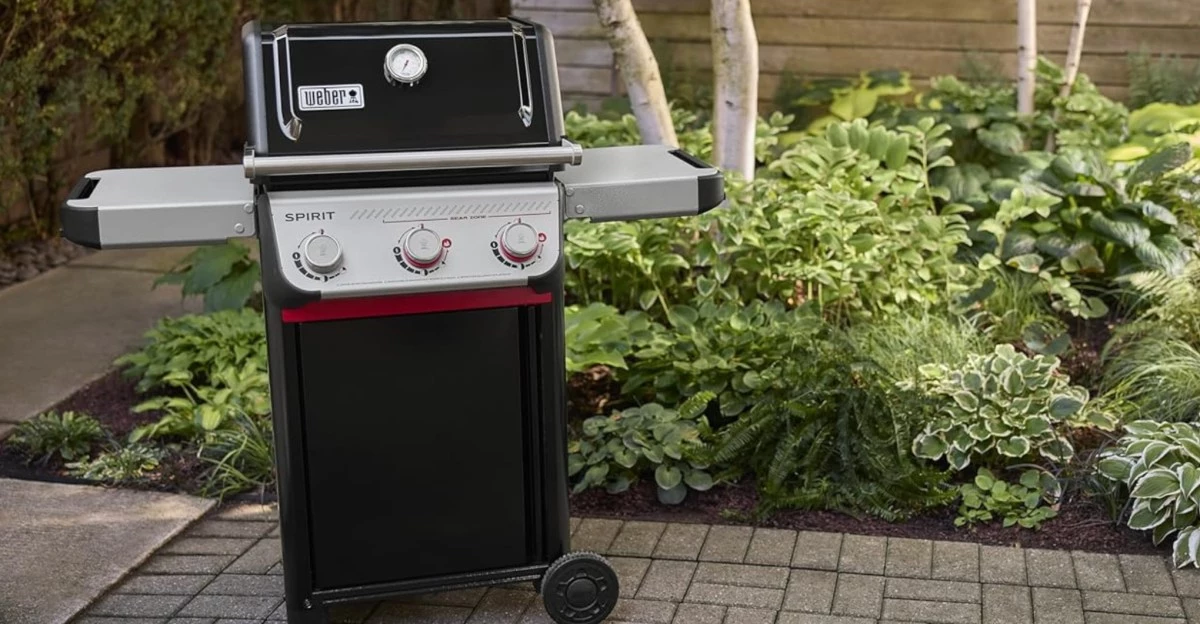
The headline offer is the Spirit E-325 three-burner gas grill, now discounted for what CEO Roger Dahle describes as its first major price reduction. The pricing is carefully tiered:
- Propane Spirit E-325: $499 (down from $549)
- Natural gas Spirit E-325: $549 (down from $599)
This is not a clearance-style markdown; it’s a calibrated incentive designed to pull hesitant buyers off the fence without collapsing perceived value. In a market where consumers are increasingly deliberate about discretionary purchases, Weber appears to be using the Spirit line as a high-confidence entry point—a gateway product that can later support accessory attachment, consumables, and upgrades.
The rest of the promotional set reinforces that intent. Weber is not discounting one category; it is discounting across use cases—from griddling to pellet smoking—so it can capture whichever “outdoor cooking identity” the customer is leaning toward this summer.
—
Product segmentation as strategy: gas, griddle, pellet—and the economics of choice
Weber’s promotional lineup spans multiple outdoor cooking modalities, each with distinct consumer motivations around convenience, flavor, and cost of ownership. The company’s pricing architecture appears designed to cover the full demand curve:
- Slate 30-inch griddle: $649, positioned as $50 below Home Depot’s price
- 17-inch portable tabletop griddle: $249, also $50 off, with design cues aimed at mobility and off-grid setups
- Searwood pellet grills, including the Searwood XL 600 at $1,199 (down $100), emphasizing capacity and multi-layer cooking
From a business perspective, this is segmentation with intent. Gas grills like the Spirit E-325 appeal to buyers prioritizing speed, familiarity, and predictable operating costs. Griddles capture a different pattern of use—breakfast, high-volume cooking, and social “flat-top” versatility. Pellet grills, meanwhile, target consumers willing to pay for smoke flavor, precision temperature control, and a more “craft” cooking experience.
What’s notable is how Weber is using discounts to reduce friction at each tier without erasing the ladder between tiers. The Spirit discount invites entry. The griddle pricing challenges competitive shelf pricing. The pellet discount sweetens premium consideration while keeping the product firmly in the high-end bracket—protecting brand prestige while still stimulating demand.
—
Engineering and “smart outdoor cooking” as differentiation, not just features
Weber’s product messaging increasingly reflects a technology and materials narrative—an important shift in a category that historically leaned on brand heritage and cooking culture. Several elements stand out as signals of where outdoor cooking is headed:
- Tiered fuel systems (propane, natural gas, wood pellets) that map to consumer trade-offs in convenience vs. flavor vs. infrastructure
- Digital temperature control and pellet-feed automation in the Searwood line, aligning Weber with expectations set by IoT-enabled appliances
- Rust-resistant griddle surfaces and durability-forward materials that speak to lifecycle value, not just performance
- Ergonomic and mobility design, such as adjustable feet on the tabletop griddle, acknowledging real-world usage beyond the patio
For SEO and market clarity, the strategic point is this: Weber is competing not only with other grill brands, but with a broader set of consumer expectations shaped by smart home devices, app-driven experiences, and “precision” as a baseline. In that context, pellet grills with digital controls are no longer niche—they are part of an emerging mainstream where remote monitoring and repeatable results are increasingly “table stakes.”
Just as important is Weber’s emphasis on an accessory ecosystem—covers, plates, add-ons, and consumables like pellets. Discounting the base unit can be rational if the company expects stronger lifetime value through:
- higher accessory attachment rates
- repeat consumable purchases
- extended warranties and service plans
- digital content engagement (recipes, guided cooking, performance tips)
This is the familiar “razor-and-blades” logic adapted for premium consumer hardware—less about locking customers in, more about making Weber the default platform for outdoor cooking.
—
Channel dynamics, inflation pressure, and the delicate art of discounting without dilution
Weber’s decision to price certain items below third-party retail benchmarks—such as the Slate griddle under Home Depot—highlights a key tension in modern consumer goods: direct-to-consumer (DTC) growth versus retail partner stability. Undercutting a major retailer can drive DTC volume and improve customer data capture, but it also risks channel conflict if not managed through coordinated promotions, inventory allocation, and co-marketing support.
At the macro level, the timing is equally telling. The U.S. consumer is navigating persistent price sensitivity, and discretionary categories must justify themselves against alternatives. Outdoor cooking remains attractive because it functions as a mid-priced experiential purchase—a way to “upgrade” summer gatherings at a lower cost-per-occasion than frequent dining out. Weber’s promotions appear designed to meet that psychology: provide a deal that feels meaningful, while keeping the brand positioned as a quality choice rather than a bargain label.
For executives watching the category, Weber’s playbook underscores several forward-looking realities:
- Promotions are becoming precision instruments, not blunt tools—used to test price elasticity by segment and channel
- Durability and materials innovation are increasingly part of the value proposition, especially as consumers scrutinize replacement cycles
- Recurring revenue opportunities (accessories, consumables, services, digital engagement) are central to making hardware discounting economically attractive
- Post-holiday demand volatility will likely intensify, making forecasting and inventory discipline as important as product design
Weber’s July 4th strategy ultimately looks less like a simple holiday markdown and more like a controlled experiment in modern brand economics: use targeted discounts to expand the installed base, then compete on technology, durability, and ecosystem depth—where margins and loyalty are built long after the first cookout.


 By
By

 By
By
 By
By

 By
By
 By
By







