
A revenue milestone that signals robotics’ shift from promise to procurement
FieldAI’s rapid ascent—surpassing $100 million in revenue after being founded in 2023—lands as more than a startup success story. It is a market signal that industrial robotics is moving decisively from pilot programs and staged demos into budgeted, contract-backed deployment. Customer agreements spanning Europe, Asia, and North America suggest demand is not confined to one regulatory regime or labor market; it reflects a broader industrial appetite for autonomy that can operate where conditions are messy, variable, and expensive to staff.
The company’s financial trajectory also reframes expectations for the sector. Robotics has historically been synonymous with long timelines, heavy burn, and brittle integrations. FieldAI’s performance implies a different pattern: software-led autonomy that can be sold repeatedly across platforms, with deployment economics that resemble enterprise software more than custom automation projects.
Several forces appear to be converging behind this momentum:
- Labor constraints and safety pressures in mining, construction, and industrial operations
- A renewed focus on asset utilization and uptime, especially in capital-intensive sites
- A willingness to fund autonomy when it delivers measurable outcomes: mapping, inspection, materials movement, and digital record-keeping
- The maturation of compute and sensing stacks that make real-time autonomy feasible outside controlled facilities
Against that backdrop, FieldAI’s $405 million funding round in 2023—reportedly valuing the company at $2 billion—reads less like speculative exuberance and more like a bet that autonomy software is becoming a durable layer of industrial infrastructure.
The “universal robot brain” thesis—and why risk-aware autonomy matters
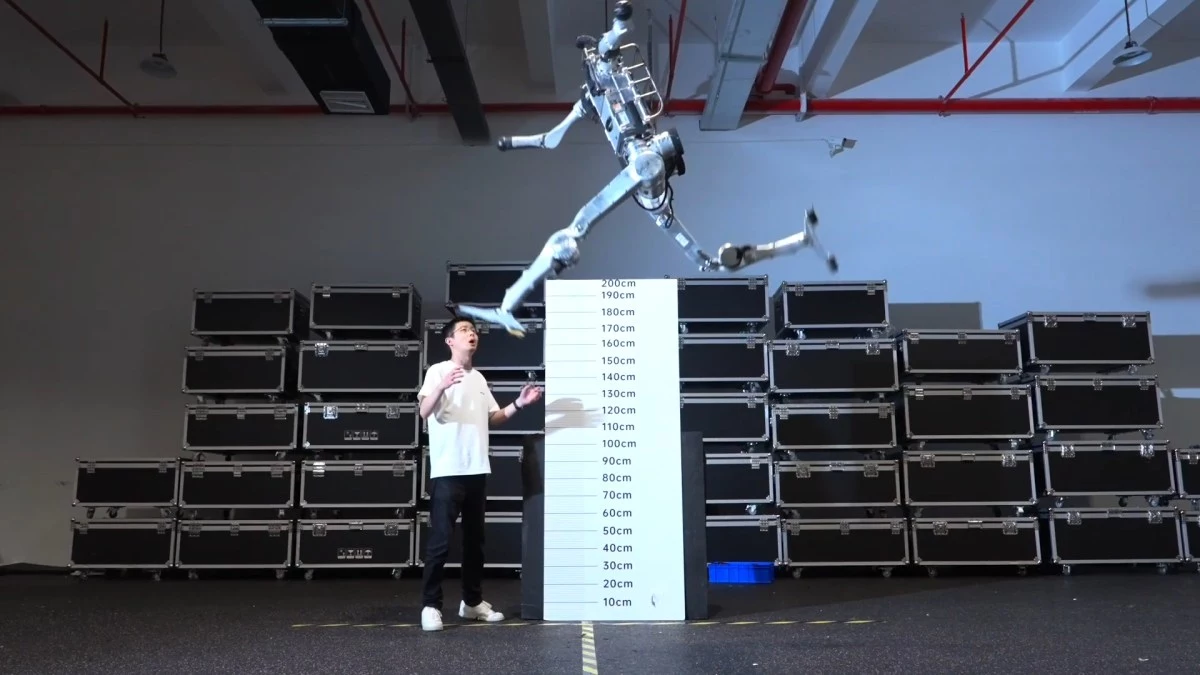
At the center of FieldAI’s positioning is a bold product claim: a “universal general-purpose brain” for robots—humanoids, drones, and industrial rovers—capable of autonomous navigation and task execution in unstructured environments. The strategic implication is clear: if autonomy can be abstracted into a reusable software layer, the market expands from single-purpose machines to a cross-platform ecosystem where hardware becomes interchangeable and intelligence becomes the differentiator.
Technically, FieldAI’s Field Foundation Models emphasize physics-based probabilistic reasoning to produce what it calls “risk-aware” AI. This framing is notable because it targets one of the hardest problems in real-world robotics: not merely perceiving the environment, but making decisions under uncertainty—when sensors are occluded by dust, lighting changes, terrain shifts, or humans enter the workspace unexpectedly.
Key elements of this approach, as described, point to a pragmatic engineering philosophy:
- Reduced dependence on exhaustive labeled datasets, potentially lowering the cost and time to adapt to new tasks
- Probabilistic safety margins that allow robots to anticipate hazards rather than react after the fact
- A hardware-agnostic software layer that can normalize differences across robotic platforms, promising scale economies
If FieldAI can consistently deliver “risk-aware” behavior, it addresses a core adoption barrier: industrial buyers do not just want autonomy; they want predictable autonomy—systems that fail gracefully, document decisions, and operate within defined safety envelopes. In heavy industry, the cost of a mistake is not an inconvenience; it can be equipment damage, downtime, or injury. Risk-aware autonomy is therefore not a feature—it is a prerequisite for broader deployment.
Live deployments as a compounding advantage: the data flywheel in the field
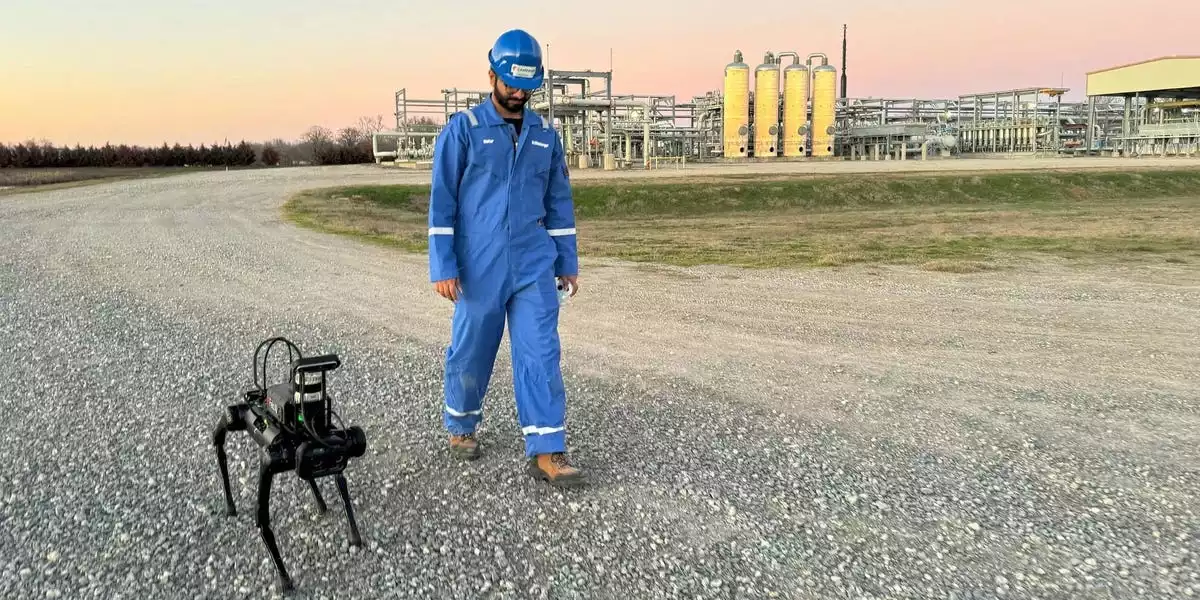
FieldAI’s reported deployments in mining, construction, and factories—including continuous site mapping, digital record-keeping, and basic materials handling—matter because they suggest the company is building its models in the conditions that most often break robotics systems. This is where the company’s “live loop” approach becomes strategically potent: deployed fleets generate continuous streams of unstructured sensor and operational data, feeding iterative improvement without pausing operations.
That dynamic can create a compounding advantage:
- More deployments generate more edge-case data
- More data improves robustness and reduces intervention
- Improved robustness lowers integration risk for the next customer
- Lower risk accelerates procurement cycles and expands use cases
This is also where FieldAI’s talent profile becomes relevant. Hiring from DeepMind, Waymo, and Tesla signals an emphasis on applied autonomy at scale—teams accustomed to shipping systems that must work outside the lab, under real constraints, with measurable performance targets.
For industrial customers, the value proposition extends beyond autonomy itself into operational visibility. Continuous mapping and digital records can become the foundation for:
- Compliance and audit trails in regulated environments
- Digital twins and site analytics
- Predictive maintenance and asset tracking
- Faster incident investigation and safety reviews
In other words, autonomy is not only a labor substitute; it is a data generator that can reshape how industrial work is measured and managed.
Competitive positioning, investor leverage, and the standards battle ahead
FieldAI’s backers—Bezos Expeditions, Nvidia, and Khosla Ventures—provide more than capital. They represent distribution gravity and ecosystem access: Nvidia’s compute stack and edge inference roadmap, deep-tech commercialization experience, and logistics and industrial adjacency. For a company selling a horizontal autonomy layer, these relationships can accelerate partnerships with OEMs and operators that already control fleets, sites, and procurement channels.
The competitive challenge FieldAI poses is twofold:
- It pressures specialized navigation startups by offering a broader “brain” rather than a single module
- It challenges incumbent industrial automation providers by decoupling intelligence from proprietary hardware and bespoke integration
If the company succeeds in embedding its autonomy layer into existing equipment manufacturers, it could shift the market toward a licensing model where autonomy becomes a recurring software line item—an outcome that would reset valuation benchmarks across the robotics sector.
Yet the next phase may be defined less by model performance and more by governance: safety certification, interoperability, and liability frameworks for human-machine collaboration. The firms that help shape standards for “risk-aware” autonomy—how systems quantify uncertainty, log decisions, and enforce safety constraints—may build moats that are difficult to dislodge.
FieldAI’s trajectory suggests a robotics industry entering a new era: autonomy that is purchased for production, improved in production, and defended through data, partnerships, and standards. The companies that win will not merely build smarter robots—they will define the operating system for work in the physical world.

 By
By
 By
By
 By
By

 By
By
 By
By

 By
By