
A 24/7 humanoid-run capsule store tests Hong Kong’s appetite for automated retail
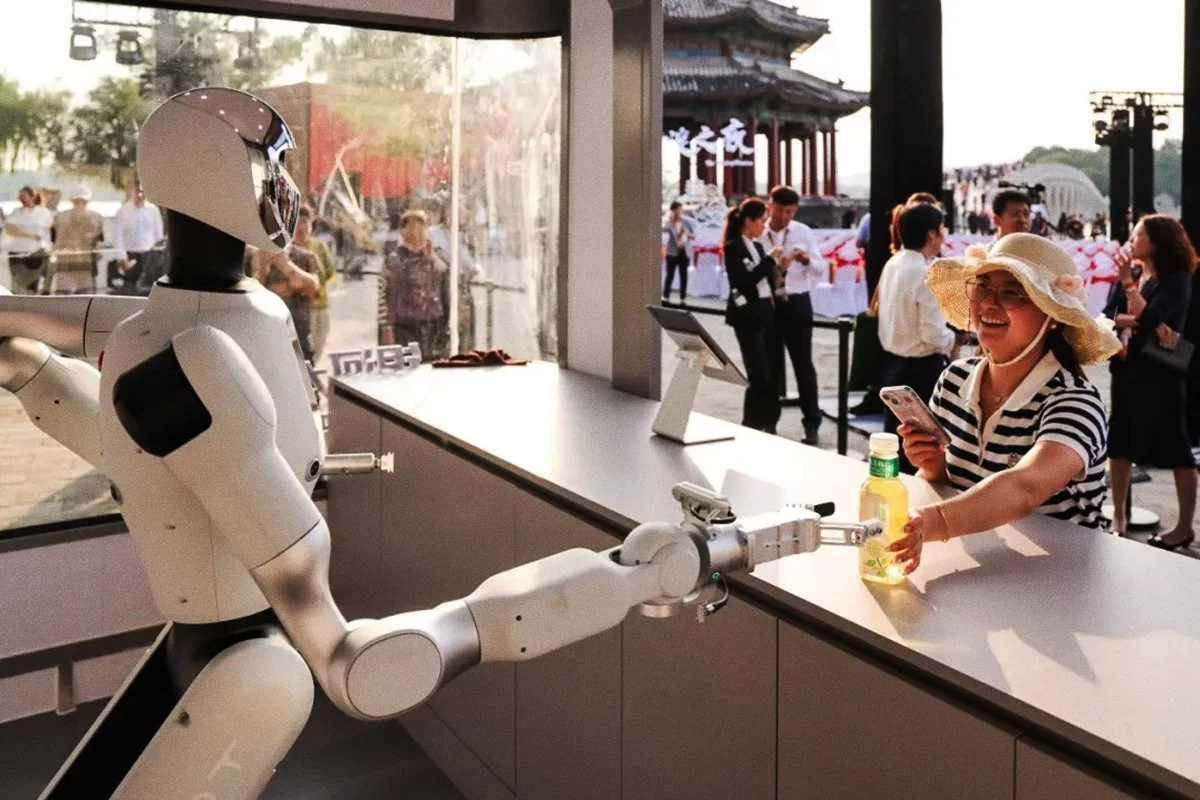
On Hong Kong’s Hung Hom waterfront, a pop-up convenience store is being positioned as both a retail experiment and a smart-city signal: it will operate around the clock under the sole stewardship of “Xiao Gai,” a five-foot-six humanoid robot built by Beijing-based Galbot and financed by the Hong Kong Investment Corporation. Housed inside a portable capsule, Xiao Gai combines shelf-stocking reach—enabled by an approximately six-foot arm span—with multi-language natural-language processing (NLP) and autonomous checkout.
The concept is straightforward: compress the essential functions of a convenience store into a modular footprint, then staff it with a humanoid robot capable of interacting with customers and maintaining the shelf. The strategic ambition is less modest. Galbot is projecting a 40% uplift in foot traffic and has floated an expansion vision of 100 additional robot-managed capsules across ten cities.
For Hong Kong, the pilot reads as a public demonstration of “always-on” commerce aligned with smart infrastructure narratives. For the broader retail and robotics sectors, it is a live test of whether humanoid form factors can move beyond spectacle and become operationally credible in semi-unstructured environments—where lighting changes, product placement shifts, and customer behavior is inherently unpredictable.
—
Inside the capsule: edge AI, dexterous manipulation, and real-time human interaction
What distinguishes this deployment from earlier waves of retail automation is not the idea of self-service—kiosks and self-checkout are mature—but the attempt to unify manipulation, perception, and conversation in a compact, customer-facing unit.
Key technological implications include:
- Robotic manipulation in semi-unstructured retail spaces
Xiao Gai’s reach and dexterity suggest incremental progress beyond factory-style “pick-and-place” robotics. Retail shelves introduce variability: items are misaligned, packaging reflects light, customers interrupt workflows, and restocking requires safe motion planning near humans.
- Multi-language NLP as a retail interface
Rapid language switching moves the experience closer to a conversational agent than a scripted kiosk. In a city like Hong Kong—where Cantonese, Mandarin, and English frequently mix—language agility is not a novelty feature; it is a usability requirement.
- Edge-heavy systems integration to reduce latency and downtime
Operating inside a capsule implies tight constraints on connectivity and response time. Real-time vision, motion planning, and customer interaction benefit from on-device inference rather than cloud dependence, reducing latency and limiting exposure to network interruptions. This architecture mirrors a broader industry shift toward localized AI for mission-critical tasks.
- Reliability engineering as the real product
The history of service robotics is littered with cautionary anecdotes: restaurant robots malfunctioning in public spaces, or autonomous agents making costly procurement decisions. These episodes underscore a central truth: the commercial value of robotics is not the demo—it is fault detection, graceful degradation, and safe recovery. For Galbot, sustained uptime will likely depend on:
– Fail-safe protocols and conservative motion constraints near customers
– Over-the-air firmware updates with rigorous rollback capability
– Remote monitoring and escalation paths when edge systems encounter ambiguity
In other words, the capsule store’s success will hinge less on whether Xiao Gai can impress passersby, and more on whether it can perform mundane tasks repeatedly, safely, and predictably.
—
The business case: labor economics, data value, and the hidden costs of autonomy
The economics of a robot-run convenience capsule sit at the intersection of rising service-sector labor costs, consumer curiosity, and the operational realities of maintaining sophisticated machines in public.
Several forces shape the commercial outlook:
- CapEx vs. OpEx trade-offs in a tight labor market
Robotics demand upfront investment in hardware, integration, and software. The counterweight is a retail environment facing wage inflation and staffing constraints—particularly for late-night shifts. A projected 40% increase in foot traffic could accelerate payback, but margins will be shaped by:
– Preventive maintenance and parts replacement
– Calibration and periodic revalidation of perception systems
– On-call human support for exceptions and safety incidents
- Foot traffic is only one metric; data may be the compounding asset
A robot that greets customers, observes purchasing patterns, and manages inventory can generate granular behavioral signals. Over time, this can enable:
– Dynamic inventory optimization (reducing stockouts and waste)
– Personalized promotions and localized assortment planning
– Potential subscription-style replenishment or loyalty integrations
In many AI-enabled retail models, the durable advantage is not the transaction itself, but the feedback loop between observed demand and automated operations.
- Scalability depends on regulation and real-estate realities
The capsule model is designed for portability, but cities are not plug-and-play. Scaling to 100 units across ten cities will require repeatable answers to practical constraints:
– Kiosk permitting, zoning, and public-space rules
– Power, connectivity, and physical security requirements
– Site-by-site commercial agreements with landlords and municipalities
This is where many automation pilots stall: not because the robot fails, but because the deployment model cannot be replicated economically across heterogeneous urban environments.
—
Competitive positioning: humanoid branding, RaaS pathways, and what “success” will really mean
Globally, automated retail is converging from multiple directions—Amazon Go-style frictionless checkout, aisle-monitoring robots, and autonomous café kiosks all aim to reduce labor intensity while increasing convenience. Galbot’s differentiator is the humanoid form factor, which may function as much as a marketing and engagement device as a cost-optimization tool.
Strategically, the most plausible route to scale is an ecosystem approach:
- Robotics-as-a-Service (RaaS) models that convert large upfront costs into subscription-like fees
- Partnerships with payment providers, retail operators, and property developers
- A modular software stack where analytics, inventory logic, and conversational capabilities can be updated without redesigning the entire machine
The macro backdrop is favorable: aging demographics across East Asia, post-pandemic labor reallocation, and renewed government emphasis on AI and automation all create tailwinds. Yet the bar for public-facing autonomy is unforgiving. A single widely shared failure can erase months of goodwill, especially in dense urban settings where safety perceptions travel faster than performance metrics.
If Xiao Gai’s capsule store proves anything, it will not merely be that robots can sell snacks at midnight. It will be whether humanoid retail automation can earn trust through consistency—turning a waterfront curiosity into a repeatable operating model that cities, regulators, and consumers are willing to live with every day.

 By
By
 By
By
 By
By
 By
By
 By
By