
A global perception shift: who the public believes leads in artificial intelligence
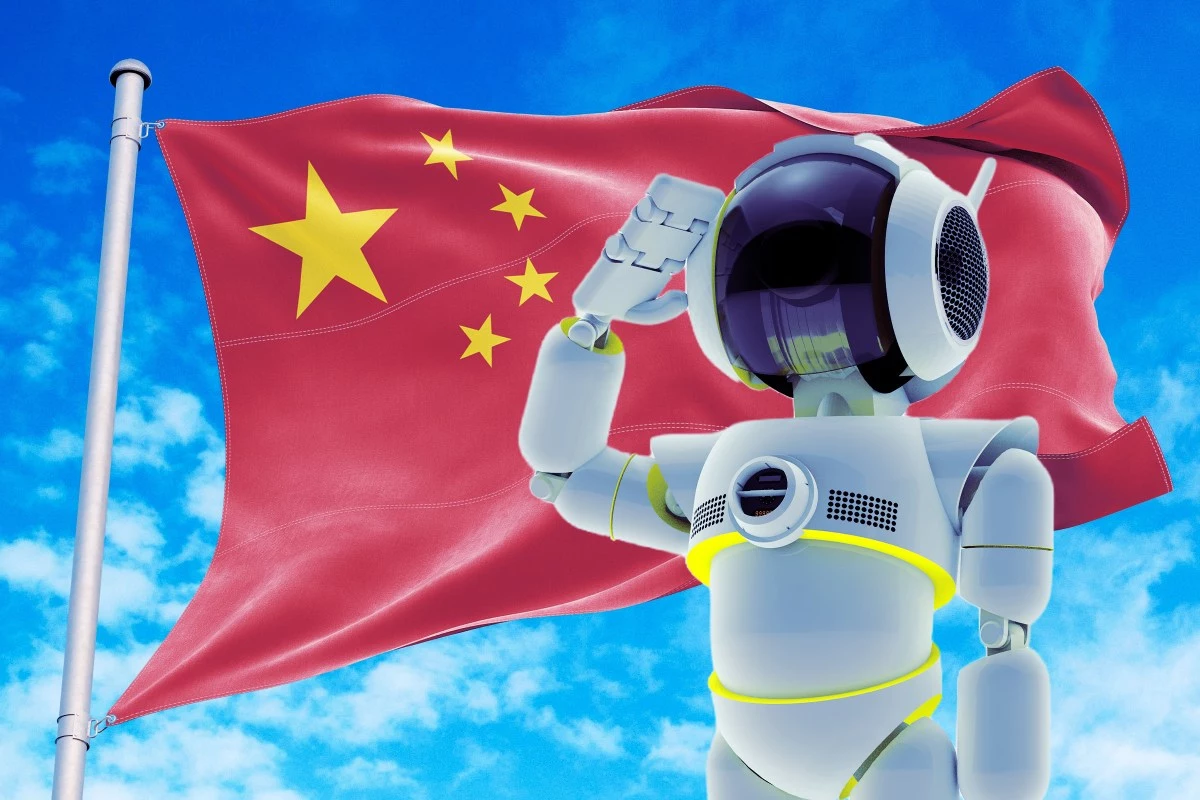
A new cross-national survey reported by *Politico*—conducted by Public First across 15 countries—captures a striking reality about the current AI race: public belief is drifting toward China as the perceived leader in artificial intelligence, even as many of the most visible generative AI breakthroughs still carry American corporate branding.
The topline is less about a definitive technical scoreboard and more about narrative power. Respondents across much of Europe, North America, and Latin America reportedly lean toward the view that China has overtaken the United States in AI capabilities. Meanwhile, Japan, India, Vietnam, and the U.S. itself remain comparatively confident in American leadership—though even inside the United States, conviction is not overwhelming: 51% see the U.S. as a frontrunner, 24% point to China, and 25% are undecided.
That distribution matters because AI leadership is increasingly judged not only by model benchmarks, patents, or compute scale, but by a broader mix of:
- Deployment visibility (where AI shows up in daily life)
- State capacity (how quickly rules and infrastructure follow innovation)
- Social legitimacy (whether citizens believe AI is improving their lives)
- Geopolitical credibility (whether allies see a stable, trustworthy partner)
In other words, the survey reads like a referendum on which system looks more capable of turning AI into national advantage—and which looks more vulnerable to internal friction.
Two competing AI playbooks: corporate acceleration versus coordinated deployment
The divergence highlighted by the survey aligns with contrasting national strategies.
In the United States, the dominant model remains resource-intensive, corporate-led innovation: hyperscale cloud platforms, vast GPU clusters, elite research talent, and a “move fast” culture that rewards rapid iteration. This approach has produced headline-grabbing advances in generative AI, developer tooling, and frontier model performance. Yet it also tends to externalize social costs—from misinformation and deepfakes to job displacement and opaque data practices—creating a trust deficit that can quickly become political fuel.
China’s approach, by contrast, is often characterized by coordinated state-enterprise execution with “people-centric” regulatory guardrails. Beijing’s model emphasizes scale, standardization, and deployment across high-impact sectors—often with a civics-oriented framing that prioritizes social stability and administrative capacity. The trade-off is familiar: less creative freedom and openness, but potentially faster nationwide rollout and clearer compliance expectations for domestic actors.
What the public may be reacting to is not simply “who has the best model,” but who appears to have the most coherent system for turning AI into tangible outcomes. In perception terms, China’s centralized deployment can look decisive, while America’s market-driven dynamism can look chaotic—especially when the benefits feel concentrated and the harms widely distributed.
Economic and geopolitical stakes: supply chains, standards, and the “social license” to innovate
The survey’s deeper signal is that AI leadership is now inseparable from political economy.
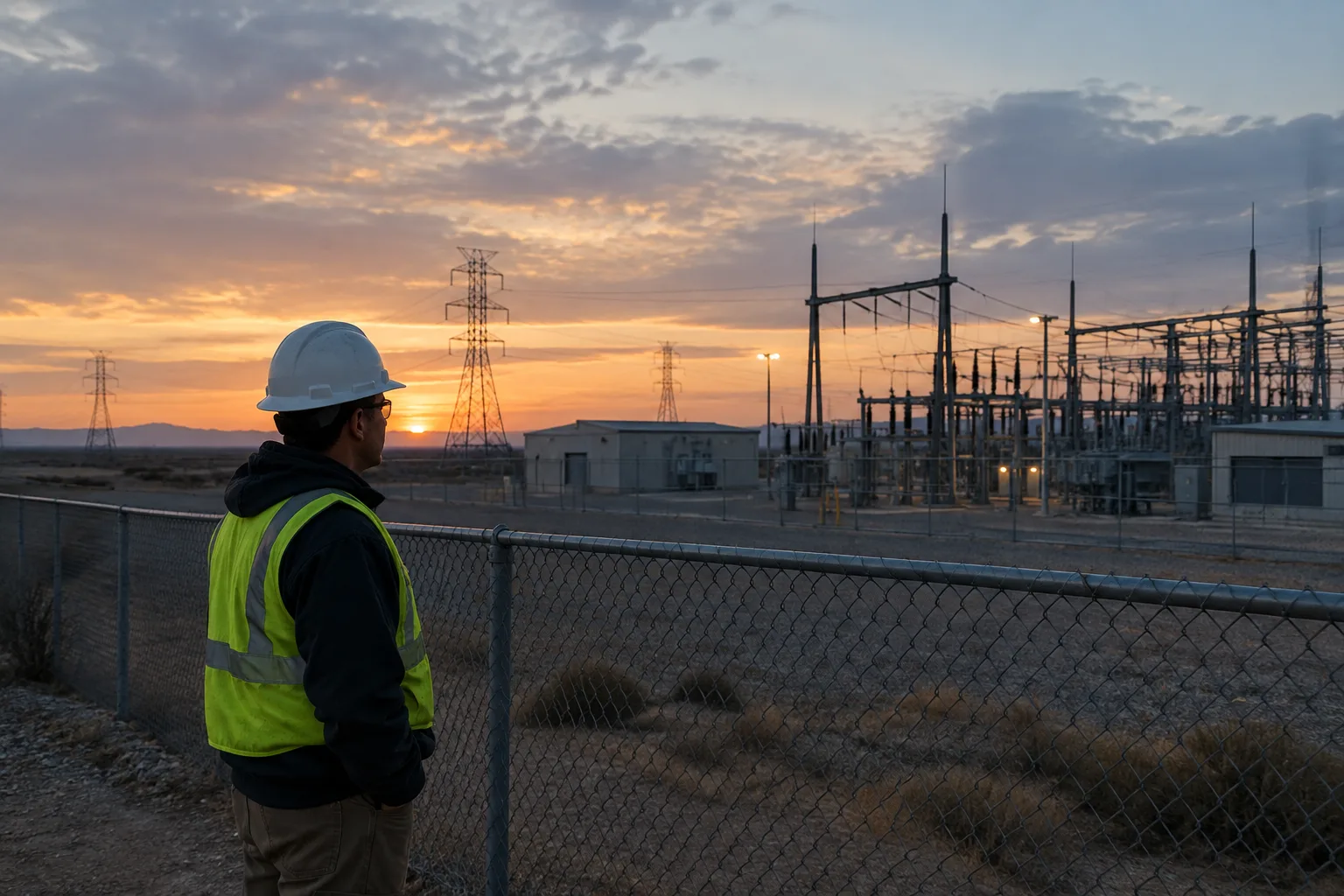
On the economic front, the U.S. retains formidable strengths in semiconductor design, cloud services, and venture-backed commercialization, but faces compounding constraints: export controls, talent bottlenecks, energy and data-center permitting friction, and rising scrutiny of platform power. China, meanwhile, is pushing vertical integration—from domestic chip fabrication to cloud and AI infrastructure—to reduce dependency. That strategy can be capital-intensive and inefficient in the near term, but it is designed to harden resilience under geopolitical pressure.
Equally consequential is the question of labor and legitimacy. Critics of the American model argue that an “extractive” approach—marked by contract-gig norms, workplace churn, and uneven distribution of gains—risks eroding the social license required to sustain long-run innovation. When public trust weakens, the policy response often follows: stricter regulation, antitrust escalation, data localization, and protectionist measures that fragment markets and raise the cost of scaling AI.
Geopolitically, perception becomes leverage. If allies and swing states believe China is the AI frontrunner, Washington’s ability to shape:
- AI safety standards
- export-control coalitions
- cross-border data governance
- security norms for frontier models
becomes harder to sustain. Meanwhile, regulatory divergence is accelerating. The U.S. continues with a sector-by-sector patchwork, China iterates quickly on nationwide guidelines, and Europe’s AI Act is forming a third pole with risk-tiered compliance obligations. For global firms, this is not an academic debate—it is a direct driver of product segmentation, compliance overhead, and slower interoperability.
What business and policy leaders should watch next in the AI leadership contest
For executives, investors, and policymakers, the most actionable takeaway is that the AI race is shifting from a sprint on capability to a marathon on governance, infrastructure, and trust.
Several forward-looking implications stand out:
- Rebuilding trust as a competitive asset: Companies that treat AI ethics, transparency, and workforce impact as board-level priorities—rather than PR—will be better positioned as auditing, disclosure, and model accountability become normalized.
- Regulatory clarity as an innovation accelerant: A targeted U.S. federal framework—potentially via an AI safety commission or harmonized baseline rules—could reduce uncertainty without freezing experimentation, while improving credibility with allies.
- Infrastructure as strategy: Compute, energy, chips, and secure data corridors are now national competitiveness inputs. Scaling domestic capacity—fabs, supercomputing centers, and grid upgrades—will shape who can train and deploy at frontier scale.
- Alliance architecture will matter: As a multipolar AI order emerges—U.S., China, EU—countries and companies will increasingly choose ecosystems. Standard-setting coalitions, shared evaluation methods, and interoperable compliance tooling may become as important as model weights.
Ultimately, the survey underscores a modern truth of technological power: leadership is not only what you build, but what others believe you can sustain—economically, politically, and ethically—when AI moves from novelty to national infrastructure.

 By
By
 By
By

 By
By

 By
By
 By
By
 By
By