
A single career arc that exposes the new fault lines in global tech mobility
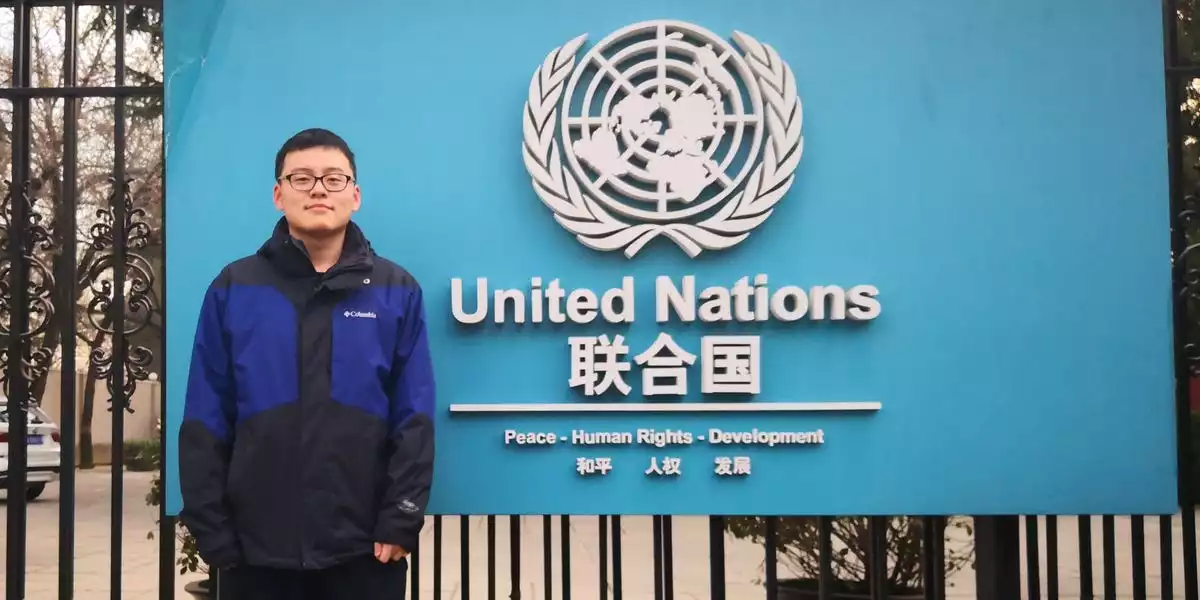
Charlie Fang’s journey—moving between Nanjing, Portland, Minnesota, Harvard, California, and ultimately Beijing—reads less like an individual detour and more like a case study in how global talent mobility is being reshaped by policy bottlenecks, cultural expectations, and geopolitical signaling. For much of the past two decades, the implicit promise to international technologists was straightforward: study in the United States, work in Silicon Valley, and participate in the world’s most valuable innovation ecosystem. Fang’s repeated failure in the H-1B visa lottery punctures that narrative with a structural reality: for many highly trained workers, U.S. employment is not a meritocratic pipeline but a probabilistic gate.
That uncertainty is not merely personal. It reverberates through corporate workforce planning, product roadmaps, and the location strategy of research and development. Fang’s eventual repatriation to Beijing—paired with “reverse culture shock” and heightened scrutiny around “loyalty”—captures a broader shift: cross-border careers are increasingly interpreted through the lens of national competition, not just professional advancement.
At the same time, his experience complicates simplistic assumptions about work cultures. Fang absorbed both American individualism and autonomy and China’s famously intense “996” work ethos. Yet his later role at an American tech firm’s China arm suggests a more nuanced reality: work-life balance, community, and professional identity are not fixed by geography. They are shaped by team norms, managerial design, and the psychological costs of being perpetually “in-between.”
—
Distributed R&D and the quiet localization of Silicon Valley know-how
Fang’s trajectory highlights a strategic pattern that is accelerating across the technology sector: when talent cannot move, work moves. As U.S. immigration constraints and geopolitical frictions rise, multinational firms increasingly rely on localized R&D hubs in Beijing, Shanghai, Shenzhen, Singapore, Toronto, London, and Berlin. This is not only about cost; it is about resilience and continuity.
Several implications stand out for business and technology leaders:
- Talent localization becomes a competitive asset. Engineers trained in U.S. universities and steeped in Silicon Valley practices can become “anchors” for advanced capabilities in China-based teams—especially in software-heavy domains like AI tooling, advertising technology, and platform engineering.
- Methodology transfer accelerates product iteration. Professionals who understand agile development, experimentation culture, and metrics-driven product management can shorten the time from concept to deployment in domestic markets.
- Operational continuity improves under policy volatility. When visa outcomes are uncertain, companies can reduce disruption by building modular teams that can execute across time zones and jurisdictions.
Yet the same trend introduces new governance demands. Distributed R&D in a world of export controls and data localization requires clean-room processes, strict access controls, and auditable compliance—not as legal formalities, but as core operating principles. The more global the engineering footprint, the more essential it becomes to define what can be shared, where it can be built, and how intellectual property is protected without paralyzing collaboration.
—
The digital diaspora as an innovation bridge—and a governance challenge
Even as physical mobility tightens, Fang’s story underscores how digital diaspora networks keep cross-border innovation alive. International technologists maintain persistent ties across American academia and Chinese industry through open-source communities, alumni groups, research collaborations, and professional networks. These connections can diffuse best practices in:
- Data privacy and platform governance
- Monetization models and adtech measurement
- AI engineering workflows and model evaluation norms
- Security practices and software supply-chain hygiene
For companies, these networks are both an opportunity and a risk surface. They can enable faster learning and broader recruiting reach, but they also heighten sensitivity around information boundaries, especially amid U.S.-China strategic competition. The practical takeaway is not to sever ties—an approach that often backfires—but to professionalize them through clear internal rules:
- Explicit guidance on what constitutes confidential information
- Training on export-control and sanctions compliance
- Role-based access to sensitive datasets and code repositories
- Transparent escalation paths when employees face external pressure or ambiguity
Fang’s experience of being questioned about allegiance is a reminder that the human layer matters as much as the technical one. When geopolitics enters the workplace, employees can feel scrutinized not for performance but for identity. Firms that want durable global teams must invest in psychological safety, consistent compliance standards, and non-discriminatory governance—all while meeting legitimate regulatory obligations.
—
What Fang’s experience signals for executives: the era of “single-country talent strategy” is ending
The economic logic of global tech labor is also shifting. China’s “996” culture may deliver throughput, but it carries long-term costs in burnout and retention. Meanwhile, U.S. compensation remains high, but the innovation premium is increasingly offset by immigration uncertainty and rising political risk. Cost arbitrage, once a dominant driver, is narrowing as salaries rise and regulation tightens; the differentiator is now speed of iteration, operational discipline, and the ability to recruit reliably.
For leadership teams, Fang’s odyssey points to a set of strategic imperatives that are becoming baseline capabilities:
- Diversify talent pipelines across multiple geographies to reduce dependence on any single visa regime.
- Build localized R&D centers that can own meaningful product scope, not just execution tasks.
- Embed cultural agility into leadership development—especially for managers running transnational teams where directness, hierarchy, and feedback norms differ sharply.
- Adopt scenario planning for visa caps, export-control expansions, and data residency rules, with modular team structures that can reconstitute quickly.
Ultimately, Fang’s story is not about choosing between the United States and China. It is about how modern innovation is increasingly produced by people who can navigate both—professionals who translate norms, bridge networks, and absorb the personal cost of operating in contested space. The companies that thrive in this environment will be those that treat global talent not as a pipeline to be optimized, but as an ecosystem to be sustained—legally, culturally, and strategically—under conditions that are no longer predictable.

 By
By
 By
By
 By
By
 By
By

 By
By
 By
By
 By
By