
Artemis 3’s 2028 target meets a more complex, more commercial Moon architecture
NASA’s Artemis program is moving toward a crewed lunar landing mission (Artemis 3) targeted for 2028, but the most revealing story is not a single launch date—it is the architecture shift underway. Artemis is increasingly defined by a hybrid model: a government-owned heavy-lift rocket (the Space Launch System, SLS) paired with commercial spacecraft and landers, including SpaceX Starship and Blue Origin’s Human Landing System (HLS).
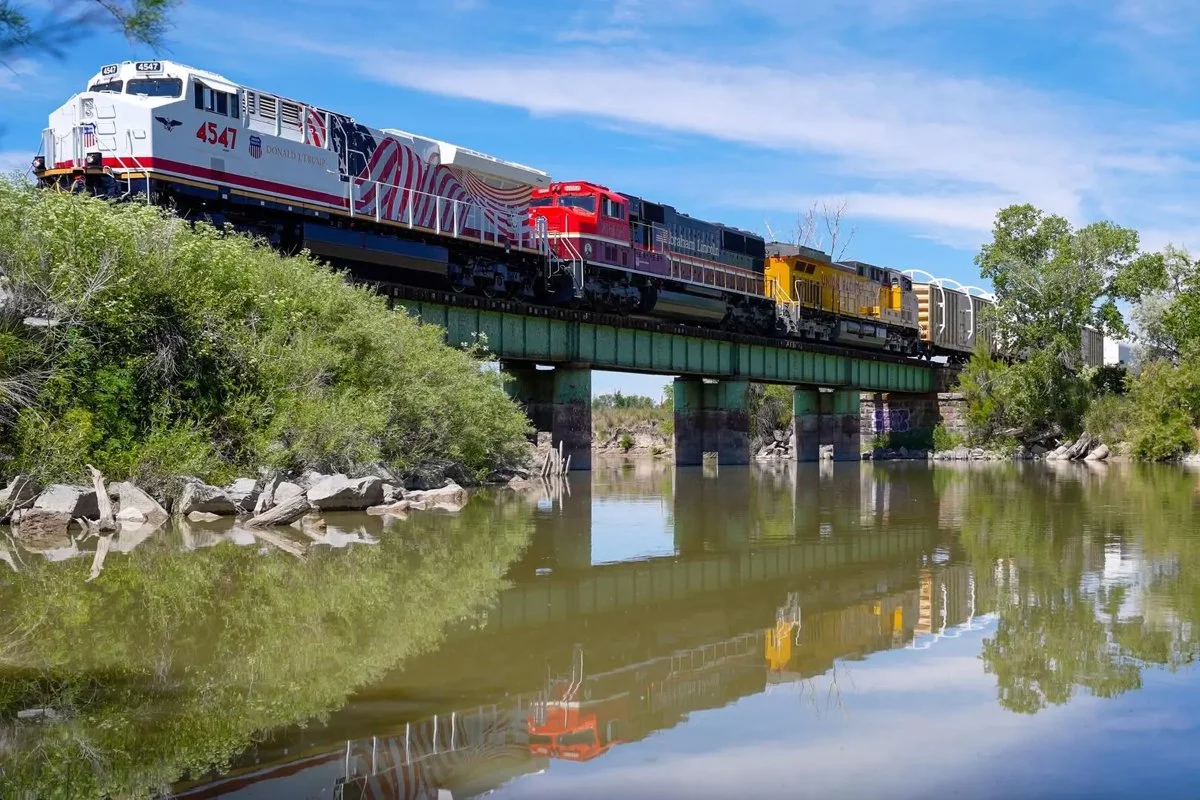
The early-June rail shipment of the final two solid-rocket motor segments from Northrop Grumman’s Utah facility to NASA’s Vehicle Assembly Building in Florida is a tangible reminder that Artemis is as much an industrial and logistics program as it is a spaceflight campaign. These booster segments—towering, 17-story components once stacked—join the SLS core stage and four RS-25 engines to generate more than 16 million pounds of thrust at liftoff, a figure that underscores why SLS remains central to NASA’s near-term deep-space ambitions.
At the same time, NASA’s decision to rely on Starship for Artemis 4’s trans-lunar injection burn rather than SLS signals a strategic recalibration. It is not a repudiation of SLS so much as a recognition that mission assurance now depends on multiple pathways—and that the agency is increasingly willing to place critical mission functions onto commercial systems when the cost, cadence, or flexibility advantages are compelling.
The supply chain behind the rocket: rail logistics, legacy engines, and integration risk
The Artemis narrative often focuses on launch vehicles and landers, but the program’s operational reality is shaped by a long, interdependent chain of manufacturing, transport, and integration steps. The rail movement of 100-foot-class booster segments illustrates a frequently underappreciated constraint: terrestrial infrastructure can become a schedule driver. Weather disruptions, rail congestion, or infrastructure damage can cascade into months of downstream delays, particularly when stacking and integration windows are tightly choreographed.
Artemis also sits at a pivotal propulsion transition point. The SLS relies on RS-25 engines—high-performance, flight-proven hardware with Space Shuttle lineage—yet costly refurbishment and limited production scalability have long been part of the program’s political and budgetary debate. By contrast, Starship’s methane-fueled Raptor engines represent a different philosophy: iterative development, high test tempo, and an economic model built around reusability and manufacturing repetition.
This creates a dual-edged technical reality for NASA:
- Risk is diversified by using multiple systems and suppliers rather than a single monolithic stack.
- Systems integration complexity increases, because each element—SLS, Starship, and two distinct lunar landers—brings different interfaces, operational assumptions, and verification regimes.
The dual HLS approach—one lander from SpaceX and one from Blue Origin—is a textbook redundancy strategy, but it also stretches NASA’s oversight bandwidth. Two contractors mean two safety cases, two test programs, and two evolving designs, each with its own failure modes. Recent high-profile setbacks and explosions across the commercial launch sector reinforce a core truth of aerospace development: rapid progress and visible failures often coexist, especially in programs pushing new propulsion, cryogenic handling, and reusability boundaries.
Cost, competition, and the industrial map of Artemis: who benefits, who bears the risk
Economically, Artemis is a live case study in how governments are rebalancing public procurement and commercial partnership. SLS has faced persistent scrutiny for multi-billion-dollar cost overruns and schedule pressure, while Starship’s development model—though not without technical volatility—has reshaped expectations about cost per ton to orbit and the speed at which capability can be iterated.
NASA’s increasing reliance on commercial systems for critical mission phases functions as a form of risk-sharing:
- It can reduce NASA’s exposure to single-program overruns by distributing capability across providers.
- It can create competitive pressure that discourages monopoly pricing and encourages performance-based delivery.
- It can also introduce dependency on contractors’ financial resilience, test outcomes, and production maturity.
Artemis is also an industrial policy engine. Manufacturing and assembly are distributed across U.S. aerospace clusters—motor production and casting in the Mountain West, engine and stage work across the South, and final integration in Florida. That geographic spread creates political durability, but it also means local economies are highly leveraged to Artemis continuity. When schedules slip, the effects ripple beyond NASA: subcontractors, specialized materials suppliers, and skilled labor pools all feel the shock.
A further, quieter tension sits at the boundary of civil and defense demand. Major suppliers often straddle both markets, and if SLS-related demand spikes or becomes unpredictable, it can contribute to capacity bottlenecks that force the Department of Defense and prime contractors to diversify suppliers, invest in reshoring, or accelerate alternative propulsion and manufacturing pathways.
The Moon as a political stage—and a strategic one
The appearance of a Union Pacific locomotive bearing former President Trump’s likeness—framed as a commemorative design—may seem peripheral to rocket engineering, yet it captures a central vulnerability of long-cycle national programs: space exploration is inseparable from political narrative. Artemis timelines extend across administrations, and the closer a crewed landing gets to an election horizon, the more exposed it becomes to rebranding, reprioritization, or budget renegotiation.
This politicization matters because Artemis is not only about flags and footprints. It is about cis-lunar infrastructure, standards-setting, and the early scaffolding of a lunar economy—communications, navigation, logistics, and eventually resource utilization. With China’s accelerating lunar ambitions, Artemis also functions as a soft-power instrument and a strategic hedge: leadership in lunar operations can translate into leadership in norms, partnerships, and commercial access.
From a business and technology perspective, the most consequential signal may be NASA’s willingness to assign critical mission functions—like trans-lunar injection—to a commercial vehicle. That choice implicitly validates a future where reusable heavy-lift systems are not adjuncts but central pillars of deep-space logistics. If Artemis succeeds in harmonizing heritage reliability with commercial scalability, the program will do more than return humans to the Moon—it will define how complex, capital-intensive technology programs are built when budgets, politics, and innovation cycles all move at different speeds.

 By
By
 By
By
 By
By


 By
By