
A planetary “internet” beneath our feet—and why business should care
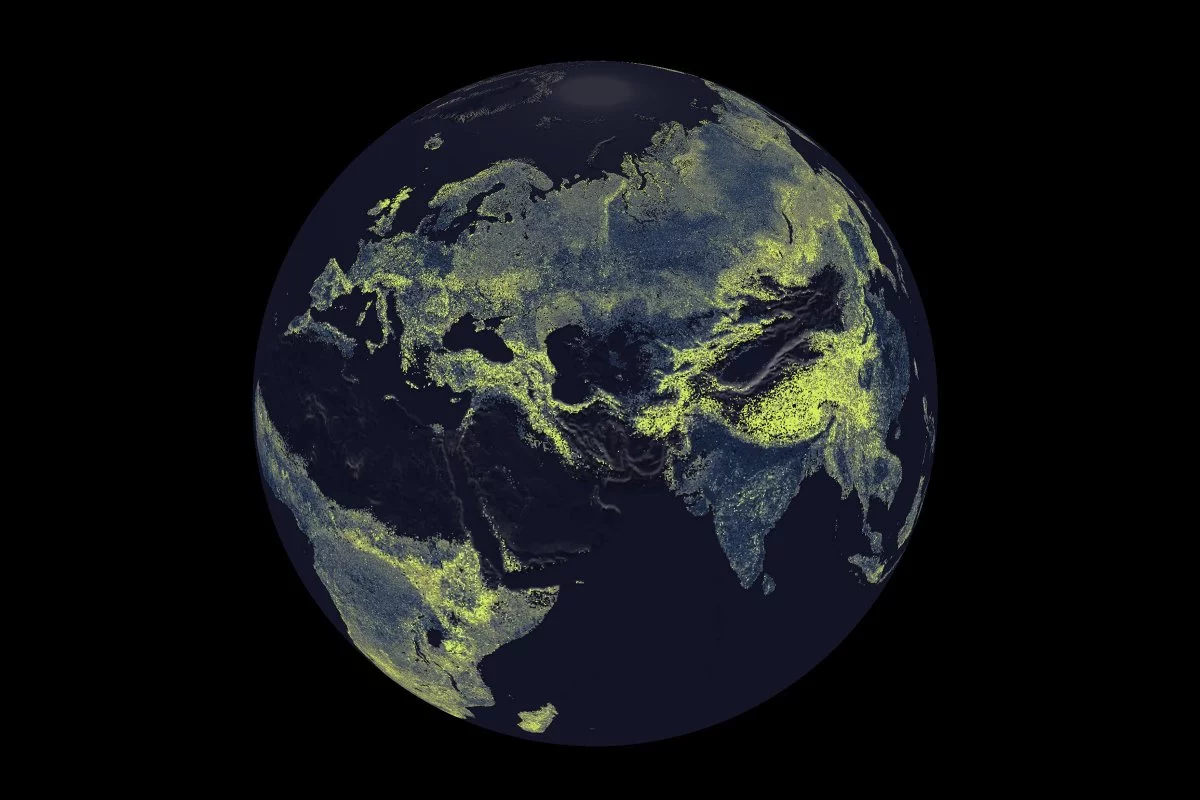
The latest machine-learning-driven mapping of arbuscular mycorrhizal (AM) fungi forces a recalibration of how markets, policymakers, and technology leaders think about soil. By synthesizing 16,000+ soil samples with environmental proxies, researchers estimate a global web of fungal hyphae stretching roughly 110 quadrillion kilometers—a scale so vast it invites astronomical comparisons. Yet the more consequential message is terrestrial and immediate: these networks underpin the productivity and stability of the land-based economy.
AM fungi form symbiotic relationships with plants, trading water and nutrients for plant-derived carbon. With about 70% of terrestrial plants dependent on these associations, the network functions less like a niche ecological curiosity and more like foundational infrastructure for agriculture, forestry, and grassland systems. The study’s biomass estimate—around 300 megatons, several multiples of total human biomass—adds weight to a growing view in natural-capital circles: the subterranean biosphere is not merely “nature,” but a material asset that quietly supports food supply chains, land values, and climate resilience.
Just as striking is the distribution signal. Roughly 40% of AM fungal biomass appears concentrated in high-altitude and flooded grasslands, including ecosystems such as Florida’s Everglades. For conservation strategists and insurers alike, this concentration implies geographic hotspots of systemic importance—areas where land-use change or hydrological disruption could trigger outsized downstream effects on ecosystem services.
AI ecological cartography moves from research novelty to operational tool
The methodological leap is as important as the biological finding. This is a case study in how machine learning can fuse disparate field measurements—often collected for different purposes, at different times—into coherent, high-resolution models of a hidden biome. In business terms, it signals the maturation of ecological observability: the ability to measure and forecast natural systems with a rigor that begins to resemble modern supply-chain analytics.
Several technology implications emerge:
- Soil as a measurable platform: Combining remote sensing, climate layers, and ground truth sampling creates a pathway toward continuous soil microbiome monitoring, not just periodic agronomy tests.
- Precision agriculture’s next layer: Today’s precision tools optimize water, fertilizer, and seed placement. A logical next step is optimizing for mycorrhizal integrity—where management decisions are guided by predicted fungal density and network health.
- Carbon accounting and MRV (measurement, reporting, verification): If AM fungi materially influence soil carbon dynamics, then AI-derived fungal maps could become a new input into carbon-in-soil protocols, strengthening verification and reducing uncertainty in carbon crediting.
This is where the convergence becomes commercially relevant: AI + sensors + biology can turn what was previously “underground and unknowable” into a dataset that can be tracked, benchmarked, and—inevitably—priced.
The agricultural warning embedded in the map: degraded networks, latent yield risk
The study’s most policy-relevant—and economically sensitive—signal is the reported reduction of fungal density in agricultural soils. While intensification has delivered yield gains for decades, the decline of mycorrhizal networks suggests a compounding risk: weakened nutrient cycling and water relations can reduce resilience precisely when climate volatility is increasing.
For agribusiness, this is not an abstract sustainability concern; it is a risk management issue with potential implications for:
- Input dependency: Lower fungal function can increase reliance on synthetic fertilizers, raising exposure to price volatility, regulation, and supply disruptions.
- Yield stability under stress: Drought, heat, and flooding can amplify the cost of degraded soil biology, turning marginal land into a balance-sheet liability.
- Long-term land valuation: As lenders and insurers incorporate soil health into underwriting, farms with declining biological function may face higher capital costs or reduced insurability.
At the same time, the mapping opens a pragmatic innovation pathway. Better distribution intelligence supports tailored mycorrhizal inoculants and microbial products designed for specific climates and soil types—an important distinction in a market that has sometimes overpromised with one-size-fits-all biologicals. With biological inputs and inoculants projected to grow rapidly over the next decade, the competitive edge may shift to firms that can pair products with credible, location-specific diagnostics.
Potential commercialization vectors include:
- Fungal-derived biostimulants designed to reduce fertilizer intensity
- Soil-health analytics platforms integrating satellite, drone, and in-situ sensor data
- Microbial soil-carbon credits that incorporate subterranean biodiversity metrics into MRV
Natural capital, climate policy, and the coming repricing of soil
The sheer scale of AM fungi reframes soil from a passive medium into a living system with macroeconomic relevance. For investors, this strengthens the thesis that natural capital is becoming an investable—and insurable—domain, where ecosystem function affects asset performance. For governments and multilateral bodies, it bolsters the argument that subterranean biodiversity should be treated as critical infrastructure in climate and conservation frameworks.
Three strategic implications stand out:
- Natural-capital valuation: If soil microbiome health supports measurable ecosystem services—productivity, water regulation, carbon storage—then it becomes increasingly plausible to integrate fungal-network indicators into pricing models and risk frameworks.
- Climate mitigation alignment: Because AM fungi influence soil carbon sequestration, their mapping could inform national greenhouse-gas inventories and improve the integrity of soil-based climate claims.
- Land-use governance: Concentration in grasslands and wetlands implies that zoning, subsidies, and restoration incentives may need to account for belowground hotspots, not only aboveground biodiversity.
The emerging picture is a strategic one: as land scarcity intensifies and climate stress tests global food systems, the competitive advantage may accrue to those who treat soil biology as a managed asset—measured with AI, protected with policy, and strengthened through regenerative practice—rather than an invisible externality.

 By
By
 By
By

 By
By
 By
By
 By
By

 By
By