
A multi-state legal offensive tests the boundaries of AI duty of care
A coalition of state attorneys general—led by New York Attorney General Letitia James—has opened a sweeping inquiry into OpenAI that signals a decisive shift in how U.S. regulators may approach generative AI governance. The subpoena reportedly seeks extensive records spanning user engagement, data governance, and model design, reflecting a regulatory posture that is no longer satisfied with high-level assurances about “safety” and “responsible AI.” Instead, states appear to be moving toward a more prosecutorial standard: show the controls, prove they work, and document how risks are managed at scale.
The investigation’s focal point—alleged harms to minors and vulnerable users, including suicides and violent incidents purportedly linked to ChatGPT’s responses—places the controversy at the intersection of product safety, consumer protection, and public health. Parallel legal action, including claims attributed to Florida Attorney General James Uthmeier, argues that OpenAI’s product enabled harmful behavior and fostered addictive use patterns without sufficient age verification or parental oversight.
This framing matters. It suggests states may be testing whether an AI chatbot should be treated less like a neutral tool and more like a consumer-facing product with foreseeable misuse, where the provider could be expected to anticipate and mitigate predictable harms—especially when the user is a child or in crisis.
From “black box” innovation to verifiable guardrails and audit-ready AI
The subpoena’s emphasis on deep-learning architecture and data-handling processes underscores a broader regulatory pivot: model transparency and auditability are becoming core compliance expectations. For large language models (LLMs), whose behavior emerges from training data and probabilistic inference rather than deterministic rules, regulators are increasingly likely to demand evidence of verifiable guardrails—not just policy statements.
Key technical and safety issues now moving from internal engineering debates into legal discovery include:
- Model transparency and explainability: Not necessarily full disclosure of proprietary weights, but documentation that enables third parties to evaluate how safety mitigations are designed, tested, and monitored.
- Risk detection and escalation: Allegations that ChatGPT failed to detect suicidal ideation or incitements to violence spotlight the limits of keyword-based filters and static safety layers. The next expectation may be context-aware escalation protocols, including clearer pathways to human support and more conservative behavior in high-risk conversational states.
- Safety performance measurement: Regulators may push for metrics that resemble those used in other safety-critical domains—incident reporting, severity classification, and post-incident remediation timelines.
- Data governance and retention: How user conversations are stored, used for training, or reviewed for safety becomes central when the user may be a minor or discussing self-harm.
OpenAI has publicly emphasized that ChatGPT is not a substitute for professional mental-health care and has pointed to updates that direct at-risk users to support resources. That posture aligns with a growing industry baseline: crisis signposting, self-harm policies, and refusal behaviors are now table stakes. The harder question—one regulators appear poised to press—is whether these measures are sufficiently reliable under real-world conditions, including edge cases, adversarial prompting, and prolonged user engagement that can resemble dependency.
Minors, age-gating, and privacy: the compliance front that could reshape consumer AI
The inquiry’s attention to age verification and protections for minors elevates a debate that has long simmered across social media and gaming: how to reconcile frictionless onboarding with meaningful child safety. For AI chatbots, the challenge is amplified because the product is conversational, persuasive, and often used in private contexts.
Expect the legal and policy discussion to converge on several pressure points:
- COPPA and parental consent expectations in the U.S., alongside global regimes such as GDPR and LGPD, particularly where data minimization and purpose limitation collide with model improvement practices.
- The feasibility of age-gated AI services without creating new privacy risks (for example, collecting more sensitive identity data to verify age).
- The standard of care for “reasonable” protections when minors can access advanced generative systems through browsers, apps, or embedded integrations.
If states succeed in extracting enforceable commitments—through consent decrees or settlement terms—those requirements could become a de facto national standard for consumer AI, influencing deployments in education, youth-oriented products, and AI companions. The ripple effects would extend beyond OpenAI to any provider offering open-ended conversational systems.
Capital markets, competitive dynamics, and the emerging “safety premium” in AI
For business leaders and investors, the most immediate implication is that regulatory risk is becoming a cost-of-capital variable in the AI sector. Litigation and subpoenas introduce reputational exposure, potential damages, and compliance overhead that can affect:
- Valuations and fundraising narratives, as investors price in downside scenarios and longer timelines to scale.
- Insurance premiums and indemnity demands, particularly for enterprise deployments where downstream harms could trigger contractual disputes.
- Product roadmaps, as teams prioritize safety engineering, monitoring, and documentation over feature velocity.
The political and legal strategy also echoes historical multi-state campaigns—against tobacco firms and Purdue Pharma—where coordinated state action increased negotiating leverage and produced expansive behavioral remedies. While AI is not opioids or cigarettes, the structural similarity lies in the playbook: build a record of harm, argue inadequate safeguards, and pursue remedies that reshape an industry’s operating model.
Competitive dynamics may shift accordingly. Firms that can demonstrate third-party validation, robust safety auditing, and mature governance may command a “trust premium.” Smaller providers and open-source ecosystems face a double bind: they must invest in compliance-grade controls without the scale economics of large incumbents, potentially accelerating consolidation or pushing innovation toward modular architectures that limit high-risk features.
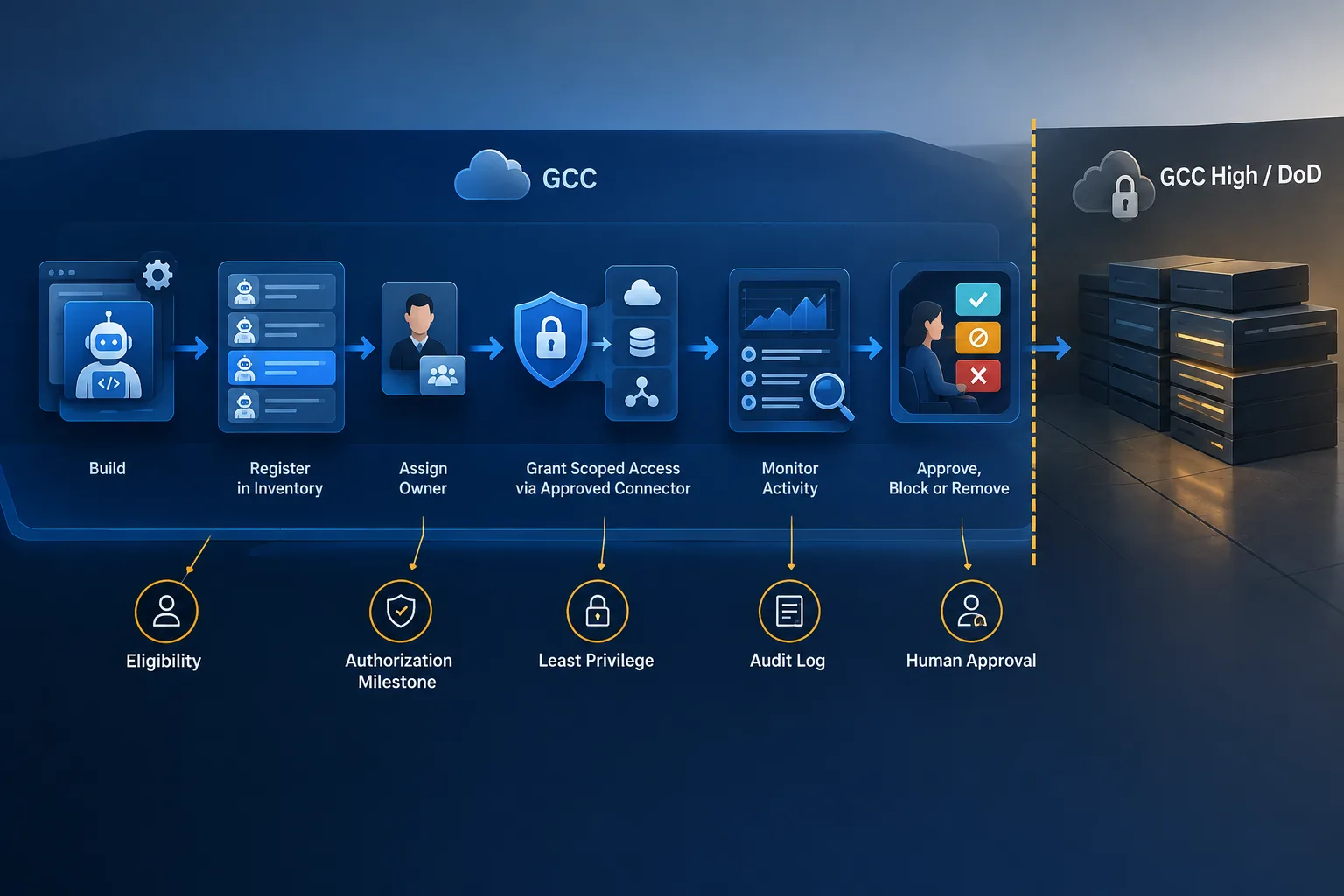
For boards and executives, the strategic mandate is becoming clearer: treat AI safety as a first-order governance issue, not a product afterthought. The companies that thrive in this environment will be those that can operationalize Safety by Design—with audit-ready documentation, measurable controls, and credible external partnerships—while still delivering the performance and usability that made generative AI commercially transformative in the first place.

 By
By
 By
By
 By
By

 By
By
 By
By

 By
By