
A weekly dinner swap that quietly rewires modern childcare
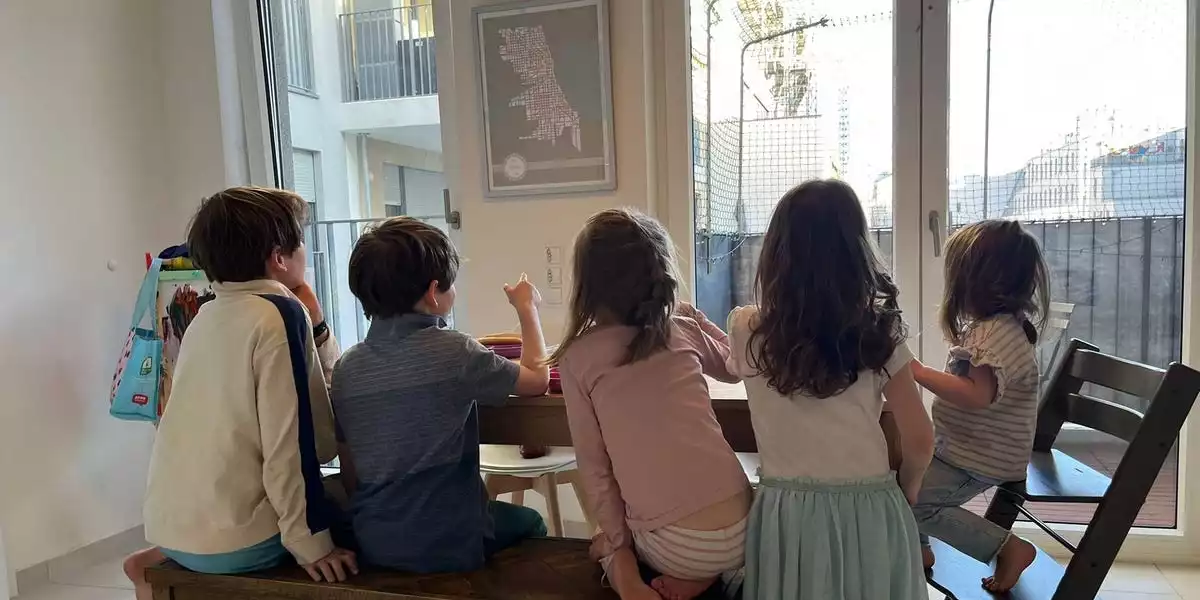
What began as a practical neighborhood workaround—one family and their upstairs neighbors trading Tuesday-night hosting duties—has matured into something more structurally significant: a repeatable, trust-based micro-network for childcare and parental recovery time. The mechanics are deceptively simple. One home takes all the kids for dinner; the other set of adults gets uninterrupted personal time. Next week, they switch. A deliberately enforced “no-pre-cleanup” rule keeps the ritual from collapsing under the weight of perfectionism and social pressure.
From a business and technology lens, the most notable feature isn’t the meal itself. It’s the operational design: a lightweight, recurring system that converts informal goodwill into reliable capacity. In an era when many families experience parenting as a high-friction logistics problem—calendars, carpools, extracurriculars, work calls—this kind of neighborhood protocol functions like a local “service layer” for care.
Over time, the arrangement also changes the social geometry of parenting. Adults stop being adjacent strangers and become co-stewards of children’s routines, habits, and emotional well-being. The dinners create a predictable cadence for connection, accountability, and mutual aid—without requiring formal contracts, payments, or institutional oversight.
Social capital becomes an operating system: mentorship, autonomy, and shared accountability
The deeper story is how quickly a rotating dinner can evolve into a distributed support model. Parents begin to occupy mentor-like roles: one adult helps with ballet practice, another checks in on school progress, another becomes the trusted listener when a child is frustrated. That “multiple invested adults” dynamic—once more common in extended-family or tight-knit community settings—reappears here as a modern, urban-friendly version of the proverbial village.
For children, the benefits are not merely nutritional or recreational. The dinners create a peer network with continuity, where kids bond over shared interests (Pokémon, “breakfast-for-dinner”), negotiate rules, plan activities, and practice social independence. In effect, the children are learning how to operate inside a small community: how to share attention, resolve conflicts, and build friendships outside the immediate family unit.
A subtle but powerful mechanism is the post-dinner debrief: updates on what was eaten, how behavior went, what moods surfaced. This isn’t surveillance; it’s collective accountability. It normalizes the idea that care is a shared responsibility and that feedback can be constructive rather than judgmental. Over time, that feedback loop strengthens trust and reduces the anxiety that often prevents parents from asking for help in the first place.
Key characteristics that make the model resilient include:
- Predictability (weekly cadence builds reliability and reduces negotiation fatigue)
- Role clarity (one host, one off-duty household)
- Low social overhead (the “no-pre-cleanup” norm prevents performative hosting)
- Reciprocity by design (fairness is embedded in the rotation)
The tech layer: from neighborhood messaging to “care analytics” and smart-home integration
These micro-communities increasingly run on everyday digital infrastructure. WhatsApp threads, Nextdoor posts, shared calendars, Slack groups, and simple spreadsheets can turn a casual idea into a stable routine by reducing coordination costs: scheduling, RSVPs, allergy notes, pickup timing, and quick updates. The technology here is not flashy; it’s friction removal, and that’s precisely why it scales socially.
The next frontier is the gradual formalization of these circles through tools that already exist at the edge of the smart-home ecosystem. It’s not difficult to imagine:
- Voice-controlled check-ins (“Kids are eating now,” “Homework finished”)
- AI-generated activity summaries for parents who weren’t present
- Privacy-preserving photo albums shared only within the hosting circle
- Child-safe intercom or doorbell workflows that confirm arrivals and departures
This is where the “care economy” intersects with product strategy. The raw ingredients of a new category are visible: micro-network childcare software that sits between informal group chats and institutional daycare platforms. Even basic “care analytics”—logging dietary intake, mood indicators, or activity milestones—can become a shared knowledge base that improves outcomes over time. The opportunity is not to over-instrument parenting, but to make coordination and continuity easier while keeping trust and privacy central.
For entrepreneurs and incumbents alike, the differentiator will be governance: consent, data minimization, and clear boundaries. Parents may welcome lightweight reporting and scheduling automation; they will resist anything that feels like monitoring or scoring children.
Why business leaders and policymakers should pay attention to neighbor-led care networks
Economically, the appeal is immediate. In many markets, licensed childcare can consume 10%–15% of household income, and even families who can afford it still face availability constraints. A rotating dinner co-op is not a replacement for full-time childcare, but it is a zero-fee pressure valve—one that returns time, attention, and mental bandwidth to parents on a predictable schedule. That reclaimed hour per week can translate into measurable benefits: reduced burnout, improved household functioning, and—indirectly—better workplace focus.
Strategically, this is also a signal about work-life integration. As hybrid and remote work reshape daily routines, proximity becomes an asset. Employees are increasingly building their own care infrastructure outside formal benefits, using neighbors and peer networks to stabilize their weeks. That should matter to HR leaders focused on retention and performance: the most effective support may not be another app stipend, but enabling the conditions for community-based solutions to thrive.
Several adjacent industries can position themselves as enablers of these networks:
- Meal kits and food delivery: “host-night bundles” sized for multiple children, timed to weekly rotations
- Home automation and security: child-safe check-in flows, shared access controls, and time-limited permissions
- Family SaaS platforms: scheduling, allergy tracking, and privacy-first updates designed for small circles
The broader implication is that care is being consumerized and modularized—reassembled into small, human-scale systems that deliver flexibility where institutions often cannot. The Tuesday-night dinner swap may look like a charming neighborhood ritual, but it also reads as a prototype: a low-cost, high-trust model that converts social capital into real capacity, one meal—and one reclaimed hour—at a time.

 By
By
 By
By
 By
By
 By
By
 By
By
 By
By

 By
By