
A garage door collision that spotlights the autonomy “last mile” problem
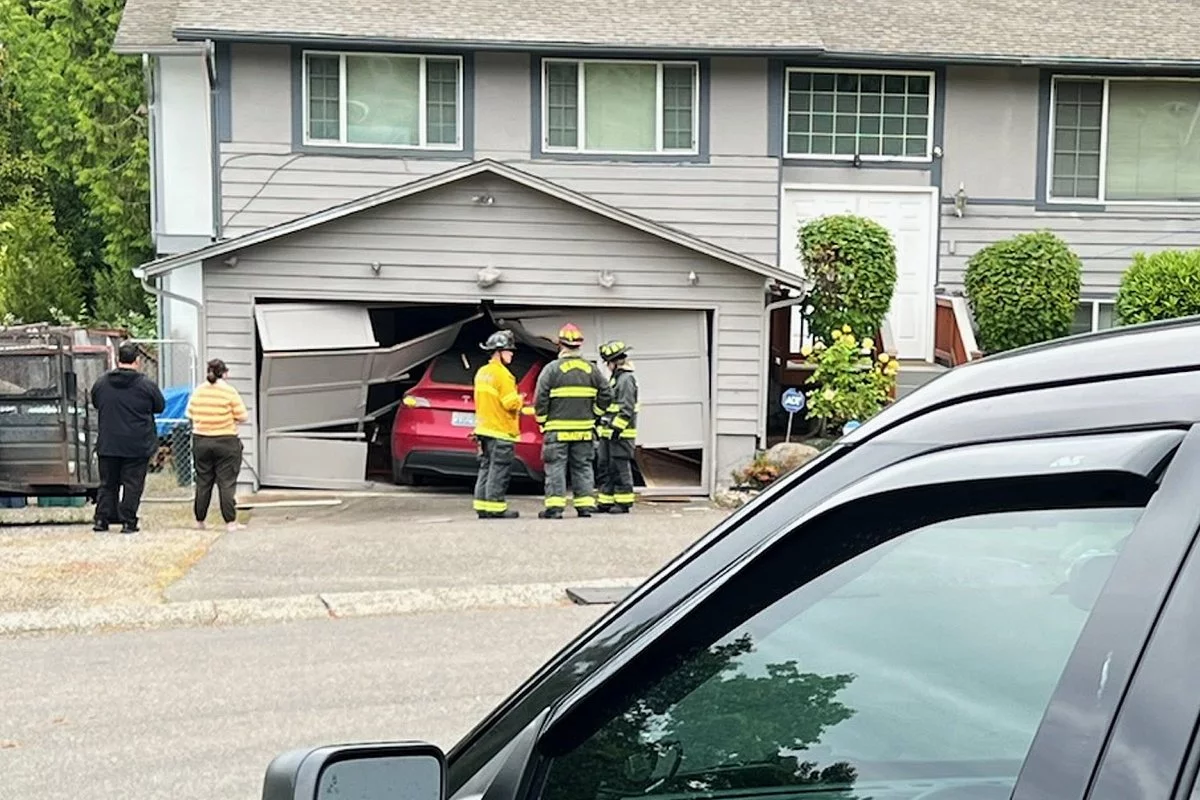
A Tesla operating in Autopilot mode reportedly struck a residential garage door in Washington state around 11 a.m. Monday, destroying the structure while leaving occupants uninjured. Local law enforcement is investigating, and early indications suggest no driver impairment—a detail that shifts attention away from human error and back toward the persistent question surrounding advanced driver-assistance systems (ADAS): *what happens when software behaves unexpectedly in everyday, low-speed environments?*
Crashes involving highways and emergency vehicles tend to dominate headlines because they are dramatic and often deadly. Yet incidents like a garage impact—mundane in setting, costly in damage, and ambiguous in causality—can be equally consequential for public trust. Residential driveways and neighborhood streets are filled with irregular geometry, partial occlusions, tight turning radii, and visual clutter. These are precisely the “edge-case” conditions that challenge camera-centric perception and decision logic, especially when the system is optimized for lane-structured roads.
The driver’s claim of an unexplained malfunction will be tested against vehicle telemetry, environmental conditions, and system-state logs. Regardless of the final attribution, the episode reopens a familiar debate: Tesla’s branding and consumer expectations often outpace the operational reality that both Autopilot and the more advanced Full Self-Driving (FSD) remain driver-assist technologies requiring continuous human supervision, not hands-off autonomy.
How Autopilot and FSD can fail—and why residential settings are unforgiving
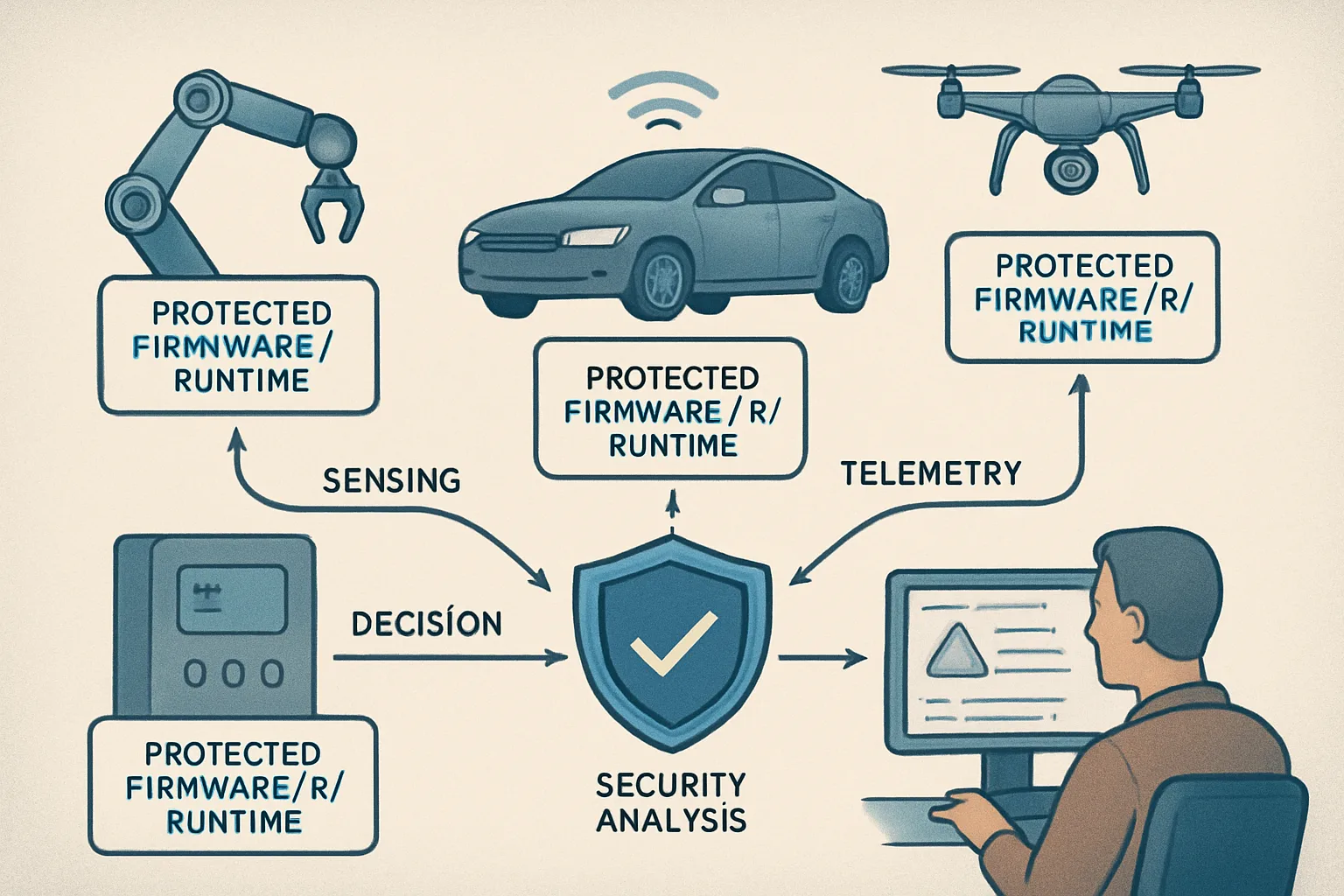
Tesla’s driver-assistance stack is widely understood to be camera-forward, with sensor configurations varying by build and generation (ultrasonic sensors and radar appear in some versions, while Tesla has also pursued a “vision-first” strategy). FSD adds more sophisticated neural-network inference and planning layers, but neither system represents Level 5 autonomy—the industry’s shorthand for a vehicle capable of operating anywhere, under all conditions, without human attention.
From a technical standpoint, a garage-door collision could plausibly stem from several known ADAS failure modes:
- Obstacle perception gaps: Stationary objects, low-contrast surfaces, or unusual textures can be misread by vision models, particularly in shadowed or reflective conditions common near garages.
- Decision-logic overrides: Even when an object is detected, the planning module may prioritize a path or maneuver that appears valid in the model’s internal representation but is unsafe in the real world.
- Edge-case training limitations: Machine-learning systems are only as robust as the diversity of scenarios they have been trained and validated on. Residential micro-environments—tight driveways, atypical curb lines, cluttered facades—are notoriously variable.
- Human-machine interaction ambiguity: If a driver assumes the system will brake or steer in a driveway-like context, reaction time can be delayed when the system does not behave as expected.
This is where Tesla’s over-the-air (OTA) software lifecycle becomes a double-edged sword. OTA updates enable rapid iteration and fleet-wide feature deployment—an advantage traditional automakers struggle to match. But the same mechanism can also propagate defects at scale if validation and scenario coverage lag behind release velocity. For regulators and safety engineers, the critical question is not whether software can be improved quickly, but whether it is being improved predictably, measurably, and transparently.
Regulation, liability, and the growing demand for “black-box” clarity
Incidents tied to semi-autonomous features increasingly draw scrutiny from U.S. agencies such as the National Highway Traffic Safety Administration (NHTSA) and the National Transportation Safety Board (NTSB), which have previously examined collisions involving stationary emergency vehicles and other ADAS-related hazards. A residential crash may appear less severe, but it expands the conversation into low-speed, non-highway operational domains—the very places consumers may be most tempted to “trust” automation because the environment feels familiar.
The legal and insurance implications are equally significant. ADAS crashes often live in a gray zone where responsibility is contested:
- Driver duty of care versus system performance claims
- The meaning of “engagement” when hands are on the wheel but attention is divided
- The evidentiary role of vehicle logs, camera footage, and event data recorders
Expect continued momentum toward standardized data recording—a “black box” approach akin to aviation—where system state, driver inputs, alerts, and sensor interpretations can be reconstructed with minimal ambiguity. For insurers, this is not merely forensic; it is actuarial. If risk can be quantified based on driver attentiveness and system usage, usage-based insurance models may evolve to price autonomy features dynamically, rewarding verified engagement and penalizing risky reliance.
Globally, regulatory posture is diverging. Europe’s UNECE processes are moving toward more prescriptive rules for automated lane-keeping and related functions, while the U.S. often relies on investigations and post-market enforcement. For Tesla and its competitors, navigating these regimes will influence product roadmaps, feature gating, and regional availability—and may ultimately determine how quickly advanced automation can scale.
Competitive pressure and the sensor strategy debate reshaped by real-world anomalies
Each high-profile anomaly reverberates beyond Tesla. It influences consumer confidence in the broader autonomous driving category and shapes boardroom decisions about sensor redundancy, validation budgets, and go-to-market timelines.
A central strategic fault line remains the industry’s sensor philosophy. Many automakers and autonomy developers pursue redundant architectures—pairing cameras with radar and, in some cases, LiDAR—to reduce single-modality failure risk. Tesla’s resistance to LiDAR has made it an outlier, betting that vision and neural networks can reach sufficient reliability without expensive additional sensors. If incidents continue to highlight perception uncertainty in complex environments, market demand could tilt toward multi-sensor redundancy, benefiting LiDAR suppliers, radar innovators, and semiconductor vendors—while also complicating supply chains already sensitive to component constraints.
For investors, the signal is nuanced. A single crash does not invalidate autonomy’s trajectory, but repeated incidents can compress valuation multiples by raising the perceived cost of safety assurance: more simulation, more real-world testing, more compliance overhead, and more conservative feature rollouts. The winners will likely be those who can demonstrate data-driven safety gains—not just miles driven, but measurable reductions in critical events per operational context.
The Washington garage crash may ultimately be cataloged as an isolated malfunction, a misuse case, or a preventable design limitation. Yet its broader meaning is difficult to ignore: the path to trustworthy autonomy will be decided as much in driveways and neighborhoods as on highways, where the margin for software ambiguity is thin and the public’s tolerance for surprise is thinner still.

 By
By
 By
By


 By
By
 By
By

 By
By