
Tesla Robotaxi: the widening gap between narrative velocity and operational reality
Elon Musk has long framed Tesla Robotaxi as the company’s next great inflection point—an autonomous ride-hailing network that could scale with software-like speed and unlock high-margin recurring revenue. That storyline helped propel Tesla’s market capitalization above $1 trillion, reinforcing the idea that autonomy is not merely an R&D program but a future platform business.
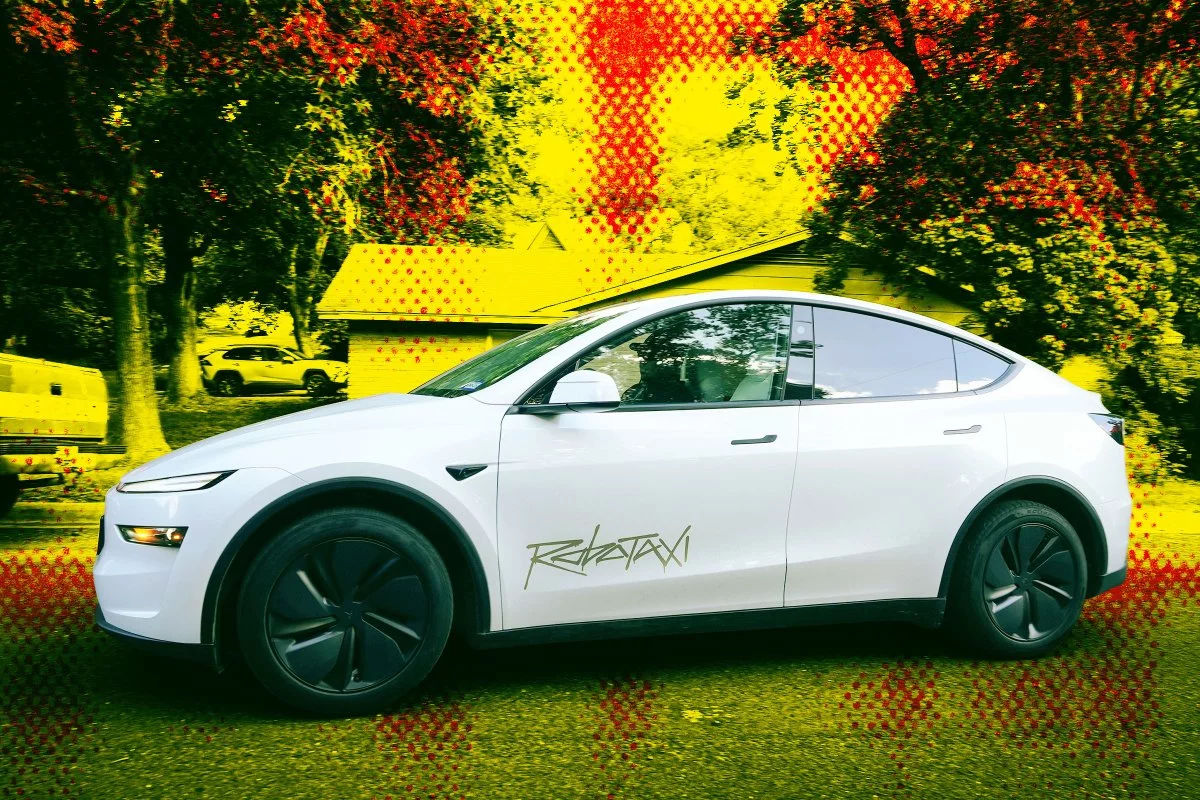
Yet the current operating picture is markedly narrower. Tesla reports 59 Robotaxis in limited service, constrained to supervised operations in Austin, Texas, with human oversight still required on a meaningful share of rides. Expansion into California has reportedly run into regulatory friction, compounded by Tesla’s own disclosures that the vehicles are not operating with true autonomy. For customers, early feedback has been mixed: long wait times, erratic routing, and limited visibility into service reliability metrics—issues that are tolerable in a pilot, but problematic for a product positioned as imminent mass deployment.
The result is a familiar tension in frontier technology commercialization: a compelling long-term thesis colliding with the slow, iterative reality of safety-critical deployment. In autonomous mobility, the distance between “works often” and “works reliably, everywhere it’s allowed, at scale” is where most programs either mature—or stall.
Autonomy engineering meets the hard constraints of scale, edge cases, and supervision
Tesla’s approach to autonomy has always been distinctive: a vision-only, neural-network-driven stack that avoids LIDAR and minimizes reliance on high-definition mapping. Strategically, that choice aims to create a generalized driving intelligence that can operate broadly without expensive sensor suites or painstakingly mapped geofences. Operationally, the Robotaxi pilot suggests the approach still faces the classic autonomy bottlenecks: edge-case handling, system reliability, and safety validation under real-world variability.
Several technical dynamics stand out:
- Scalability depends on diversity of data and operational exposure. A fleet of 59 vehicles can generate valuable signals, but it limits the breadth of scenarios needed to harden a system for wide-area ride-hailing. The “continuous learning loop” that autonomy advocates cite—collect data, retrain, redeploy—becomes slower when the operational footprint is narrow.
- Safety conservatism can degrade the rider experience. Reports of missed turns, detours, and interventions align with a system that prioritizes risk reduction, sometimes at the expense of efficiency. In ride-hailing, reliability is not just about avoiding collisions; it’s also about predictable routing, pickup accuracy, and time-to-destination.
- Supervised operations signal a maturity gap to Level 4 autonomy. The presence of onboard supervisors—and in some cases additional safety measures—underscores that the program remains closer to advanced driver assistance than to fully driverless service. That distinction matters because the economics of robotaxis depend heavily on removing the human from the loop.
Tesla’s broader consumer fleet continues to generate vast driving data, which is often cited as an AI advantage. But the robotaxi-specific data required for commercial ride-hailing—dense urban pickups, curb management, rider interactions, and repeated service loops—can be qualitatively different. Competitors that operate fully autonomous vehicles in tightly controlled geofenced areas may accumulate more directly relevant operational evidence, even if their approach is less generalized.
Regulation, transparency, and trust: the non-negotiable infrastructure of autonomous ride-hailing
Autonomous mobility is regulated not only through statutes and permits, but through public tolerance. That tolerance is shaped by transparency, incident reporting, and the perceived candor of operators when systems fail. As regulators in major markets demand clearer safety cases and operational accountability, Tesla’s reported reluctance to disclose detailed metrics—such as incident rates, intervention frequency, or service uptime—could become a strategic liability.
Key pressure points include:
- Permitting and claims of autonomy. If regulators believe marketing language outpaces technical reality, approvals can slow or narrow. California, in particular, has historically required careful delineation between driver assistance, supervised autonomy, and driverless operation.
- Operational metrics as a competitive differentiator. In a market where trust is fragile, companies that publish clear safety and performance dashboards may gain faster regulatory pathways and stronger public acceptance.
- Human oversight as a policy and labor issue. If one-third of rides require intervention or supervision, the service resembles a premium assisted mobility product more than a scalable robotaxi network. That affects not only cost structure but also how regulators classify the service.
For Tesla, the strategic question is not whether autonomy will arrive, but whether the company can align communications, compliance, and measurable performance in a way that sustains credibility through inevitable setbacks.
Market implications: valuation sensitivity, capital intensity, and the partnership question
Tesla’s valuation increasingly reflects expectations of future autonomous revenue streams rather than near-term automotive earnings. That creates valuation sensitivity to robotaxi milestones: delays, constrained rollouts, or credibility gaps can trigger sharp reassessments, even if the long-term opportunity remains intact.
At the same time, scaling from dozens of vehicles to anything resembling a national fleet would require more than software progress. It would demand:
- Capital expenditure for vehicles, charging capacity, depot operations, maintenance, and customer support
- Insurance and liability frameworks robust enough for commercial ride-hailing at scale
- Regulatory compliance infrastructure across states and municipalities
- Service reliability engineering comparable to mature ride-hailing platforms
This is where industry structure matters. Many autonomy efforts have leaned on partnerships, joint ventures, and strategic investors to distribute cost and risk. Tesla’s more unilateral posture preserves control and brand coherence, but it also concentrates execution risk—especially if the EV market’s margin pressures limit how much capital can be redeployed toward mobility-as-a-service.
For executives and investors watching the autonomous mobility landscape, Tesla’s Robotaxi pilot is a live case study in how AI ambition meets operational accountability. The next phase will be defined less by visionary timelines and more by measurable proof: intervention rates trending down, service reliability trending up, and a regulatory posture built on data-rich transparency rather than expectation-setting.

 By
By
 By
By

 By
By

 By
By
 By
By
 By
By