
When an Oscar Becomes a Bargaining Chip: The Economics of Emotional Capital
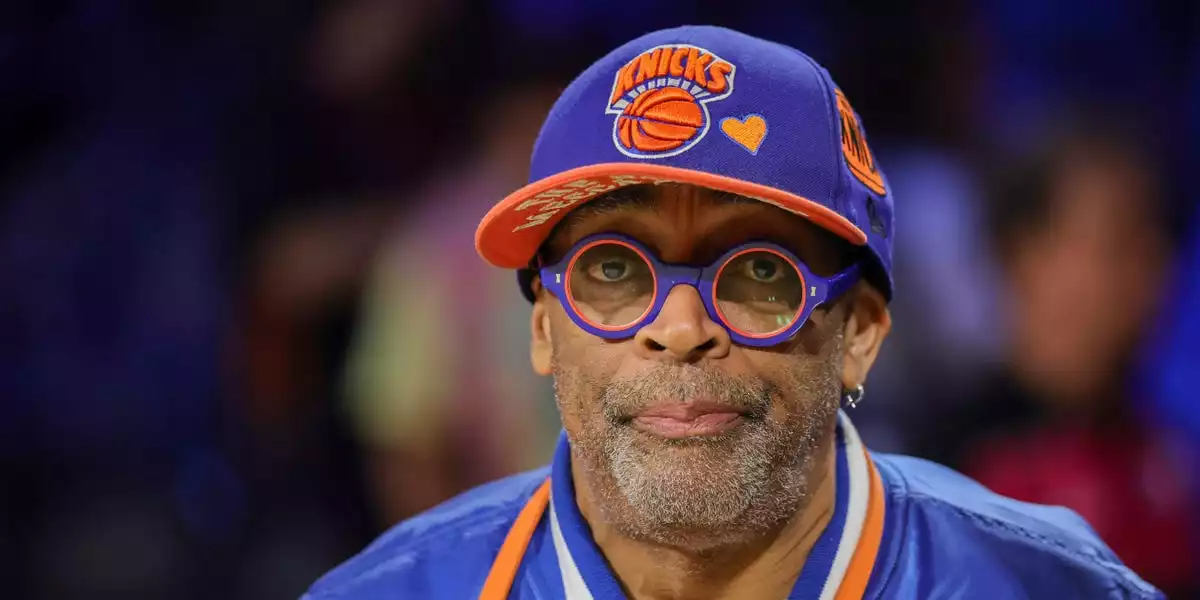
Spike Lee’s public willingness to trade one of his two Academy Awards for a New York Knicks championship is, on its face, a playful provocation. Yet it also functions as a revealing market signal about how emotional capital—the deep, identity-level attachment fans form with teams—can rival or even eclipse conventional measures of prestige.
For business leaders and sports executives, Lee’s statement is less about the literal value of an Oscar than the symbolic exchange rate between cultural achievement and sports glory. In an era where attention is fragmented and brand loyalty is increasingly difficult to sustain, the most durable currency is often not reach, but authenticity. Lee’s fandom is not a campaign; it is a decades-long narrative, built since he bought season tickets in 1985 and reinforced by his presence at historic moments spanning from the 1970 Finals to today’s NBA Finals atmosphere.
That longevity matters. It turns a celebrity fan into a living archive of the franchise—an asset that can’t be replicated by paid endorsements. The implicit lesson for marketers is that the strongest brand associations are not always purchased; they are earned through consistent, public commitment. Lee’s “prestige swap” frames a strategic question for corporations and franchises alike: when does aligning with a high-trust cultural figure generate more durable consumer affinity than traditional advertising spend?
Key business takeaways from this “intangible asset exchange” include:
- Brand equity can be amplified through authentic affiliation, not just sponsorship inventory.
- Celebrity devotion can operate as earned media, sustaining attention through narrative rather than promotion.
- The most valuable partnerships increasingly resemble co-authored stories, not transactional endorsements.
The Spike Lee Effect: Organic Influencer Marketing and Cultural Co-Branding
Lee’s Knicks identity has long transcended courtside visibility. His global gestures—such as presenting Knicks jerseys at the Vatican—illustrate how modern fandom can become a cultural export, extending a team’s relevance beyond the arena and even beyond the sport itself. For the Knicks, this kind of association reinforces a brand position that is as much about New York cultural mythology as it is about basketball performance.
This is the mechanics of organic influencer marketing at its highest level: a public figure whose advocacy is credible precisely because it is not obviously monetized. In a marketplace saturated with paid partnerships, audiences have become adept at discounting scripted enthusiasm. Lee’s advocacy, by contrast, reads as lived experience—complete with frustration, loyalty, and the kind of irrational hope that defines sports devotion.
For franchises and consumer brands, the strategic opportunity is to identify and cultivate similar “superfan” archetypes—people whose relationship to the brand is already emotionally resonant and socially legible. The Naismith Basketball Hall of Fame’s 2024 designation of Lee as a “SuperFan” formalizes what the market already understood: fandom itself can be a form of cultural production.
Practical implications for sports marketing and brand strategy:
- Build campaigns around credible community advocates, not only celebrity spokespeople.
- Treat superfans as narrative partners—feature them in content, experiences, and storytelling formats.
- Expand co-branding beyond merchandise into culture-forward activations (film, art, civic events) that match the fan’s identity and the city’s ethos.
Ticket Prices as a Real-Time Market Signal: Scarcity, Access, and Trust in the Secondary Economy
Lee’s spotlight on the Knicks’ secondary-market ticket escalation—regular matchups at $250–$350 versus Finals seats ranging from $1,400 to $35,000—captures a central tension in modern sports economics: the collision between yield optimization and fan accessibility. These price swings are not merely a reflection of demand; they are a referendum on scarcity, status, and the monetization of belonging.
For teams, venues, and ticketing platforms, the Finals pricing spectrum underscores how quickly a fan experience can shift from communal entertainment to luxury commodity. Dynamic pricing models are designed to capture willingness to pay, but extreme volatility can also erode trust—especially among long-tenured supporters who feel priced out of the moments they helped sustain.
This is where technology and governance become strategic. The industry’s next phase will likely be defined by how well it can balance revenue maximization with legitimacy in the eyes of fans. Potential solutions increasingly discussed across sports business include:
- Hybrid pricing frameworks that protect access for season-ticket holders while still monetizing peak demand.
- Stronger anti-scalping and provenance tools, including blockchain-based verification for ticket authenticity and transfer history.
- More transparent fee structures to reduce consumer backlash and regulatory scrutiny.
The broader point is that ticket prices are no longer just a revenue line—they are a brand experience. When the cost of entry becomes a headline, the franchise’s relationship with its community becomes part of the competitive landscape.
From Courtside to Cloud: How Celebrity Narratives Shape Media Rights and Fan-Tech Roadmaps
Lee’s remarks about potentially skipping future projects rather than missing a championship moment highlight a deeper shift: sports are increasingly consumed as story ecosystems, not isolated games. Media companies and streaming platforms understand that the most valuable broadcasts are those wrapped in human narratives—celebrity devotion, generational loyalty, civic identity, and high-stakes scarcity.
This has direct implications for media rights negotiations and content packaging. Networks aren’t only bidding on competition; they’re bidding on the surrounding universe of documentary arcs, behind-the-scenes access, and culturally resonant characters who keep audiences engaged between games. A franchise with compelling public-facing storylines—especially ones anchored by globally recognized cultural figures—can strengthen its leverage in rights discussions and sponsorship pricing.
At the same time, the technological roadmap is clear: teams must meet fans where fandom now lives—on mobile platforms, social feeds, and immersive digital environments. The next competitive edge will come from direct-to-fan infrastructure that captures engagement, personalizes experiences, and converts attention into durable loyalty.
High-impact areas for investment include:
- Fan-first apps with personalization, real-time content, and interactive features (including AR/VR layers where viable).
- Data-driven loyalty modeling to identify superfans early and offer tiered experiences that feel earned, not extracted.
- Tokenized or verifiable digital memorabilia that rewards participation while creating new forms of collectible value—implemented carefully to avoid speculative backlash.
Spike Lee’s Knicks devotion ultimately reads as more than sports passion; it is a case study in how modern brands—teams, cities, platforms, and cultural institutions—compete for identity-level allegiance. In that contest, the loudest signal isn’t always a marketing budget. Sometimes it’s a filmmaker, an Oscar, and a willingness to trade the highest honors of one industry for the ultimate validation in another.

 By
By
 By
By
 By
By
 By
By


 By
By