
A year-long security buildout for Southern California’s World Cup footprint
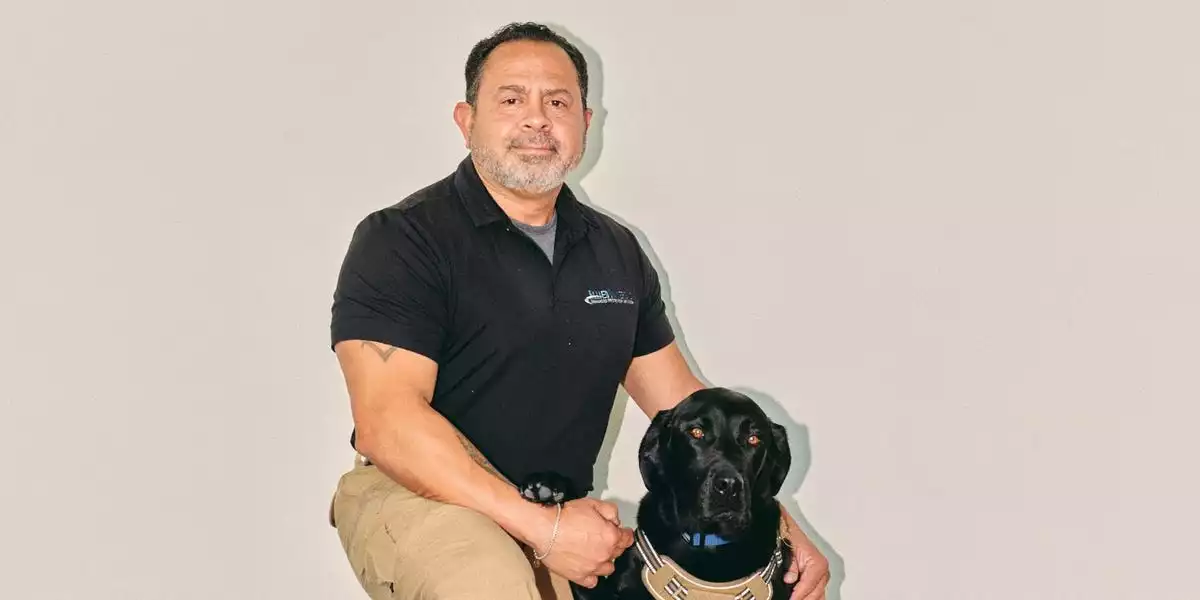
As Southern California prepares to host World Cup matches and related activities, the security posture forming around venues such as SoFi Stadium, adjacent hotels, and practice facilities is increasingly defined by a familiar—but strategically modern—asset: explosive-detection K-9 teams. Allied Universal’s SoCal K-9 unit, led by Operations Supervisor Dan Silva, has spent more than a year preparing a deployment model built around 52 handlers and 52 dogs, emphasizing daily sweeps, visible deterrence, and continuous proficiency training.
The operational objective is straightforward and uncompromising: finish the event without injuries, credible threats, or security breaches. Yet the means of achieving that goal are anything but simple. Over the past three months, coordination has intensified among private security, venue operators, and local law enforcement—an acceleration typical of mega-events, where planning horizons are long but final security architectures often crystallize close to opening day.
This ramp-up reflects a broader reality of modern event protection: security is no longer a single perimeter or a single checkpoint. It is a layered system, tuned to crowd flows, venue geometry, VIP movements, and the shifting threat environment that surrounds globally televised gatherings.
Why “living sensors” still outperform many machines in explosive detection
In an era of AI-enabled video analytics, autonomous patrol concepts, and rapidly improving chemical detection hardware, the continued reliance on explosive-detection dogs can look, at first glance, like tradition. In practice, it is a performance and economics decision.
Explosive-detection dogs function as mobile, self-powered detection platforms with sensory capabilities that remain difficult to replicate cost-effectively. Their olfaction can detect trace odors at extremely low concentrations—often described in parts per trillion—while maintaining real-time adaptability in dynamic environments like stadium concourses, loading docks, and hotel corridors.
Key advantages that keep K-9s central to high-stakes security planning include:
- Superior detection thresholds for a wide range of explosive odors, including complex mixtures and trace contamination scenarios.
- Operational agility: dogs can move through crowds, around infrastructure, and into irregular spaces where fixed sensors or robots struggle.
- Immediate behavioral feedback: the dog’s alert is not merely a data point; it is a situational signal interpreted in context.
That last point is where the human element becomes inseparable from the canine one. The discipline of reading a dog’s “change of behavior” (COB) demands a handler with refined pattern recognition and emotional intelligence—skills that complement sensor-fusion systems but resist full automation. In a high-noise environment filled with false cues (food, perfumes, cleaning chemicals, vehicle exhaust), the handler’s judgment becomes a critical filter between signal and overreaction.
Training design also matters. The unit’s emphasis on single-purpose explosive detection—rather than multi-role tasking such as narcotics or tracking—reflects a growing industry preference for specialization. Dogs that are “imprinted” on regulated explosive signatures and maintained through recurring drills can deliver more consistent reliability, especially when the operational requirement is binary: detect and deter, without ambiguity.
The business of outsourced mega-event security: growth, margins, and labor constraints
Beyond the tactical story sits a clear business trend: outsourced security is becoming a growth vertical, particularly for specialized services like explosive detection. Allied Universal’s reported fleet of 800+ explosive-detection dogs in the U.S. signals scale—and scale is increasingly what municipalities, venue owners, and event organizers are buying. Mega-events compress risk into a short window, and buyers often prefer vendors that can surge staffing, standardize training, and integrate with public-sector command structures.
Economically, the K-9 model also competes well against purely technological alternatives. While acquiring and training a single-purpose dog can exceed $30,000 upfront, lifecycle costs—food, veterinary care, and handler compensation—can remain competitive compared with the capital expenditure and maintenance burden of autonomous detection robots, especially when deployments require flexibility across multiple sites.
Still, the constraint is not the dog—it is the handler labor market. Recruiting and retaining qualified personnel, often drawn from ex-military or law enforcement backgrounds, introduces wage pressure and scheduling complexity. This is where the security industry’s growth thesis meets its bottleneck: scaling capability is as much about talent pipelines as it is about equipment.
For corporate security leaders and venue operators, the World Cup model highlights a set of procurement realities:
- Planning fees and surge premiums are increasingly standard for high-visibility events.
- Post-event, vendors often pursue retainers and ongoing protective details, turning a one-time operation into recurring revenue.
- Buyers are paying not only for coverage, but for integration—the ability to operate inside multi-agency frameworks without friction.
Human-machine teaming as the next frontier in stadium and critical infrastructure protection
The most consequential takeaway may be how clearly this operation illustrates the future of security architecture: human-machine teaming, not human-versus-machine substitution. K-9 teams are already being positioned as part of a broader “stack” that can include access control, AI-assisted CCTV monitoring, checkpoint design, and coordinated response protocols.
The next step is likely deeper instrumentation and data integration. A plausible near-term evolution includes wearable telemetry for dogs, enabling real-time mapping of search paths, environmental conditions, and alert locations—turning canine work into structured operational data that can be audited, optimized, and used for after-action learning.
Strategically, Silva’s own career arc—from Air Force K-9 handling to civilian operations leadership—also reflects a durable macro pattern: military-to-private capability transfer. As geopolitical volatility and event-driven risk continue to elevate security spending, this migration of trained expertise will shape standards, training rigor, and expectations for professionalism across the private security market.
For Southern California’s World Cup venues, the message is clear: the most effective security posture is not the loudest or most visible one, but the one that quietly orchestrates people, dogs, and technology into a system where threats fail to materialize—and where the absence of incident is the only metric that matters.

 By
By
 By
By
 By
By
 By
By
 By
By


 By
By