
A viral robot striker that reframes what “performance” means in sport and industry
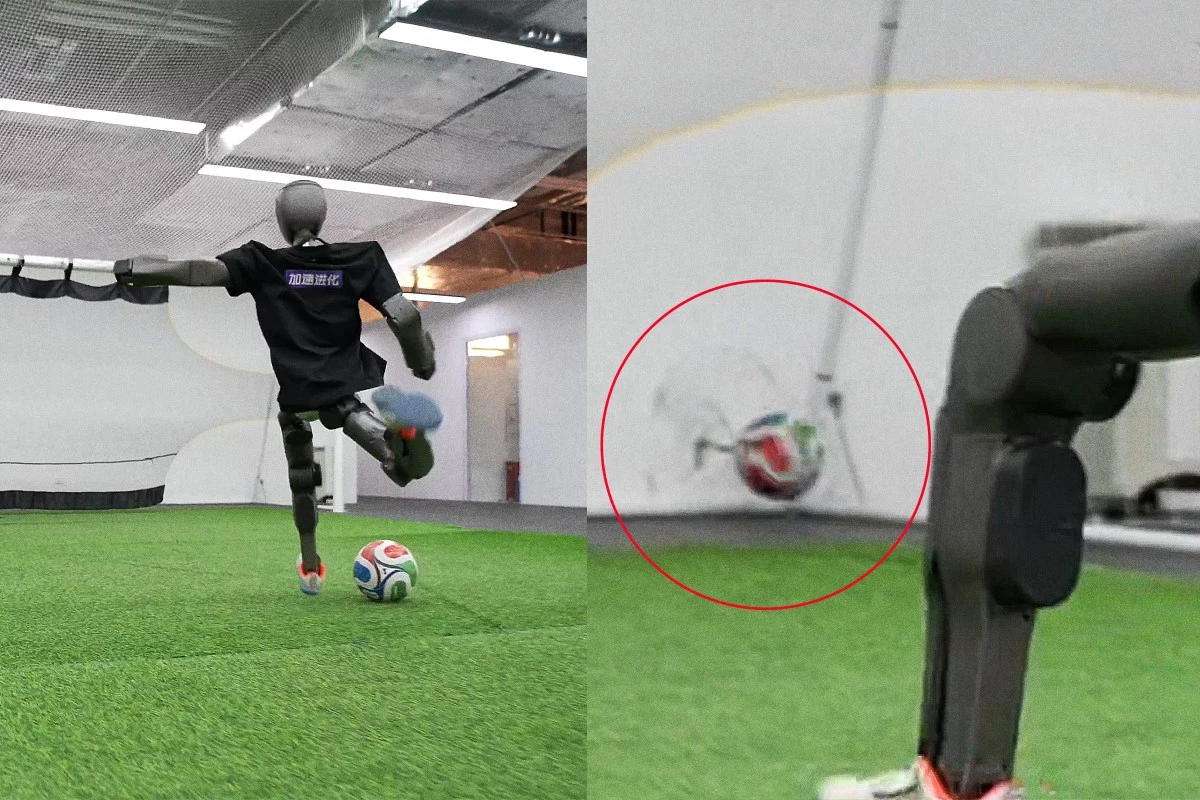
The viral footage of Booster Robotics’ T1 soccer-playing robot—notably its ability to strike a ball with enough force to shatter concrete—is more than a social-media spectacle. It is a compressed demonstration of where modern robotics is heading: toward high-power, high-precision machines that can operate in dynamic environments and, increasingly, in public view. The timing is also telling. As human football narratives build around traditional powerhouses—Spain’s status as a betting favorite among them—T1’s highlight-reel kicks have injected a parallel storyline: whether autonomous systems are approaching the athletic domain not as tools, but as performers.
T1’s competitive credentials, including a gold-winning showing at the 2025 RoboCup, matter because they shift the conversation away from novelty and toward repeatable engineering progress. RoboCup-style environments are structured but demanding: they require fast perception, stable locomotion, and decision-making under time pressure. The public fascination, however, is being driven by a simpler question: if a robot can kick *that* hard and aim *that* accurately, what else can it do—and what happens when it shares space with humans?
Under the hood: actuation, perception, and the gap between curated clips and real-world robustness
At the core of T1’s appeal is a visible leap in actuation and power delivery. High-torque motors paired with energy-dense power modules translate into explosive leg swings—an engineering feat for legged robots, where balance, heat, and mechanical stress typically constrain output. This is not merely “sports tech.” The same capabilities map directly onto adjacent markets where force and precision are monetizable:
- Logistics and warehousing robotics, where controlled bursts of power enable lifting, pushing, or rapid repositioning
- Prosthetics and rehabilitation devices, where actuator efficiency and responsiveness can improve gait assistance and patient outcomes
- Industrial automation, especially tasks requiring dynamic interaction rather than fixed-path motion
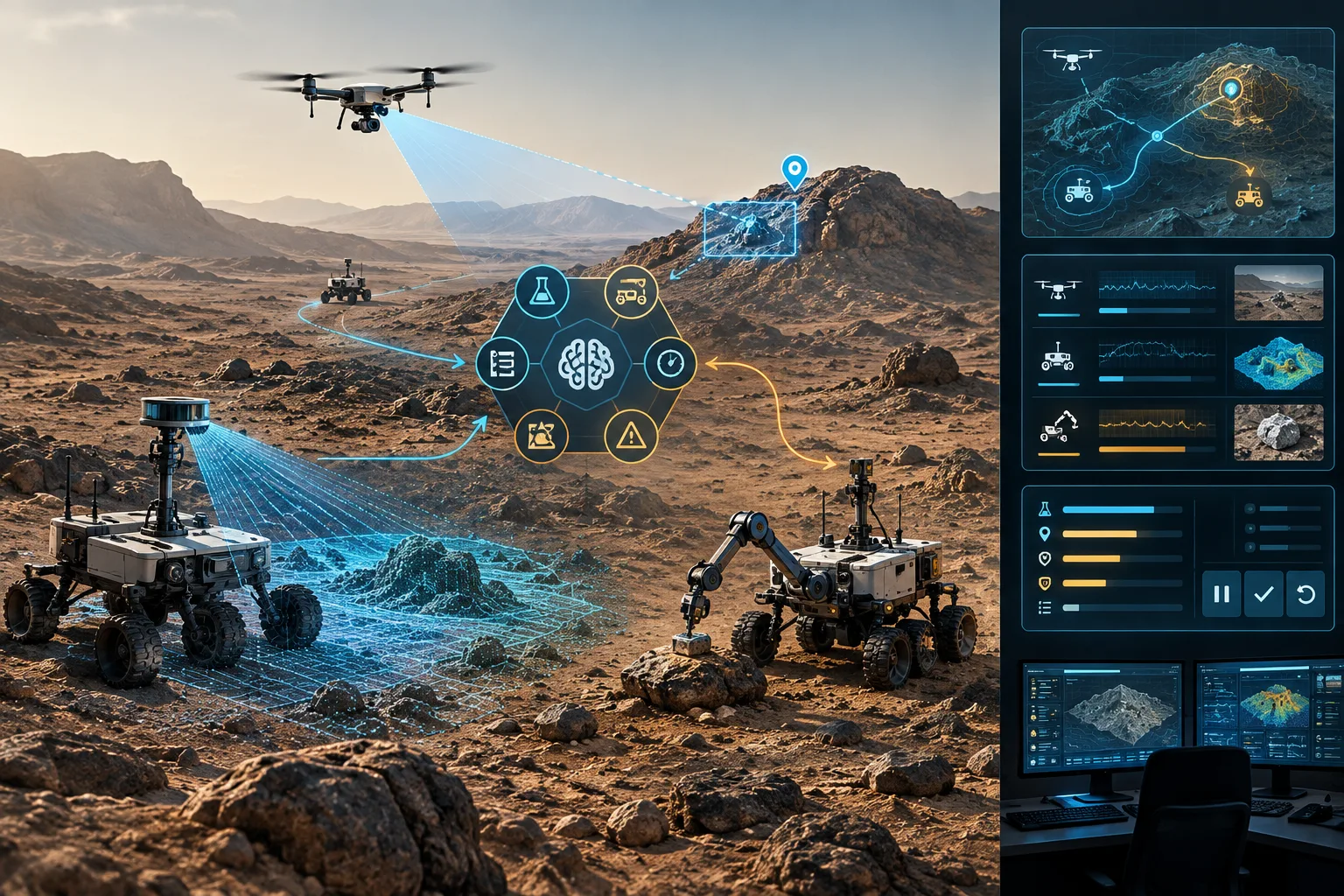
Equally consequential is the robot’s perception-and-control stack. Tracking a fast-moving ball and adjusting gait mid-kick implies meaningful progress in sensor fusion, predictive control, and real-time motion planning. In practical terms, this is the robotics equivalent of “reading the play”: anticipating trajectories, compensating for slip, and executing a coordinated movement without destabilizing the body.
Yet the viral format itself introduces a key analytical constraint. Highlight clips are, by nature, curated. They rarely reveal the failure modes that define real-world deployment: variable lighting, uneven pitch conditions, occlusions, opponent interference, or sensor noise. For business leaders evaluating robotics maturity, the central question is not whether T1 can produce a spectacular kick—it is whether it can do so consistently, with bounded risk, across environments that are not optimized for the machine.
That leads directly to the most sensitive dimension: human-robot interaction and safety. Reports of robots injuring bystanders across the broader robotics landscape have already primed regulators and insurers to scrutinize public deployments. A soccer robot capable of extreme force amplifies the stakes. The emerging baseline expectation will likely include:
- Soft or energy-absorbing exterior design to reduce impact severity
- Fast-shutdown and fail-safe protocols triggered by proximity, collision, or anomalous motion
- Certification and testing regimes analogous to cobotics standards in factories and emergency-response logic in autonomous vehicles
The more robots move from labs to stadiums, the more safety becomes not a feature—but a prerequisite for market access.
The business model beyond the pitch: SportsTech revenue, workforce shifts, and data as an asset
The economic implications of sports robotics are not limited to whether robots ever “join” human leagues. Even without formal integration, robotic exhibitions can become a standalone entertainment category, with monetization pathways that resemble the rise of e-sports: sponsorships, ticketing, streaming rights, and branded content. For clubs and leagues, the opportunity is twofold: create new programming and modernize fan engagement without altering the core human competition.
Several revenue and capability vectors stand out:
- Media rights and sponsorship tied to exhibition matches, halftime showcases, or parallel events
- Merchandising and licensing, especially if robot teams develop recognizable identities and narratives
- Training and performance services, where robots act as repeatable, configurable sparring partners
At the same time, the labor market implications are tangible. As robotics enters training facilities and venues, demand rises for robotics engineers, data scientists, safety officers, and specialized maintenance crews. This is not a simple displacement story; it is a reallocation of value toward technical roles that keep machines reliable, compliant, and continuously improved.
Perhaps the most underappreciated asset is data. Robotic trials generate structured telemetry—movement traces, reaction times, error rates, and interaction dynamics—that can feed analytics products. Properly governed, this data can be monetized through:
- Predictive performance analytics for broadcasters and content platforms
- Enhanced betting and engagement tools for regulated sports-wagering ecosystems
- Sponsorship measurement that links on-field events to audience response in real time
In a media economy increasingly driven by measurable engagement, robotics offers not only spectacle, but instrumentation.
Governance, geopolitics, and the next competitive frontier for clubs, leagues, and nations
Strategically, the emergence of high-performance robots in sport forces institutions to confront governance questions early—before incidents or controversies dictate the terms. Sports governing bodies will face pressure to define permissible autonomy, performance caps, and insurance and liability requirements. The winners in this phase are often the first movers in standards-setting, because they shape the rules that later become barriers to entry.
Technology partnerships will also become a differentiator. Clubs and federations that co-develop training robots—autonomous defenders, goalkeepers, or tactical simulators—could gain proprietary insight into player decision-making under novel conditions. That advantage is subtle but compounding: better training data, better scenario coverage, and faster iteration cycles.
The macro context matters as well. T1’s association with a Beijing robotics hub fits into a broader geopolitical competition for leadership in high-value robotics. Meanwhile, the enabling stack—AI, edge computing, and low-latency connectivity (including 5G)—points toward new formats such as remote coaching, real-time telemetry overlays, and augmented viewing experiences. Against that backdrop, supply-chain realities—semiconductors, sensors, specialized actuators—remain a practical constraint, pushing executives toward long-term supplier agreements or alternative architectures, including open-source hardware where feasible.
T1’s concrete-cracking kick is a vivid symbol, but the deeper story is institutional: as robots become powerful enough to entertain, train, and potentially compete, the defining challenge shifts from “can it work?” to “can it be trusted, governed, and scaled?” The organizations that answer that question first—through safety frameworks, smart partnerships, and disciplined commercialization—will shape how robotics enters the world’s most culturally protected arenas.


 By
By

 By
By
 By
By
 By
By

 By
By