
Arlington’s caissons return as a test case for modern animal welfare governance
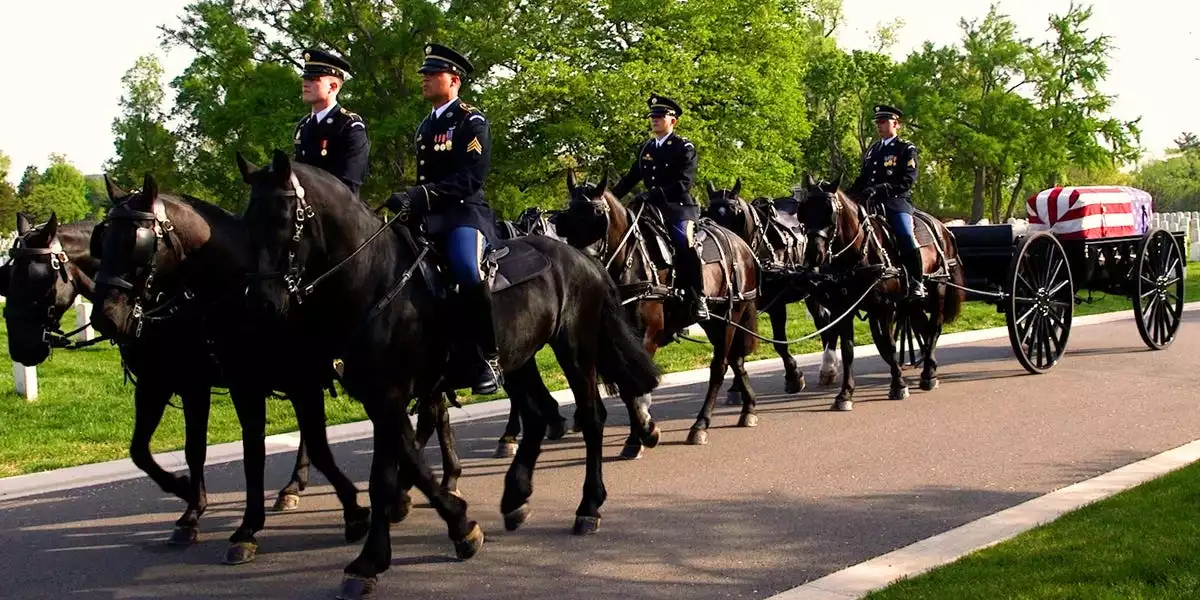
The U.S. Army’s decision to restore horse-drawn caisson detachments at Arlington National Cemetery in 2025 is more than the resumption of a solemn ritual; it is a high-visibility demonstration of how legacy institutions respond when tradition collides with modern expectations of accountability. The program’s 2023 suspension, prompted by a series of equine fatalities, created a reputational and operational inflection point: either retire an iconic ceremonial capability or rebuild it with standards that can withstand public scrutiny, stakeholder pressure, and internal readiness requirements.
The Army’s answer is a $30 million modernization effort that reframes the caisson unit as a contemporary, professionally managed operation—one that treats animal welfare not as a peripheral concern, but as a core performance metric. In an era when public institutions are increasingly evaluated through an ESG-like lens—ethics, transparency, and duty of care—Arlington’s caissons have become a proxy debate for how government agencies steward symbolic assets while meeting evolving social expectations.
Key elements of the restart signal a deliberate shift from tradition-as-inheritance to tradition-as-managed system:
- A dedicated veterinary command, led by Colonel Jason Crawford, elevating clinical oversight to a leadership function rather than an auxiliary service.
- Upgraded stables and infrastructure, positioning the horses’ environment as a controllable variable in health outcomes.
- Formalized welfare protocols and monitoring, designed to reduce preventable risk and standardize decision-making under pressure.
- High-cost equipment investments, including approximately $24,000 per ceremony in tack, underscoring the seriousness of the relaunch and the premium placed on safety and reliability.
From horsemanship to “precision care”: operational modernization with a data mindset
What stands out in the Army’s approach is the unmistakable influence of modern operational disciplines—those seen in advanced agriculture, industrial safety, and high-reliability organizations. While the source material does not confirm the use of wearables or IoT devices, the structure being built—full-time veterinary leadership, daily monitoring, and codified protocols—closely resembles the organizational prerequisites for data-driven equine health management.
In practical terms, this modernization is about converting a historically artisanal capability into a reproducible, auditable system. That shift matters because ceremonial units operate in a paradox: they are expected to appear timeless and effortless, yet they must function in real-world conditions where heat, stress, transport, and workload can compound quickly.
Several operational choices reflect a broader “precision” philosophy:
- Structured daily health checks and oversight mirror predictive maintenance logic used in aviation and manufacturing—identify early indicators, intervene before failure.
- Environmental and workload controls (enabled by stable upgrades and protocol discipline) treat the horses’ surroundings as part of the safety envelope.
- Standardization of care practices reduces variability between handlers and shifts, a common root cause in complex operations.
If the Army proceeds toward smart-stable technologies—biometric monitoring, environmental sensors, and AI-assisted risk alerts—it would not be a novelty so much as a natural continuation of the governance model now being installed. The strategic value is twofold: fewer adverse events and a defensible evidentiary trail demonstrating responsible stewardship.
The economics of ceremony: why $30 million can be rational in a tight-budget era
On its face, a $30 million investment in a ceremonial capability can appear difficult to justify amid defense priorities like cyber resilience, space systems, and AI-enabled operations. Yet the caisson program illustrates a reality often underappreciated in budget debates: symbolic capital has operational value. Arlington ceremonies are not entertainment; they are statecraft, civil-military connection, and institutional legitimacy expressed through ritual.
The spending also reveals how cost structures are being managed in a world of inflationary pressure—feed, veterinary services, and skilled labor rarely get cheaper. The Army’s approach resembles private-sector cost containment through selective vertical integration:
- In-house veterinary leadership and soldier-led care reduce reliance on external vendors and create tighter control loops.
- Modernized facilities can lower long-term risk costs by preventing avoidable incidents and improving baseline health conditions.
- Premium tack and equipment function as safety investments—high upfront cost, potentially lower incident probability.
There is also a regional economic dimension. The choice of Ocala, Florida, as a training locus taps into an established equine ecosystem—breeding, veterinary expertise, and specialized supply chains. This is consistent with how public spending often amplifies existing industry clusters, creating spillovers for:
- equestrian gear and leatherwork suppliers
- feed and stable-management services
- veterinary practices and equine health specialists
- training and transport providers
Reputation, readiness, and the new standard for “heritage operations”
The caisson relaunch is ultimately a reputational risk management story—one with implications beyond Arlington. The earlier fatalities exposed the Army to criticism from animal-welfare advocates and the broader public, and the response signals an institutional recognition that public trust is a strategic asset. In corporate terms, it is the equivalent of rebuilding a flagship product line after a safety crisis: the relaunch must be visibly more rigorous than what came before.
Equally important is the human dimension inside the unit. Caisson soldiers describe the mission as “humbling” and “profound,” language that points to identity, morale, and retention benefits. High-visibility assignments can function like elite rotations in the private sector—demanding, selective, and meaningful—especially in talent-constrained environments where purpose and prestige matter.
What emerges is a blueprint for other legacy programs—military and civilian—that rely on tradition but operate under modern ethical scrutiny:
- Codify care and training into measurable competencies rather than relying on informal apprenticeship alone.
- Elevate welfare oversight into command-level accountability with clear authority and resourcing.
- Invest in infrastructure and equipment as risk controls, not discretionary upgrades.
- Treat transparency and governance as part of readiness, not as public relations.
By rebuilding the caisson program around professionalized training, command-led veterinary oversight, and rigorous welfare protocols, the Army is effectively redefining what it means to preserve tradition: not by freezing it in time, but by engineering it to endure under the standards of the present.

 By
By

 By
By
 By
By
 By
By


 By
By