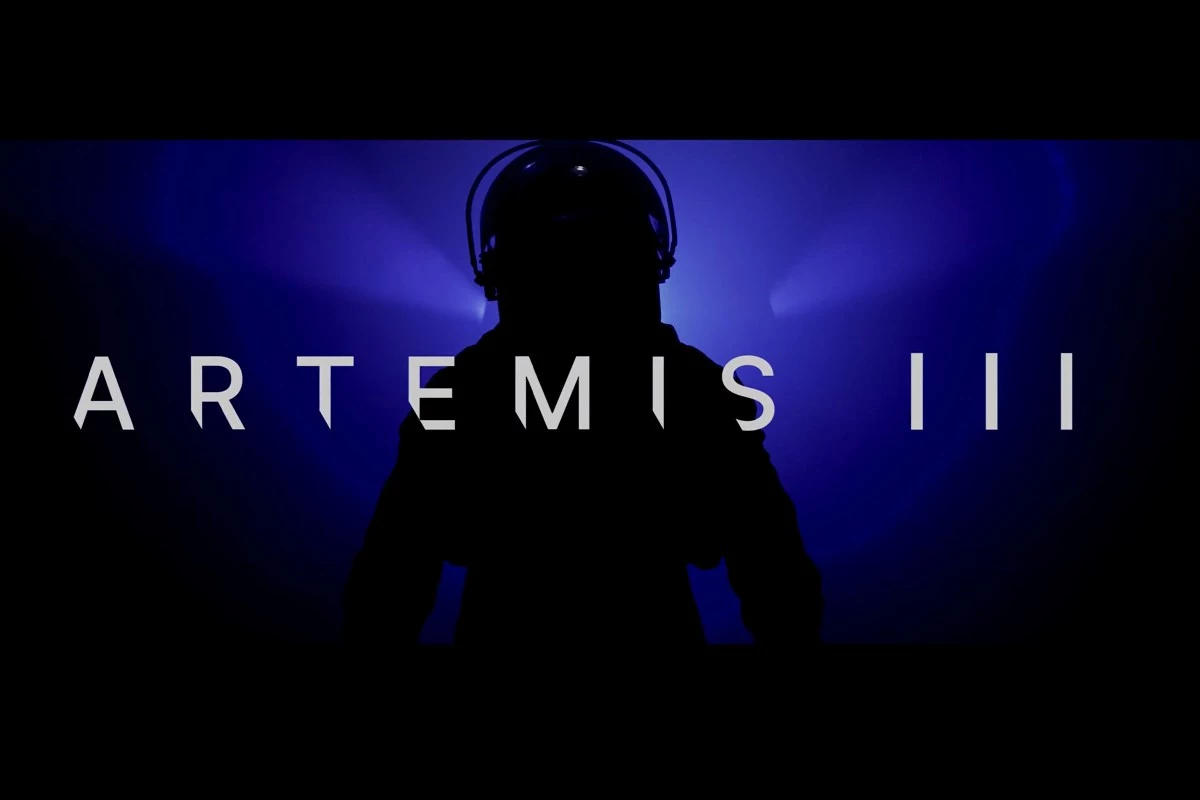

Artemis 3’s crew reveal spotlights a new kind of Moon mission—built on commercial choreography
NASA’s announcement of the Artemis 3 crew does more than name the next astronauts headed toward the Moon; it clarifies the agency’s evolving operating model for human exploration. The mission is no longer framed as a single, monolithic spacecraft executing a straightforward translunar injection and landing. Instead, Artemis 3 is shaping up as a multi-vehicle, commercially enabled logistics chain, where mission success depends on tight interoperability among platforms built by different companies under different engineering cultures and risk postures.
The plan described—astronauts launching in Orion, then conducting a rapid sequence of docking and undocking operations in low Earth orbit (LEO) to transfer first to Blue Origin’s Blue Moon lander and then to a lunar-optimized SpaceX Starship—signals a deliberate pivot toward orbital staging. Operationally, it compresses complex rendezvous activity into a narrow window (roughly three days), raising the premium on crew timelines, contingency planning, and ground-to-space coordination.
From a business and technology perspective, Artemis 3 is becoming a test of whether NASA can orchestrate a distributed, multi-contractor mission architecture with the same reliability historically achieved through vertically integrated government systems—while still capturing the cost and innovation benefits that commercial partnerships promise.
Docking, transfer, and refueling: the technical “critical path” that will define readiness
The most consequential detail in the Artemis 3 concept is not the destination—it is the sequence of in-space operations required to get there. Each step introduces its own failure modes, and the compounded risk is what makes this architecture both ambitious and fragile.
Key technical dependencies include:
- Precision rendezvous and docking across heterogeneous vehicles
Orion, Blue Moon, and Starship must execute compatible docking approaches, relative navigation, and mechanical/electrical interfaces. This is as much a systems-integration challenge as it is a flight-dynamics problem, requiring robust guidance, navigation, and control (GNC) and carefully validated procedures.
- Human factors engineering in a high-tempo transfer chain
Crew transfers—especially if any portion involves tethering or constrained movement—demand rigorous attention to ergonomics, suit interfaces, fatigue management, and abort pathways. The tighter the timeline, the less slack exists for troubleshooting.
- Orbital refueling as a make-or-break capability
The unproven ability to refuel Starship in LEO is arguably the single most pivotal technology in the Artemis 3 stack. If demonstrated reliably, it validates a reusable, high-throughput logistics model that can scale beyond lunar sorties. If it slips, the program faces difficult alternatives: heavier single-launch solutions, new depot architectures, or mission redesigns that can ripple across schedules and budgets.
Recent setbacks—such as a Blue Origin New Glenn explosion at Cape Canaveral and a Starship V3 failure—underscore the reality that Artemis 3 is being assembled from systems still moving through rapid iteration. That is not inherently disqualifying; iterative development is central to modern aerospace innovation. But it does mean NASA’s integration burden rises sharply: the agency must manage not only the performance of each vehicle, but also the interfaces, timelines, and operational assumptions that connect them.
The economics of a multi-provider lunar stack: cost volatility, supply-chain lift, and investor psychology
Artemis has always been both an exploration program and an industrial policy instrument. Artemis 3, in particular, highlights how NASA is attempting to seed a cis-lunar market by paying for services and capabilities that could later be repurposed for commercial demand. Yet the same modularity that expands the supplier base can also amplify cost uncertainty.
Several economic dynamics stand out:
- Budget pressure from integration complexity
Multi-vehicle missions tend to create “hidden” costs: interface testing, joint simulations, cross-company verification, and operational rehearsals. With NASA’s topline funding constrained by U.S. budget cycles, overruns can force trade-offs—either within Artemis or across other science and technology priorities.
- A broad subcontractor stimulus with uneven margins
The Artemis ecosystem pulls in specialized suppliers across propulsion, cryogenic fluid management, avionics, docking systems, and in-space servicing. This can generate meaningful private-sector revenue, but profitability will depend heavily on contract structures—particularly the balance between fixed-price incentives and cost-plus risk absorption.
- Market sentiment shaped by visible failures—and visible recoveries
High-profile anomalies at Blue Origin and SpaceX can cool near-term enthusiasm for space-tech investment, especially in segments tied to cis-lunar infrastructure. At the same time, a credible demonstration of orbital refueling and repeatable lunar transport could unlock capital for adjacent verticals such as lunar communications, robotics, surface power, tele-science platforms, and resource prospecting.
For investors and industry strategists, Artemis 3 is less a single mission than a signal about whether the Moon is becoming a repeatable destination—the prerequisite for any sustainable business case.
Strategic stakes in cislunar space: norms, alliances, and dual-use capability spillovers
Beyond engineering and economics, Artemis 3 sits inside a competitive geopolitical environment where timelines and credibility matter. A sustained U.S.-led lunar cadence supports the Artemis Accords framework and strengthens America’s ability to shape norms around interoperability, resource utilization, and operational transparency. Conversely, prolonged delays risk ceding narrative momentum to other national programs, including China’s steadily advancing lunar efforts.
The strategic spillovers are also technological:
- In-space refueling, rendezvous, and high-throughput communications are not purely civilian achievements; they map closely to capabilities relevant for resilient space architectures and distributed sensing.
- The Artemis schedule will influence policy debates on space traffic management, export controls, and planetary protection—especially if a high-visibility failure triggers calls for tighter oversight that could slow commercialization.
What emerges from NASA’s Artemis 3 crew announcement is a clear picture of the next era of exploration: less Apollo-style singularity, more networked infrastructure, where success depends on the reliability of interfaces as much as the power of rockets. If NASA and its partners can prove that this commercial choreography works—docking cleanly, transferring safely, refueling predictably—the Moon stops being a one-off triumph and starts looking like an operating environment. That distinction will determine whether Artemis becomes a sustained lunar presence or a technically impressive, economically brittle detour on the road to deeper space.

 By
By
 By
By
 By
By


 By
By
 By
By