
A high-stakes reckoning for philanthropic power and public legitimacy
Bill Gates’ public apology at a Gates Foundation town hall—prompted by newly unsealed materials placing him in Jeffrey Epstein’s company alongside unidentified young women—lands with particular force because it intersects personal judgment, institutional governance, and geopolitical dependency on private capital. Gates has not been accused of participating in Epstein’s criminal conduct, yet the optics and documented contact matter: email records from 2011 show Epstein, already a convicted sex offender, offering fundraising assistance and engaging with senior foundation executives.
Now, with Gates expected to provide private testimony before the House Oversight Committee, the story shifts from reputational damage to a more structural question: how much informal influence can flow through elite networks before it becomes a governance failure with public consequences? Congressional investigators have signaled they will examine whether Epstein leveraged access, coercion, or blackmail—an inquiry that, regardless of outcome, underscores a broader point lawmakers are eager to make: wealth and status do not confer immunity from scrutiny.
This is not merely a scandal attached to a famous individual. It is a stress test for the credibility of modern mega-philanthropy at a moment when large foundations increasingly operate as quasi-public actors in global health, pandemic preparedness, vaccine delivery, and food security—domains where trust is not an accessory but a prerequisite.
Due diligence, board accountability, and the new compliance baseline for foundations
The most consequential takeaway for the philanthropic sector may be the apparent due-diligence breakdown. Epstein’s criminal status was not obscure; it was discoverable through routine public-record checks. If a sophisticated institution can be drawn into reputational exposure through preventable vetting gaps, the implication is stark: traditional “Know Your Partner” protocols are not keeping pace with modern risk.
For boards and trustees, this moment sharpens fiduciary expectations. The governance question is no longer limited to whether programs are effective; it extends to whether leadership and staff have institutional safeguards strong enough to prevent third-party relationships from compromising mission integrity.
Key governance and risk oversight issues now in focus include:
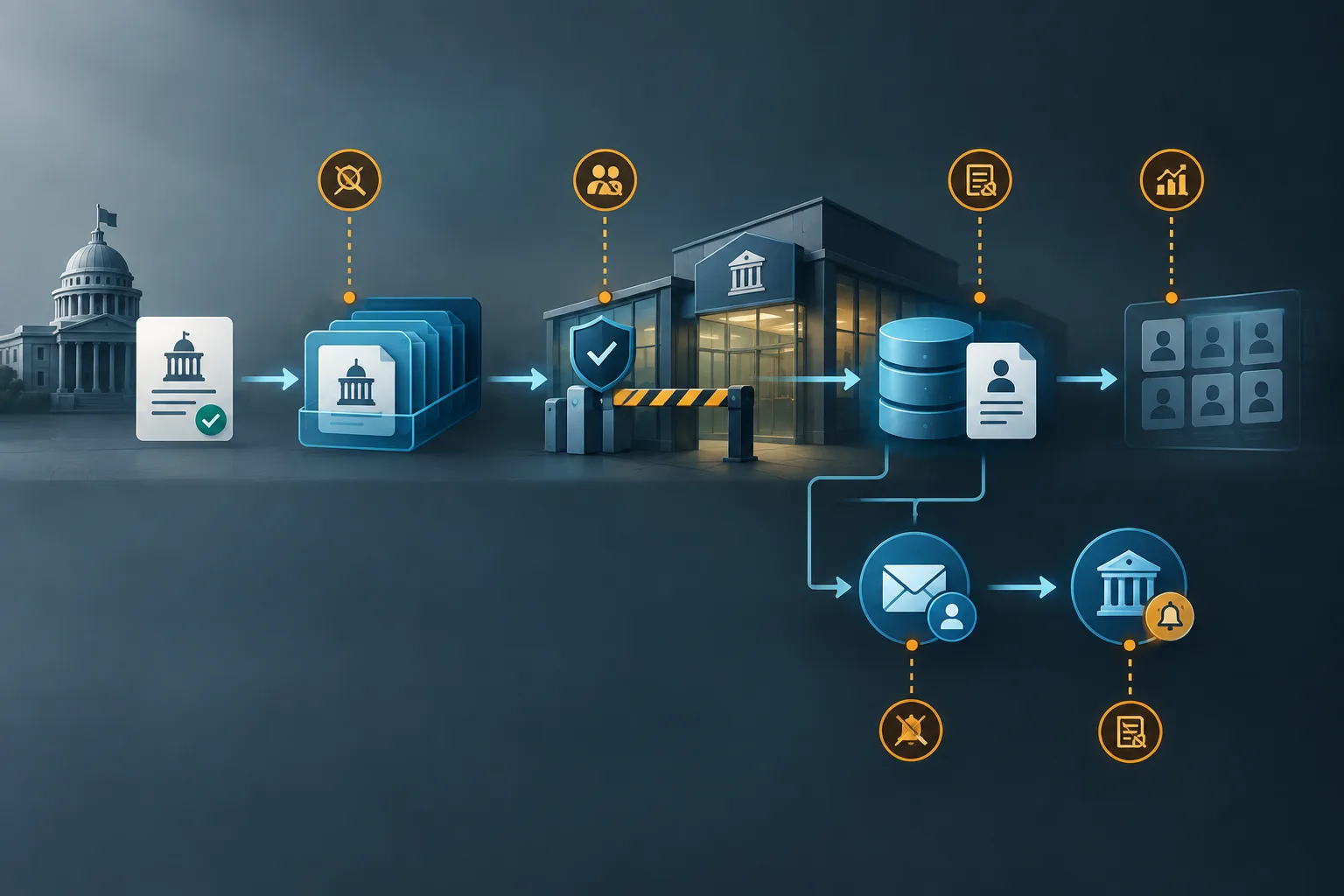
- Third-party engagement controls: Clear thresholds for who can meet whom, under what circumstances, and with what documentation.
- Escalation pathways: Independent mechanisms that allow staff to flag reputational or legal concerns without fear of retaliation.
- Board visibility: Trustees may face pressure to demonstrate they receive timely, detailed reporting on high-risk relationships—not sanitized summaries.
- Auditability: The ability to reconstruct decision-making around controversial contacts, including meeting notes, emails, and internal approvals.
The Oversight Committee’s interest also signals a broader regulatory mood: lawmakers increasingly view large nonprofits as wielding soft power that can rival state capacity, while operating under governance norms that are often less transparent than those applied to public agencies.
Global health financing under strain as state aid retreats and scrutiny rises
The timing is particularly fraught. The Gates Foundation’s global health footprint—often described in the context of an $89 billion endowment and long-term commitments—has expanded in relative importance as public-sector aid budgets tighten and humanitarian crises multiply. As U.S. foreign assistance contracts and geopolitical fragmentation grows, private philanthropy is asked to fill gaps that governments once covered.
That dynamic creates a strategic vulnerability: when a foundation becomes systemically important, its reputational stability becomes a form of infrastructure. Any erosion of confidence at the top can cascade outward to partners and recipients, including national health ministries, multilateral agencies, and NGOs.
Potential downstream effects that policymakers and implementers will quietly model include:
- Slower program approvals as host governments apply tighter scrutiny to partnerships associated with controversy.
- Reduced field access if local stakeholders fear political blowback from association.
- Higher compliance costs for grantees as they are asked to document governance assurances beyond standard reporting.
- Strategic dependency risk for countries whose health initiatives rely heavily on a small number of philanthropic funders.
This is where the Epstein episode becomes more than a headline: it touches the operational reality of global health delivery, where trust, legitimacy, and continuity determine whether vaccination campaigns, maternal health programs, and disease surveillance systems can function at scale.
Technology partnerships, misinformation pressure, and the next model of “trust architecture”
The Gates Foundation has been a catalytic player in tech-enabled development, spanning digital health systems, agricultural biotechnology, data analytics, and supply-chain innovation. In that ecosystem, reputational risk is not contained within the nonprofit world; it can affect collaboration with major technology firms and research institutions that are increasingly sensitive to brand association and governance optics.
At the same time, the information environment is unforgiving. Vaccine misinformation, skepticism toward digital surveillance, and distrust of elite institutions can turn governance failures into narrative fuel. Even if investigations find no criminal conduct by Gates, the mere existence of avoidable contact with Epstein can be used to amplify anti-establishment claims—undermining public-health campaigns that depend on credible messengers.
What emerges is a need for trust architecture: governance systems that are not only robust, but demonstrably robust to external observers. The forward-looking playbook for major philanthropies is likely to converge around:
- Enhanced vetting mechanisms, potentially including AI-assisted compliance tools that cross-reference watchlists, litigation records, and high-risk network signals—paired with human oversight to avoid automation bias.
- Independent ethics authority, empowered to pause engagements and require full background investigations without deference to fundraising or access considerations.
- Proactive transparency, such as publishing structured disclosures about high-level third-party meetings and partner integrity processes, without compromising legitimate privacy and security needs.
- Risk-distributed collaboration models, including multi-stakeholder financing vehicles and shared governance with UN agencies or local governments to reduce single-entity exposure.
- Ring-fenced critical projects, insulating essential global health and digital infrastructure initiatives from reputational contagion through independent leadership and clearer operational boundaries.
The Gates-Epstein episode is ultimately a referendum on whether 21st-century philanthropy can match its outsized influence with governance standards that are equally outsized—because in global health and technology-driven development, credibility is not a soft asset; it is a hard dependency.


 By
By
 By
By
 By
By
 By
By
 By
By

 By
By