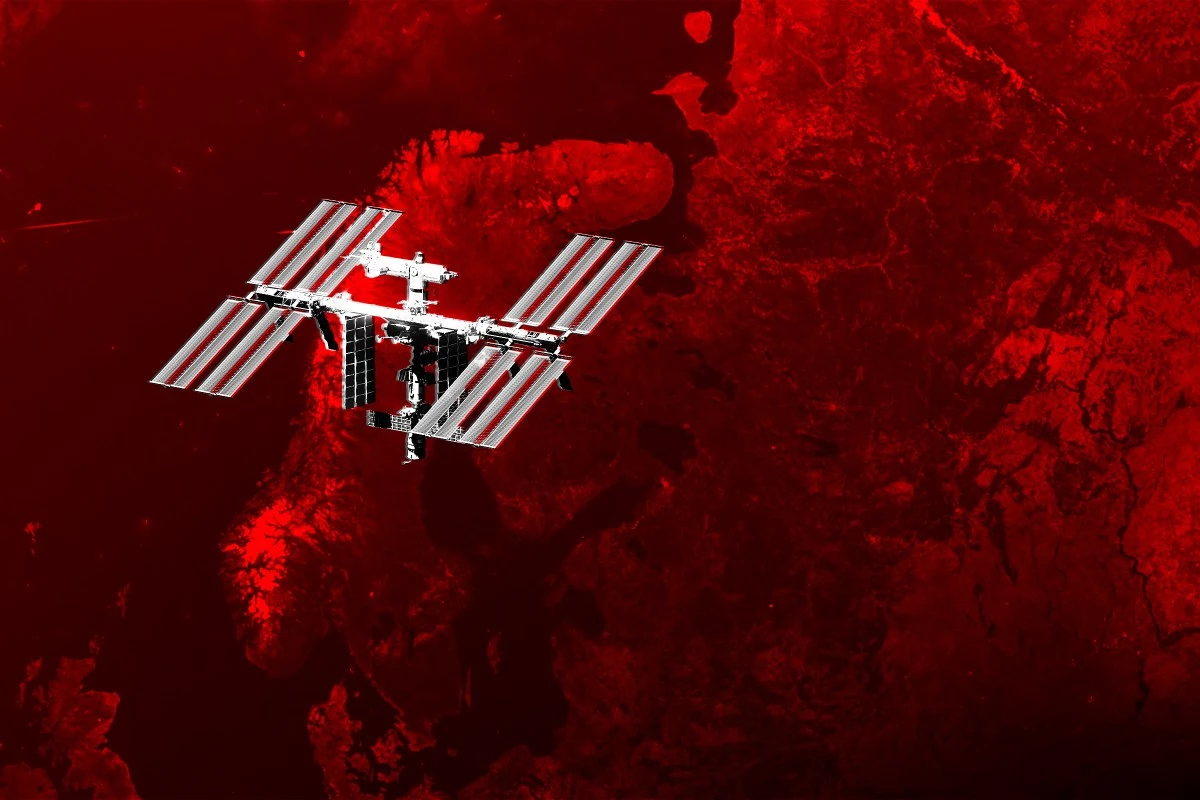

A sudden shelter order underscores how thin the margin can be in low Earth orbit
The latest incident aboard the International Space Station (ISS)—astronauts directed on short notice to take shelter inside SpaceX’s Crew Dragon—reads less like a dramatic anomaly and more like a revealing stress test of an aging orbital system. The trigger was newly identified cracks and air leaks in the Russian Service Module Transfer Tunnel, a location whose integrity matters because it sits within the station’s pressurized architecture and operational flow.
NASA has emphasized that no immediate danger was detected, yet the operational response—moving crew into a spacecraft designed for safe haven and rapid return—signals that risk management on the ISS is increasingly about containing uncertainty as much as responding to confirmed failures. Roscosmos has scheduled a more extensive repair operation for June 5, but the broader context is difficult to ignore: the ISS has been living with a chronic leak issue since September 2019, including the now-famous 2020 episode in which cosmonauts traced airflow using a tea bag—a low-tech diagnostic method that became an emblem of how hard micro-leaks can be to localize in complex, multilayered structures.
With the ISS expected to retire in roughly four years, each new depressurization event is not merely a maintenance problem. It is a reminder that the station’s remaining lifespan will be defined by a continuous negotiation between engineering reality, operational discipline, and geopolitical interdependence.
From “find the leak” to “predict the leak”: the technology gap now in plain view
The ISS is often described as a triumph of international engineering, but the current episode highlights a more sobering truth: long-duration structural health monitoring at scale remains an unsolved operational challenge in human spaceflight. When leak detection relies on manual procedures—tape, airflow tracing, and stepwise isolation—it exposes the limits of instrumentation that was designed decades ago, not for today’s expectations of real-time diagnostics.
Several technology implications stand out for space agencies and commercial station developers:
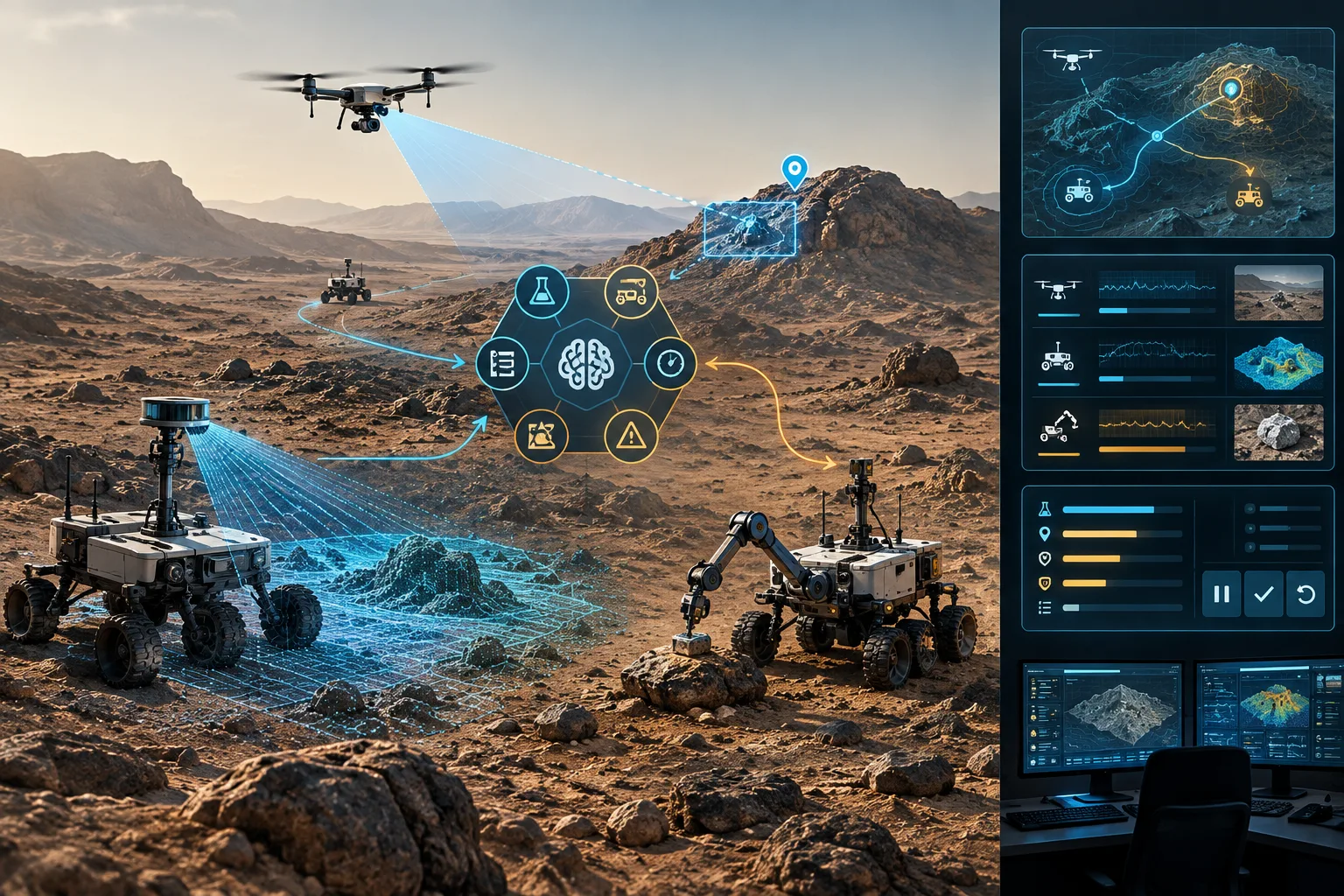
- Embedded sensing is becoming non-negotiable. The inability to rapidly pinpoint micro-leaks suggests a need for integrated sensor networks that can detect pressure anomalies and localize faults without consuming scarce crew time. Candidate approaches include fiber-optic sensing (e.g., Brillouin-based strain/temperature monitoring) and ultrasonic phased-array inspection methods adapted for orbital use.
- Materials aging is no longer theoretical. Repeated thermal cycling, micro-meteoroid exposure, and atomic oxygen erosion accelerate fatigue. The cracks in the Russian tunnel underscore that legacy alloys and sealants—many qualified in the 1990s—are approaching or exceeding design assumptions.
- The ISS can still serve as a valuable testbed. Even as retirement approaches, the station offers a rare opportunity to validate predictive maintenance concepts under real operational constraints. The most transferable lesson for future habitats may not be the repair itself, but the data: crack propagation rates, patch performance, and the operational cost of each intervention.
This is where the industry’s broader shift toward digital twins and AI-driven analytics becomes more than a buzzword. If commercial low Earth orbit (LEO) platforms are to be economically viable, they will need to move from reactive troubleshooting to forecasting component fatigue—the same logic already reshaping aviation, energy infrastructure, and maritime maintenance.
Operational and economic ripple effects: crew time, manifests, and the true cost of aging hardware
Every unplanned repair on the ISS carries a hidden price tag. It diverts crew labor, consumes cargo capacity, and introduces schedule volatility that can cascade across international partners and commercial providers. Even when an incident does not escalate into an emergency, the operational posture shifts: more inspections, more coordination, more contingency planning.
Key economic and programmatic pressures are converging:
- Manifest disruption and cost inflation. Delays to visiting vehicles and operational stand-downs can ripple into crew rotations and resupply timelines, raising costs and tightening margins—particularly for international customers purchasing seats or payload opportunities.
- Budget trade-offs inside NASA and partner agencies. With constrained public budgets and inflationary pressure across aerospace supply chains, urgent station repairs can displace planned investments—whether in Artemis logistics, technology demonstrations, or commercial LEO transition programs.
- Commercial crew as strategic insurance. The shelter-in-place move into Crew Dragon reinforces a central reality of the post-Shuttle era: commercial vehicles are not just transportation; they are risk buffers. In moments like this, redundancy is not a luxury—it is the architecture.
The incident also strengthens the business case for new-build platforms over life-extension. As systems age, the return on each additional year of operation becomes harder to justify unless maintenance becomes cheaper, faster, and more predictable—conditions that legacy modules were never designed to meet.
Geopolitics, reliability, and the accelerating pivot to commercial space stations
The ISS has long been a rare arena where U.S.–Russia technical cooperation persisted despite political strain. Yet recurring leaks in the Russian segment, combined with broader geopolitical tensions, amplify the risks of bilateral dependence in critical infrastructure. Even if day-to-day collaboration remains professional, the structural reality is that reliability issues can force strategic rebalancing—more operational reliance on U.S. and European capabilities, and greater urgency around contingency planning.
Reliability also functions as a form of soft power in space. High-visibility incidents—especially those involving crew shelter procedures—can erode public confidence and intensify the push by national agencies and private firms toward indigenous or commercially controlled orbital platforms. That trend is already underway, with concepts such as Axiom Station and Orbital Reef aiming to deliver modernized modules, standardized interfaces, and maintainability designed in from the start.
What happens next on the ISS will be watched closely not because a single leak defines the station’s fate, but because it clarifies the direction of travel for human spaceflight in LEO: toward sensor-first safety, predictive maintenance, and a more diversified ecosystem where no single partner segment becomes a single point of failure. The station’s most enduring contribution may ultimately be the hard-earned engineering evidence it provides—showing future habitat designers exactly how space structures age, how cracks propagate, and how operational resilience is built when the nearest repair shop is 400 kilometers below.

 By
By
 By
By
 By
By


 By
By
 By
By