
Nvidia RTX Spark and the redefinition of the “AI-first” personal computer
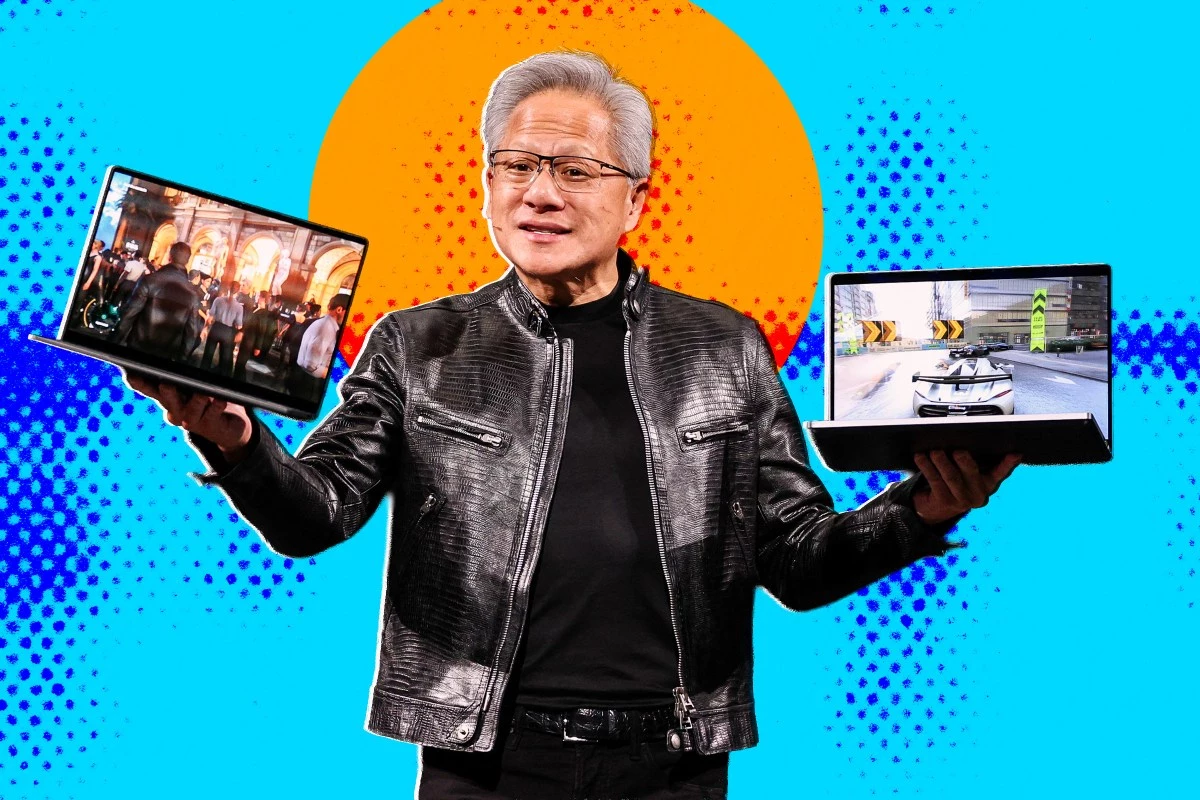
Nvidia’s unveiling of the RTX Spark family signals a deliberate attempt to move AI from a cloud-dependent service into a default capability of premium consumer PCs. The pitch is not subtle: these processors are positioned as among the most efficient PC chips Nvidia has built, designed to run large AI agents locally rather than treating the laptop as a thin client for remote inference.
At the center of the narrative is CEO Jensen Huang’s vision of an “AI supercomputer” in every home—an always-available compute hub that can coordinate TVs, security systems, personal assistants, and creative workflows. Whether that framing proves prescient or premature, it reflects a broader industry shift: AI is increasingly being treated as a platform layer—like graphics acceleration or broadband connectivity—rather than a single application.
OEM interest reportedly spans Asus, Dell, Lenovo, HP, MSI, and Microsoft, suggesting the category is being taken seriously by the PC ecosystem. The commercial bet is that a meaningful slice of creators, developers, and high-end gamers will pay thousands of dollars for on-device AI performance, especially as privacy, latency, and workflow control become differentiators.
Architecture as strategy: CPU–GPU convergence and unified memory at scale
Technically, RTX Spark’s most consequential statement is that AI compute is no longer a discrete add-on. By combining a high-core-count CPU with thousands of GPU cores and up to 128 GB of unified memory, Nvidia is pushing toward a tightly coupled architecture optimized for the data movement patterns of modern AI workloads.
Key implications stand out:
- Unified memory as an AI enabler: A large shared memory pool reduces friction between CPU and GPU execution, minimizing the classic bottlenecks of shuttling data across buses and chip boundaries. The comparison to Apple’s unified memory approach is inevitable, but Nvidia’s emphasis is less about general efficiency and more about sustaining high-throughput AI inference and multi-model workflows.
- Parallelism aimed at agentic workloads: With reported configurations reaching 20 CPU cores and 6,144 GPU cores, Spark is engineered for the kind of concurrent execution that AI agents and orchestration frameworks increasingly demand—retrieval, tool use, planning, and multimodal processing happening in tight loops.
- Edge AI and data locality: The claim that these systems can run very large models locally (including references to 120B-parameter-class inference) underscores a strategic direction: keep sensitive prompts, documents, and context windows on the device, reducing dependency on external APIs and cross-border data flows.
This is also competitive positioning by design. Against Intel and AMD, Spark raises the bar for how tightly AI acceleration must be integrated into the PC platform. Against Apple Silicon, it frames a bifurcation: Apple’s stack is optimized for battery life and media pipelines, while Nvidia is staking leadership on raw AI throughput and agent execution. The market may ultimately support both—especially if “AI PC” becomes less a single category and more a spectrum of specialized machines.
The business calculus: premium pricing, total cost of ownership, and demand realism
The RTX Spark proposition is compelling, but the market mechanics are less forgiving. These are expected to land at the premium end of the laptop spectrum, and that immediately narrows the addressable audience. For many consumers, the question won’t be whether local AI is impressive—it will be whether it is worth the upfront cost and ongoing operating trade-offs.
Several economic variables will shape adoption:
- Premiumization versus mass-market pull: The most natural buyers are likely to be AI developers, creators, and prosumer gamers who can translate performance into productivity, revenue, or competitive advantage. Mainstream consumers may struggle to justify the price if their AI usage is intermittent or satisfied by cloud tools.
- Power, thermals, and “hidden” costs: High-performance AI laptops can carry meaningful energy draw and cooling requirements, which affects comfort, portability, and electricity bills. In enterprise settings, this becomes a procurement and facilities question; at home, it becomes a lifestyle question.
- Software ecosystem readiness: Hardware leadership is only durable if frameworks and applications exploit it. Broad optimization across PyTorch, TensorFlow, ONNX Runtime, and emerging agent orchestration stacks will determine whether Spark feels like a step-change or merely a spec-sheet triumph.
- Cloud competition and hybrid economics: Cloud providers can often deliver better raw scale and elastic pricing for bursty workloads. Spark’s strongest value proposition may be hybrid: local inference for privacy and latency, with cloud escalation for training, large-batch jobs, or peak demand.
The demand uncertainty is not trivial. Today’s excitement around agentic coding assistants and multimodal tools is real, but the durability of “must-run-locally” use cases remains unproven outside regulated industries, IP-sensitive workflows, and latency-critical applications.
Strategic ripple effects: OEM risk, cloud model shifts, and regulatory tailwinds
For PC makers, RTX Spark systems can function as halo products—high-margin flagships that signal innovation even if volumes are limited. Yet halo strategies come with forecasting risk: overestimating demand can create inventory pressure, while under-supplying can concede mindshare to faster-moving competitors.
For cloud and AI service providers, widespread local inference introduces a nuanced threat and opportunity. A meaningful shift toward on-device execution could cannibalize some inference revenue, but it could also create new patterns where devices pre-process data locally and “burst” to the cloud selectively—changing, rather than eliminating, consumption.
Regulation and geopolitics add another layer. On-device inference aligns with tightening privacy regimes such as GDPR and CCPA, reducing cross-border transfers and making “local-by-default” a compliance-friendly architecture. At the same time, high-performance AI silicon increasingly attracts export-control scrutiny, and globally distributed Spark-equipped devices could face compliance complexity reminiscent of data-center accelerators.
RTX Spark ultimately represents more than a new chip line: it is Nvidia arguing that the next era of personal computing will be defined by who can run the most capable AI locally, reliably, and securely—and who can make that capability feel indispensable rather than aspirational.

 By
By
 By
By

 By
By
 By
By
 By
By

 By
By