
A World Cup security moment shaped as much by politics as by technology
As North America prepares to host the FIFA World Cup, the tournament’s operational planning is colliding with a charged political environment defined by stringent immigration enforcement and an intensified law-and-order posture. Public unease is not being driven solely by conventional safety concerns—crowd control, terrorism risk, or stadium logistics—but by the perception that security policy is being fused with immigration deterrence and civil-liberties tradeoffs.
High-profile remarks attributed to senior political figures, including Vice President JD Vance and former Homeland Security Secretary Kristi Noem, have sharpened anxieties among foreign visitors and diaspora communities. Even without formal policy changes tied directly to the tournament, the messaging effect matters: major global events run on trust—trust that fans can travel, gather, and celebrate without being treated as suspects first and guests second.
This is the context in which new security technologies are being introduced. When a public already feels that enforcement is expanding, any visible symbol of surveillance—especially one that looks like it belongs in speculative fiction—can become a lightning rod. The result is a World Cup security narrative increasingly defined by perception management, not only operational readiness.
Robot dogs at the stadium: what Spot is, what it isn’t, and why it still triggers alarm
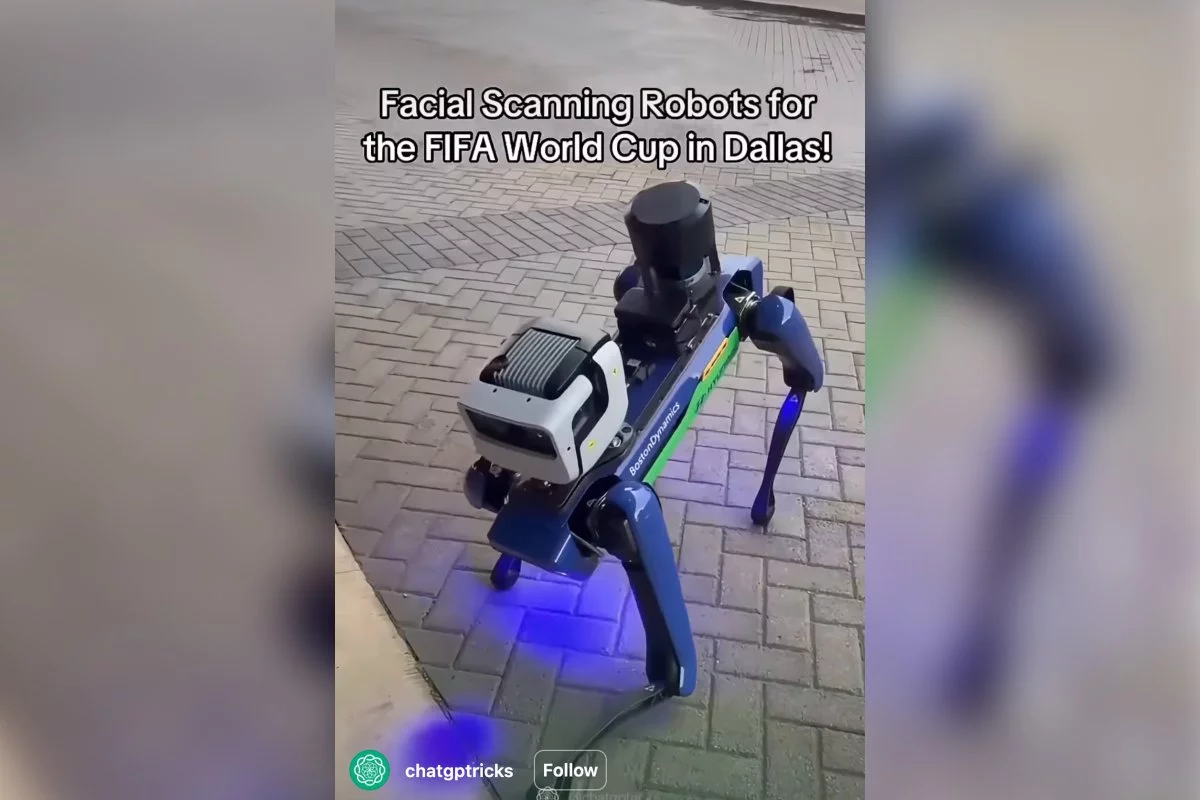
Into this atmosphere steps Boston Dynamics’ Spot quadruped robot, deployed under Hyundai’s “Security Spot” initiative at AT&T Stadium in Arlington, Texas, with Mexico also planning to field four K9-X units. The optics are immediate: a robotic “dog” patrolling a venue reads as a step-change from familiar security layers like guards, metal detectors, and CCTV.
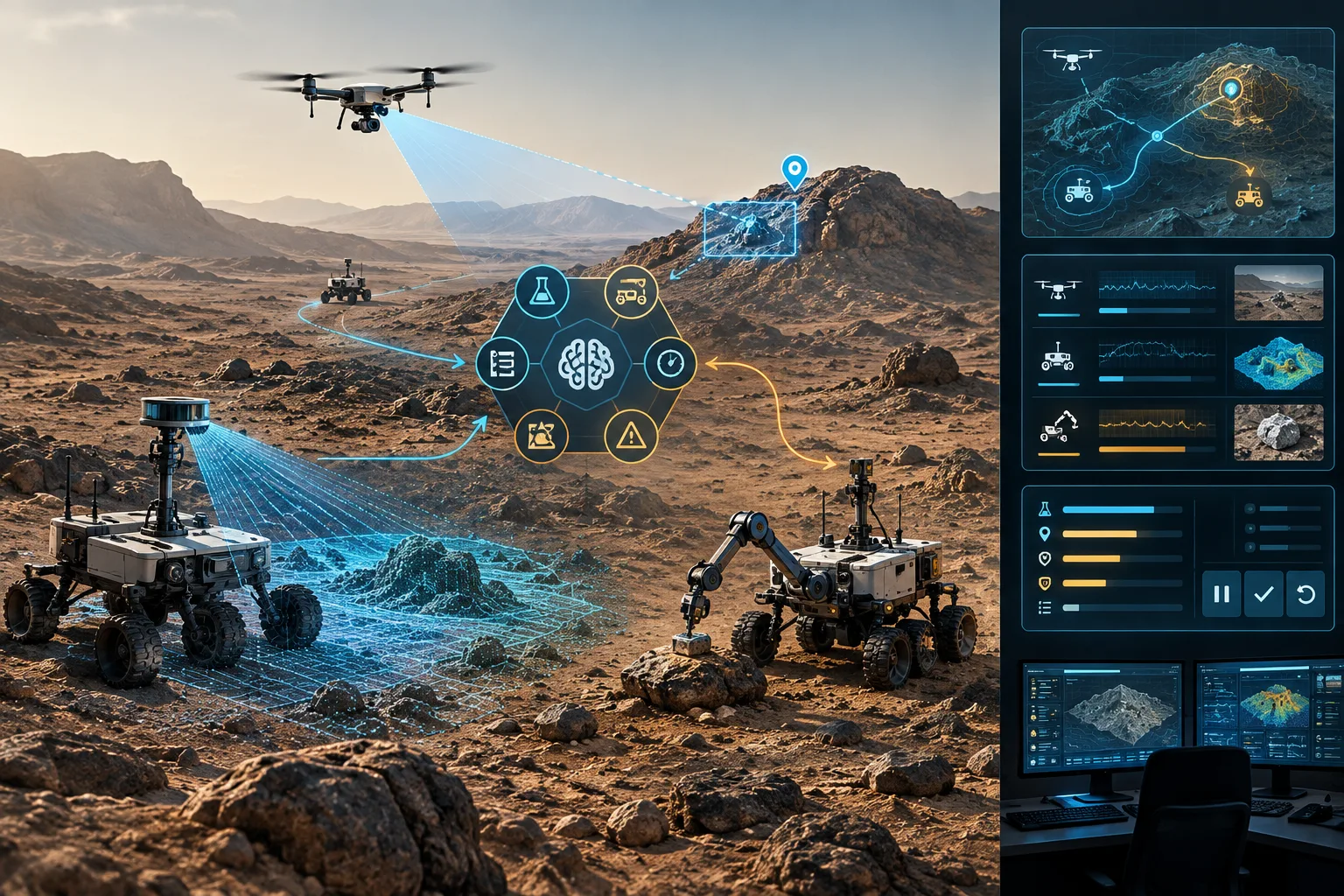
Operationally, these systems represent a shift toward mobile sensor platforms—machines that can traverse areas where fixed cameras have blind spots and where sending humans may be slower or riskier. The reported use cases are pragmatic rather than cinematic:
- Perimeter sweeps and routine patrol augmentation
- Hazardous-package inspection and standoff assessment
- Real-time sensor feeds to security operations centers
- Repeatable, auditable patrol routes that reduce human variability
Crucially, the deployment has been accompanied by clarifications that these robots do not use facial recognition. Yet the public reaction illustrates a central truth about AI-era security: capability is only half the story; legitimacy is the other half. A system can be technically limited and still provoke backlash if people believe it expands monitoring, data capture, or discretionary enforcement.
Social media comparisons to dystopian surveillance—while often untethered from the robots’ actual specifications—are not merely “misinformation problems.” They are signals of a deeper governance gap: audiences want to know what data is collected, where it goes, how long it is retained, who can access it, and under what oversight. In other words, the controversy is less about whether Spot can identify a face and more about whether the broader security stack can identify—and act on—a person.
The business logic: security modernization, liability economics, and a widening private-sector role
For host cities, stadium operators, and tournament organizers, security is both a duty of care and a balance-sheet issue. Modernizing security with advanced robotics entails capital expenditure, training, and maintenance contracts, plus the operational complexity of integrating robots into existing command-and-control workflows. The economic argument typically rests on a combination of:
- Risk reduction (fewer blind spots, faster incident detection)
- Liability management (demonstrable diligence and documented patrols)
- Operational efficiency (augmenting staff in high-footfall environments)
- Reputational protection (avoiding incidents that define the event)
Hyundai’s role underscores a broader market shift: mobility and automotive firms are increasingly repurposing R&D—sensors, autonomy, edge compute, connectivity—into adjacent domains like security and public safety. This convergence expands the addressable market for robotics providers and their partners (telecom, cloud, systems integrators), but it also imports a new category of risk: public-policy backlash and brand trust erosion if deployments appear to normalize militarized policing or opaque surveillance.
Sports and entertainment venues have become proving grounds for autonomous systems because they offer controlled perimeters, predictable surges, and measurable outcomes. Success here can accelerate adoption in other high-traffic environments—airports, transit hubs, border-adjacent infrastructure, and dense urban districts. Failure, by contrast, can harden regulatory skepticism and slow procurement cycles across the entire sector.
The governance test: transparency, civil liberties, and “security as a service” in the AI era
The most consequential question for the World Cup may not be whether robot dogs can help detect threats, but whether institutions can deploy them in a way that is rights-respecting, transparent, and publicly intelligible. In a politically fraught climate, security technology becomes a proxy debate about power: who is being protected, who is being watched, and who bears the cost of false positives.
For technology vendors and venue operators, the emerging best practice is to treat civil-liberties resilience as a competitive advantage—something that can be specified, audited, and communicated. That means moving beyond assurances and toward governance mechanisms such as:
- Clear public disclosures of sensor types, data flows, and retention policies
- Independent audits and documented compliance controls
- Strict purpose limitation (event safety, not generalized monitoring)
- Escalation protocols that keep humans accountable for decisions
- Stakeholder engagement channels for fans, advocates, and local communities
Commercially, the tournament also highlights a likely evolution in procurement: subscription-style “security as a service” models bundling hardware, analytics, connectivity, and operational support. This can lower barriers for smaller venues and align vendor incentives with outcomes, but it also concentrates responsibility—making transparency and oversight non-negotiable.
The World Cup’s security posture is becoming a live demonstration of how modern societies integrate robotics into public life. If organizers and partners can pair operational capability with credible guardrails, robot patrols may be remembered as a pragmatic tool in a complex environment. If not, the technology risks becoming the emblem of a tournament where the spectacle of enforcement overshadowed the spirit of the game.
 By
By
 By
By
 By
By
 By
By

 By
By

 By
By