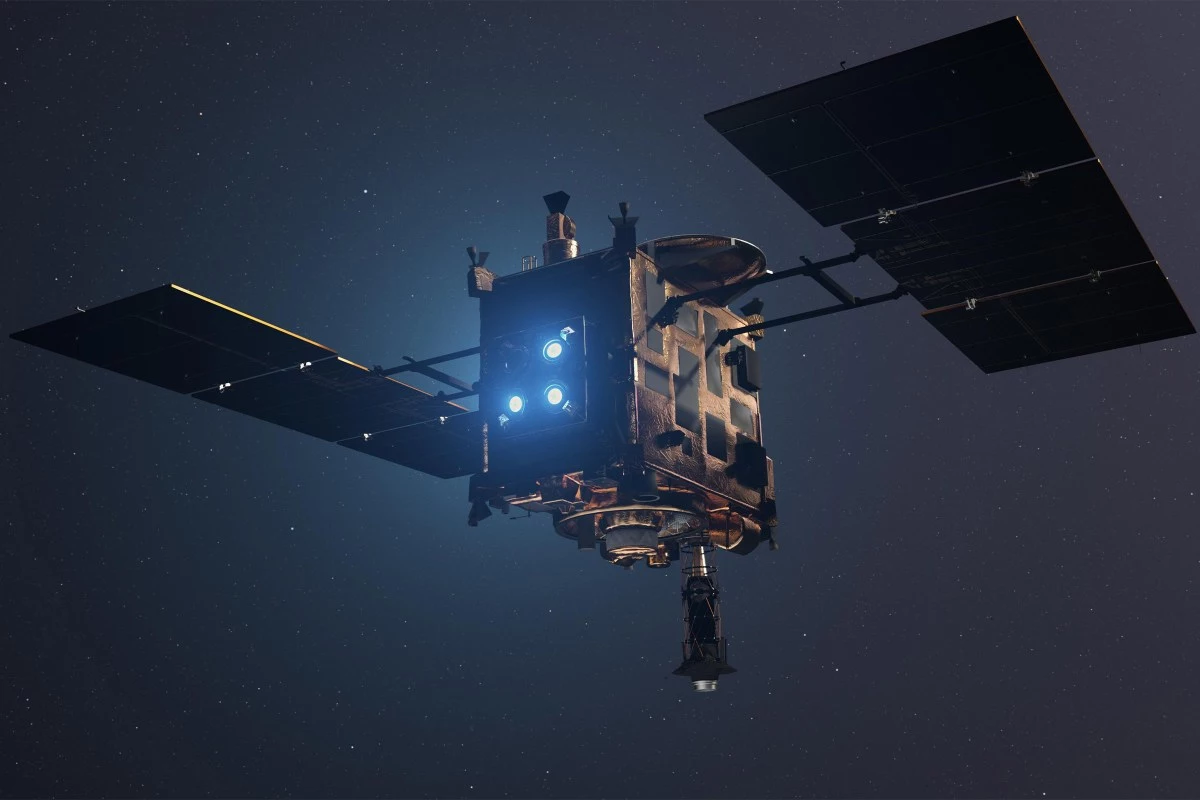

Hayabusa2’s extended mission turns a tiny asteroid into a big strategic test
Japan’s Hayabusa2 has already earned its place in modern spaceflight by returning samples from asteroid Ryugu, proving that deep-space rendezvous, touch-and-go operations, and Earth re-entry can be executed with repeatable precision. Now, its planned trajectory toward near-Earth object 1998 KY26, with a targeted rendezvous around July 2031, reframes the mission from a celebrated scientific achievement into a forward-looking stress test for the next decade of space capability.
What makes 1998 KY26 unusually consequential is not its size—only a few dozen meters across—but the way it compresses multiple high-stakes questions into a single target: how to operate around fast-rotating microgravity bodies, what such objects reveal about the evolution of small bodies, and how governments and markets should interpret the growing overlap between planetary science, space security, and commercial resource ambitions.
For Japan, the extension also reinforces a broader geopolitical narrative: JAXA’s sample-return competence positions the country as a durable “third pole” of exploration capability alongside NASA and ESA, even as China expands its deep-space portfolio and private launch providers reshape cadence and cost expectations.
The 10-minute spin: why 1998 KY26 is a robotics and autonomy crucible
1998 KY26’s defining trait—its rapid rotation of roughly once every 10 minutes—is more than a curiosity. It is a direct engineering constraint that turns routine proximity operations into a delicate choreography of timing, navigation, and contact dynamics. On a body this small, gravity is weak; on a body spinning this fast, surface-relative velocities and changing illumination conditions can complicate everything from hazard detection to sampling.
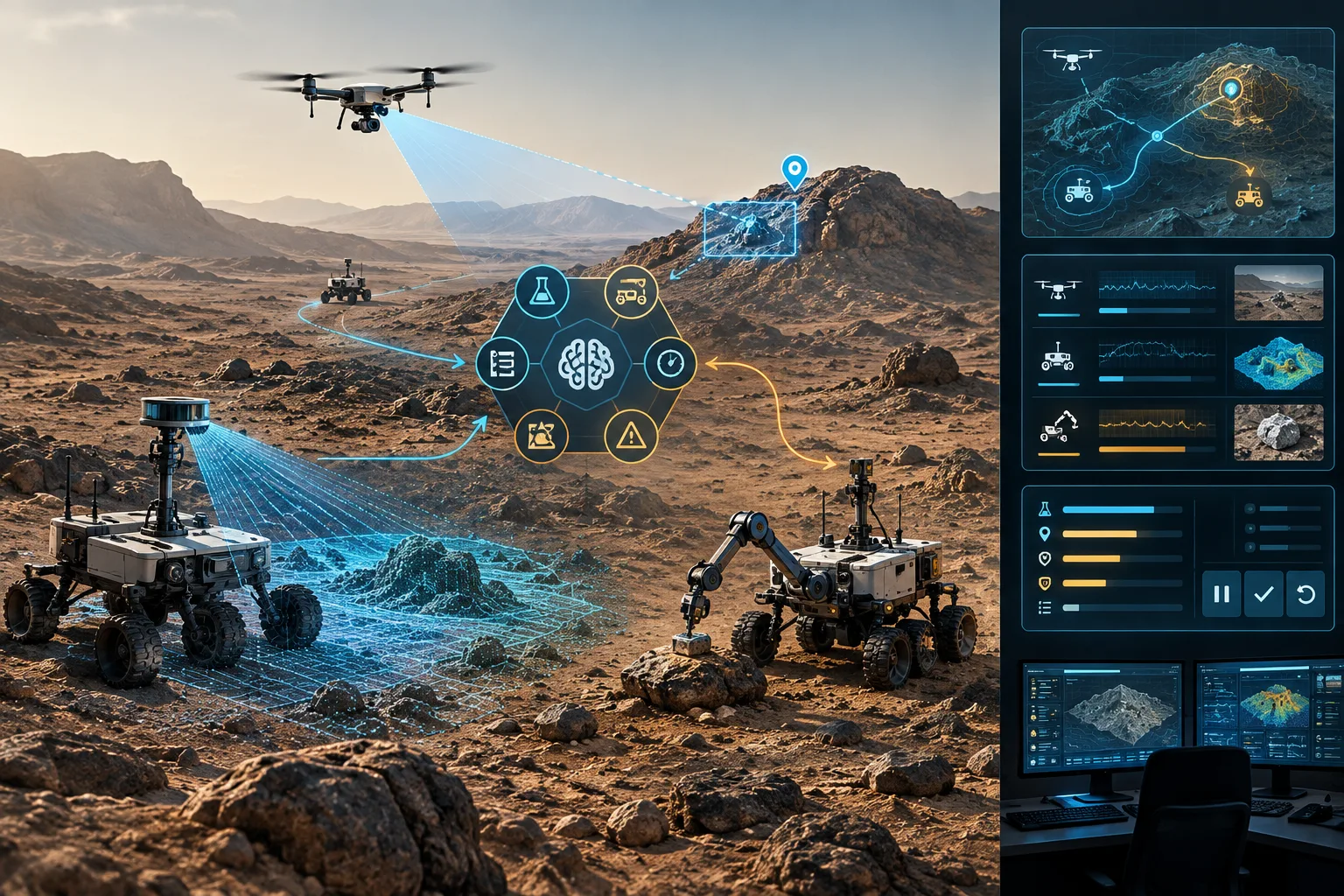
From a business-and-technology perspective, the mission’s most transferable value may be its push toward more autonomous guidance, navigation, and control (GNC) and more resilient robotic interaction with uncertain terrain. If Hayabusa2 can characterize or interact with KY26 under these conditions, it signals maturation in capabilities that map cleanly onto commercial and civil priorities:
- Microgravity anchoring and contact mechanics: techniques that can inform asteroid prospecting, debris interaction, and on-orbit servicing.
- Autonomous operations at long latency: software and fault management approaches relevant to lunar surface systems and deep-space logistics.
- Miniaturized, power-efficient instruments: payload design lessons that benefit smallsat constellations and distributed sensing architectures.
- Propellant-efficient deep-space navigation: continued validation of ion propulsion and trajectory optimization that can lower mission cost per objective.
Just as importantly, the mission extends the practical economics of sample-return supply chains—from spacecraft longevity to operations discipline. Over time, that can reduce the perceived “first-of-a-kind” risk that has historically deterred private capital from treating asteroid interaction as anything more than speculative.
Dark comet science versus “artifact” speculation: why the classification debate matters
Mainstream scientific interest in KY26 includes the possibility that it belongs to—or helps clarify—a category sometimes discussed as “dark comets”: objects that appear asteroid-like yet may exhibit subtle comet-like behavior or non-gravitational effects. If confirmed, such a finding would sharpen models of how volatiles behave on small bodies, how surfaces evolve, and how near-Earth populations are replenished.
Running in parallel is a more controversial hypothesis advanced by Harvard astronomer Avi Loeb: that KY26 could be an artificial object, potentially the long-lost Soviet Phobos 1 probe, allegedly misrouted into a similar orbit in 1988. The prevailing view in the scientific community remains that KY26 is natural; still, the episode is instructive because it highlights a growing reality in space governance and space-domain awareness: classification uncertainty has consequences.
Whether KY26 is a natural body, a “dark comet,” or something else entirely, the process of distinguishing among these categories pressures the ecosystem to improve:
- Tracking and characterization: better photometry, radar/optical fusion, and orbit determination for small, faint, fast-moving objects.
- Standards for identification: clearer norms for labeling objects as natural bodies versus human-made relics, with implications for liability, salvage, and debris policy.
- Scientific instrumentation priorities: sensors and observation strategies that can detect composition, outgassing signatures, or structural features consistent with artificiality.
The deeper point is not to elevate speculation, but to recognize that interstellar-visitor debates—from ‘Oumuamua onward—have already expanded public and institutional attention. Missions like Hayabusa2’s extension can either narrow uncertainty through data or amplify it by leaving key questions unresolved. In either case, the narrative will influence funding, policy appetite, and the perceived legitimacy of adjacent research areas, including technosignature-adjacent inquiry.
The commercial and policy aftershocks: ISRU economics, security norms, and investment signals
For executives and policymakers, KY26 is best understood as a bellwether mission: a technical demonstration whose outcomes could shift expectations across multiple markets. Even modest confirmation of accessible water, volatiles, or platinum-group elements can energize investment theses around in-space resource utilization (ISRU)—not because near-term asteroid mining is suddenly easy, but because credible data reduces uncertainty in cost models and operational feasibility.
Potential downstream implications are concrete:
- Resource security and supply-chain optionality: long-term hedging against terrestrial bottlenecks and geopolitical sourcing risk.
- Cislunar infrastructure enablement: water as propellant feedstock for depots, and volatiles as inputs for life support and industrial processes.
- Precedent-setting governance: pressure to clarify definitions of “space objects,” property-like rights, and operational norms under frameworks such as the Artemis Accords and emerging national regulations.
- Dual-use spillovers: the same precision tracking and proximity operations that enable sampling also strengthen planetary defense and space traffic management, areas increasingly intertwined with national security.
Hayabusa2’s journey to 1998 KY26 ultimately sits at the intersection of frontier robotics, small-body science, and strategic signaling. If the mission succeeds in operating around a fast-spinning object and returns high-quality characterization, it will not merely add a chapter to asteroid science—it will provide a template for how nations and firms can act with confidence in environments where physics is unforgiving, data is scarce, and the line between exploration and infrastructure is steadily fading.

 By
By


 By
By


 By
By
 By
By