
A radio mystery resolves into a white-dwarf engine—and reframes long-period transients
A quiet revolution has been unfolding in time-domain astronomy since 2022: researchers have identified roughly a dozen long-period radio transients (LPTs)—enigmatic sources that emit repeating radio bursts on timescales spanning minutes to decades. These are not the millisecond rhythms of familiar pulsars; they are slower, rarer, and harder to catch, demanding wide-field monitoring and rapid follow-up.
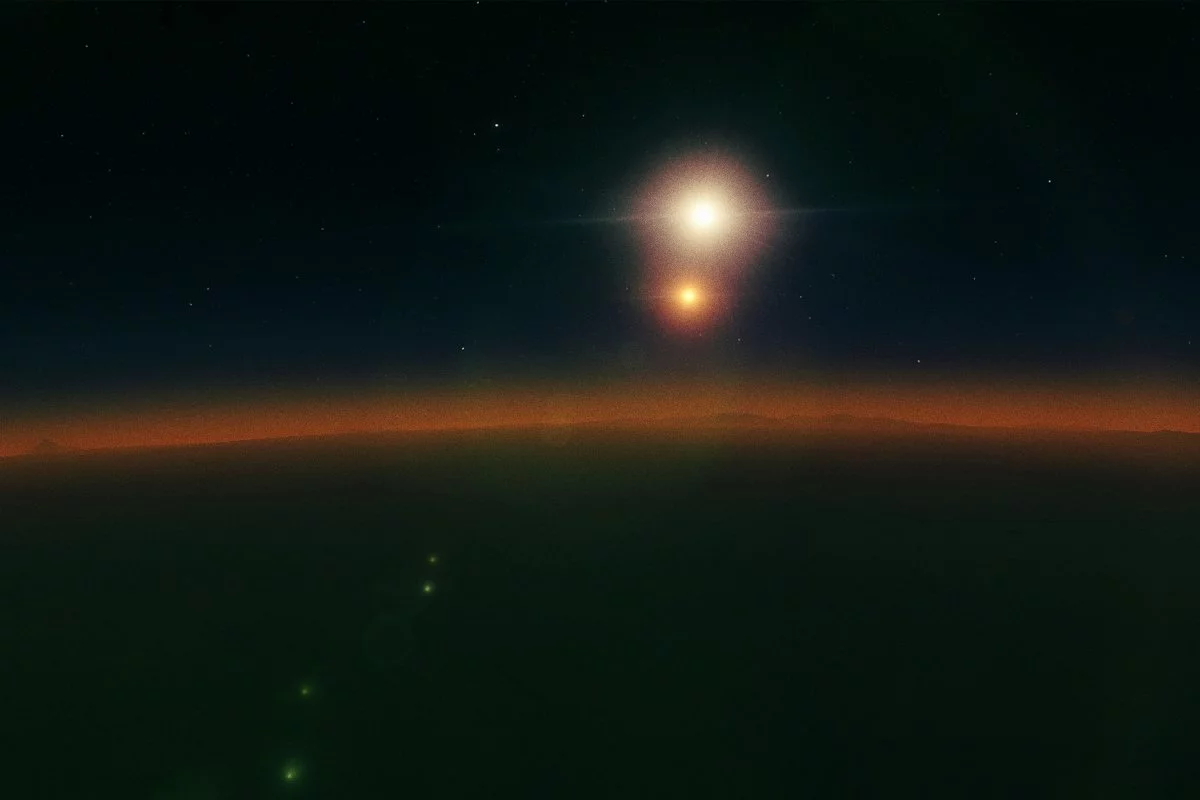
The most scrutinized case, ASKAP J1745, was first flagged by the Australian Square Kilometre Array Pathfinder (ASKAP). Now, an international team reporting in Nature Astronomy has substantially clarified what ASKAP J1745 is—and, just as importantly, what it is not. By combining radio, optical, and X-ray observations, the researchers rule out conventional pulsar explanations and instead identify the source as an accreting cataclysmic variable: a compact binary where a white dwarf draws matter from a companion star.
This matters because it offers a coherent physical mechanism for the puzzling cadence of LPTs. In this model, accretion dynamics and magnetic reconnection in strongly magnetized plasma can produce correlated radio pulses and X-ray flares—a multi-wavelength fingerprint that is difficult to replicate with standard neutron-star pulsar scenarios. The implication is carefully framed: the study does not claim all LPTs are the same, but it elevates white-dwarf binaries as a credible—and testable—class of engines behind at least some of these events.
For astrophysics, ASKAP J1745 becomes a new kind of laboratory: a system where the “weather” of magnetized plasma flows can be observed across bands, in real time, with repeatability. For technology and industry, it is also a case study in how modern discovery increasingly depends on software-defined instruments, high-throughput computing, and AI-driven signal triage.
ASKAP and the rise of software-defined discovery pipelines in radio astronomy
ASKAP’s role is not incidental. Its design—phased-array feeds and digital beam-forming—embodies the shift from monolithic telescopes to agile sensor networks that can scan large swaths of sky with high cadence. In practical terms, that means more opportunities to catch rare transients, and more pressure on downstream systems to decide quickly what is real, what is interference, and what deserves follow-up.
Several technical themes stand out for business and technology leaders tracking the spillover from “big science” into commercial platforms:
- High-cadence, wide-field sensing: ASKAP’s architecture resembles modern distributed sensing in terrestrial contexts—many beams, many channels, and continuous monitoring rather than scheduled point observations.
- Cross-spectrum data fusion: Pinning down ASKAP J1745 required correlating radio detections with X-ray activity, reinforcing that frontier discovery is increasingly a data-integration problem as much as a hardware problem.
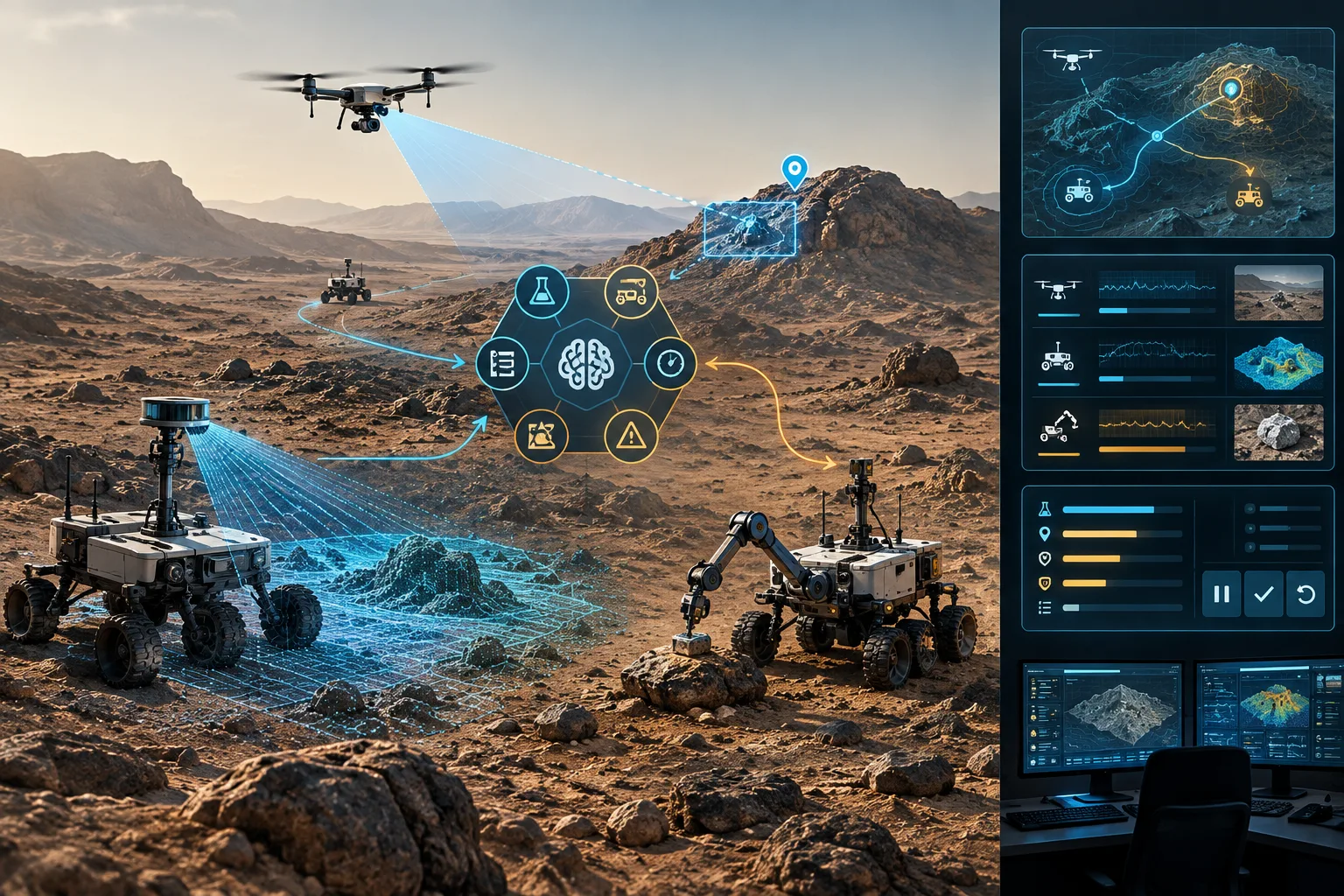
- HPC and AI at operational scale: Processing petabyte-scale radio streams and triggering follow-up observations depends on GPU/FPGA acceleration, automated pipelines, and machine-learning anomaly detection—capabilities that mirror the needs of cybersecurity operations centers, industrial IoT monitoring, and autonomous systems.
The deeper story is that astronomy is becoming a proving ground for end-to-end automation: detect, classify, prioritize, allocate resources, and validate—often with minimal human latency. That operational posture is precisely what many industries are trying to achieve as they move from dashboards to autonomous decision loops.
Economic and industrial spillovers: from low-noise receivers to real-time anomaly detection
Large-scale astronomy infrastructures—ASKAP today, and the broader Square Kilometre Array (SKA) ecosystem tomorrow—function as industrial catalysts. They pull forward demand for specialized components and advanced software, and they create a repeatable pathway from publicly funded R&D to commercial reuse.
Key economic levers highlighted by the ASKAP J1745 work include:
- R&D funding flows into enabling technologies: High-precision electronics, cryogenics, timing systems, and low-noise amplification are not niche curiosities; they are adjacent to telecommunications, medical imaging, and defense sensing.
- Commercializable analytics patterns: The challenge of distinguishing faint astrophysical signals from noise and interference maps cleanly onto enterprise problems—filtering false positives in sensor networks, detecting rare events in financial streams, or identifying novel attack signatures in security telemetry.
- Talent migration and skills scarcity: The workforce trained on these projects blends astrophysics with signal processing, statistical inference, and large-scale software engineering. That combination is increasingly sought after in satellite communications, advanced semiconductors, and emerging compute paradigms.
ASKAP J1745 also underscores a subtle but important point: the value is not only in a single discovery, but in the repeatable pipeline that makes discoveries routine. In industry terms, the differentiator is the factory, not the prototype.
Strategy, geopolitics, and dual-use realities in next-generation sensor infrastructure
Flagship science projects carry strategic weight. ASKAP and SKA-linked programs project national capability in high-performance computing, precision manufacturing, and advanced sensing—domains that overlap with economic competitiveness and security priorities.
Three strategic dimensions are difficult to ignore:
- Soft power through science diplomacy: Multinational participation in SKA-related efforts signals that scientific infrastructure can serve as a durable platform for collaboration even amid political volatility.
- Supply-chain resilience as a limiting factor: Radio arrays rely on specialized chips, high-purity materials, and components such as rare-earth magnets. Semiconductor export controls and mining constraints can become bottlenecks that affect both scientific timelines and adjacent commercial deployments.
- Dual-use technology convergence: High-sensitivity receivers, real-time beam steering, and spectrum monitoring have clear applications beyond astronomy—radar, satellite traffic management, and electromagnetic situational awareness—raising the strategic profile of what might otherwise be viewed as purely academic instrumentation.
ASKAP J1745’s reclassification—from a radio oddity to a white-dwarf binary with correlated X-ray behavior—shows how quickly “unknown unknowns” can become structured knowledge when instrumentation, compute, and collaboration align. The next competitive edge, for both nations and enterprises, will belong to those who can industrialize that alignment: build resilient supply chains, operationalize multi-modal analytics, and cultivate the cross-disciplinary talent that turns faint signals into actionable insight.

 By
By


 By
By


 By
By
 By
By