
A cruise-ship hantavirus shock that exposes the weak seams in maritime health oversight
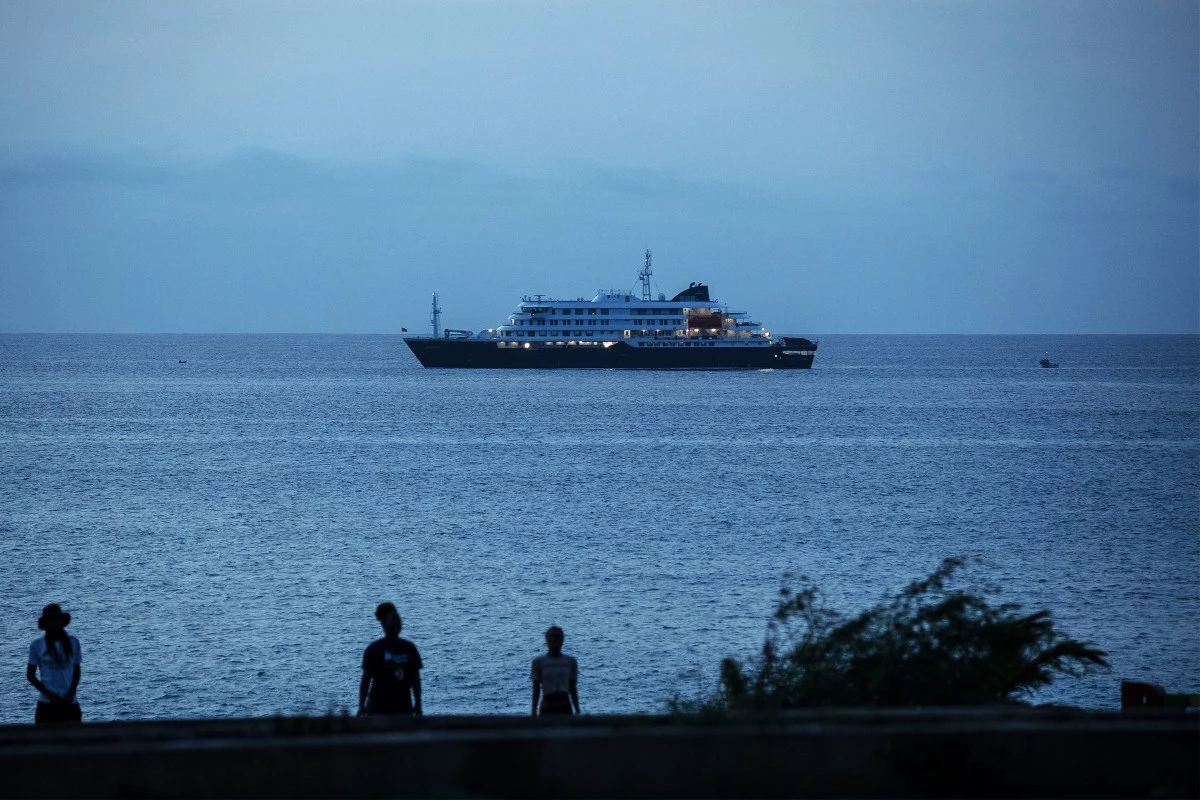
The late-April hantavirus outbreak aboard the MV Hondius, a Dutch ocean-going cruise vessel, is a stark reminder that modern travel networks remain only as resilient as their least visible safeguards. Three reported deaths and five additional symptomatic cases among roughly 150 passengers would be alarming under any circumstances. The specific pathogen—the Andes strain of hantavirus—raises the stakes further because it is the only hantavirus known for limited human-to-human transmission, shifting the incident from a routine zoonotic concern into a more complex containment and contact-tracing challenge.
Cruise ships are uniquely efficient “connectors” in the global mobility system: they concentrate people, staff, supplies, and shared air and surfaces into a moving micro-city that crosses jurisdictions quickly. That operational reality makes onboard outbreaks less about a single vessel and more about the port-to-port health security chain—inspection capacity, surveillance, reporting protocols, and the ability to coordinate across national and multilateral systems without delay.
At the center of the current scrutiny is the U.S. Centers for Disease Control and Prevention’s Vessel Sanitation Program (VSP), historically a specialized capability designed to prevent and investigate shipboard health events. Reports that the VSP has been reduced to a minimal staffing footprint—a small group of U.S. Public Health Service officers plus a newly trained outbreak investigator—have intensified questions about whether the program can still deliver the depth of expertise that cruise-era public health demands, even if “core functions” technically remain in place.
The “last-mile” problem: why sensors and AI can’t replace inspectors—yet
The Hondius episode also highlights a growing tension between traditional inspection regimes and emerging digital surveillance technologies. Vessel sanitation has long depended on in-person, high-context judgment: inspectors interpret patterns, interview crew, assess compliance culture, and identify subtle risk signals that don’t always show up in checklists. That expertise is not quickly scalable—especially when training cycles can take months and require repeated exposure to real-world investigations.
At the same time, the cruise industry’s technology roadmap is increasingly oriented toward continuous monitoring and auditable process control. Several tools now being explored or piloted across the sector illustrate what a modern “hybrid surveillance” stack could look like:
- Satellite-enabled environmental sensors to detect rodent activity or conditions that correlate with infestation risk
- Machine-learning anomaly detection for sanitation breaches, unusual illness patterns, or deviations in cleaning workflows
- Blockchain-anchored sanitation logs to strengthen traceability and reduce disputes over whether procedures were followed
- Digital-twin simulations of onboard operations to stress-test sanitation and response protocols before voyages
These innovations can reduce detection time and improve accountability, but they remain adjuncts, not substitutes, for on-site expertise. The practical gap is “last-mile” execution: data streams must be interpreted, verified, and acted upon in the messy reality of ship operations. In an outbreak involving a zoonotic pathogen with limited human-to-human transmission potential, the difference between a contained event and a cascading one often hinges on rapid, experienced judgment—not merely the presence of dashboards.
Budget austerity and institutional memory: the hidden cost of shrinking specialized programs
The near dismantling of a program like the VSP is not simply a headcount story; it is a capability erosion story. Specialized public-health units accumulate “tacit knowledge” over years—how outbreaks actually unfold onboard, which compliance failures recur, how to interpret ambiguous symptoms, and how to coordinate with ship operators under intense time pressure. When veteran epidemiologists and inspectors exit, the loss is not easily reversed by rehiring because the most valuable asset—institutional memory—is discontinuous.
This creates a compounding set of vulnerabilities:
- Slower outbreak response as less-experienced teams rebuild investigative muscle in real time
- Recruitment headwinds as candidates weigh heavy travel demands against uncertain program stability
- Training bottlenecks because mentorship capacity shrinks when senior staff are gone
- Higher downstream costs as delayed containment increases medical, legal, and reputational exposure
For business and technology leaders, the deeper lesson is that public-health readiness behaves like cybersecurity: it is not a one-time project but a continuous operating capability. Episodic cuts can produce persistent readiness deficits, and those deficits tend to surface at the worst possible moment—when a novel or uncommon pathogen appears in a high-visibility setting.
Travel economics, insurance recalibration, and the geopolitics of outbreak data
Cruise operators run on tight operational economics, and health scares can impose costs that dwarf immediate remediation. The Hondius incident is likely to reverberate through three interconnected channels: consumer confidence, insurance pricing, and regulatory scrutiny.
Insurers, in particular, may treat this outbreak as a signal to revisit assumptions about zoonotic events at sea. Potential market responses include:
- Higher premiums or narrower coverage for outbreak-related disruptions
- Stricter underwriting requirements tied to verified sanitation controls and surveillance maturity
- Expanded exclusions for emerging pathogens, pushing operators toward bespoke or captive insurance structures
Meanwhile, travel advisors and corporate travel programs may increasingly incorporate health-infrastructure ratings—not just ship quality or itinerary appeal—into booking decisions. That could gradually bifurcate the market between operators that can demonstrate robust, auditable health resilience and those that cannot, with knock-on effects for destinations dependent on cruise tourism, especially where port-health capacity is uneven.
On the global governance front, the World Health Organization’s assurance that the event is unlikely to become a pandemic reflects a careful balance: prevent panic without dulling vigilance. Yet the outbreak underscores how information latency—delays in standardized, interoperable reporting—can undermine collective response. The International Health Regulations (2005) envision coordinated surveillance, but real-time integration remains constrained by divergent privacy rules, uneven digital infrastructure, and geopolitical friction. In that environment, a capability gap in one major node of the travel system can ripple outward, stressing the broader architecture of global health security.
The Hondius outbreak ultimately reads as a case study in modern risk: a biological event amplified by operational density, shaped by institutional capacity, and increasingly mediated by technology—where the decisive advantage belongs to systems that can fuse experienced human oversight with continuous, high-integrity data at the speed global mobility now demands.

 By
By

 By
By
 By
By
 By
By

 By
By