
A legacy promotion returns—this time with restructuring-era discipline
Red Lobster’s decision to reinstate Endless Shrimp is more than a nostalgic nod to a fan-favorite deal; it is a carefully calibrated signal that the chain believes it can once again monetize its most recognizable traffic driver without repeating the margin erosion that helped push it into Chapter 11 bankruptcy in 2024. Under new CEO Damola Adamolekun, the promotion is back as a limited-time offer priced at $24.99, notably below its roughly $30 peak, and now available any day of the week rather than being constrained to a narrower window like the former Monday-only model.
That shift matters. In casual dining, iconic promotions often become a brand’s loudest megaphone—and its most dangerous cost center. Red Lobster is effectively attempting to convert Endless Shrimp from an open-ended liability into a controlled, modern marketing instrument: still generous enough to feel “endless,” but engineered to behave more predictably in the P&L.
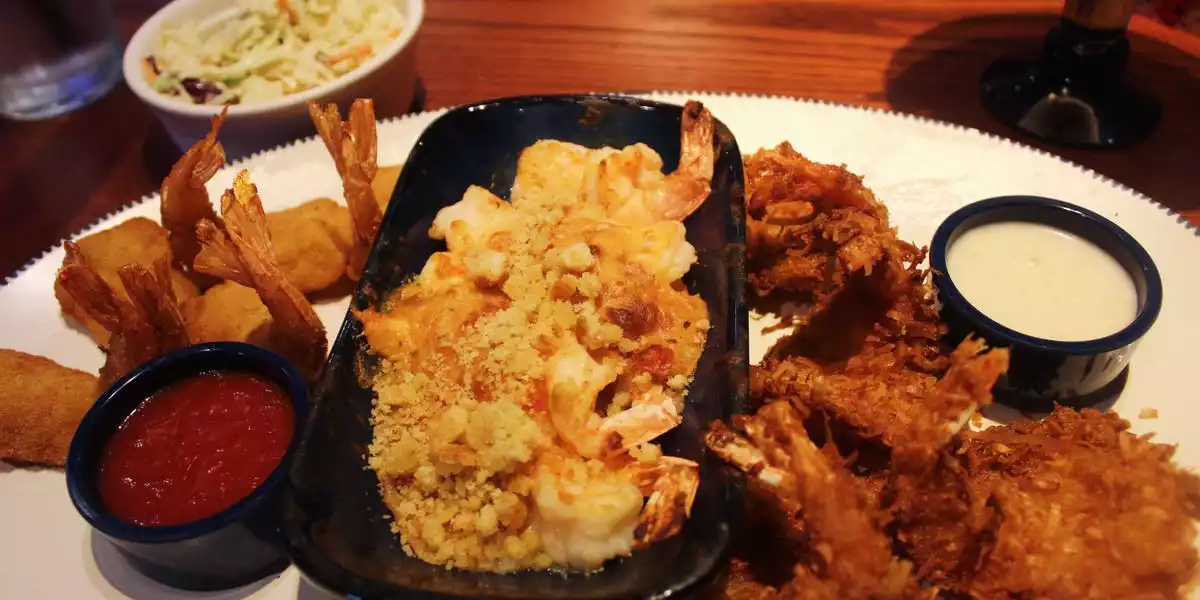
Early customer feedback suggests the company is also trying to protect the brand experience while tightening operational execution. Reviews cite improved food quality and more consistent sides (with coleslaw frequently mentioned), while also noting small service and presentation trade-offs—such as shrimp tails remaining in the new sauced entrée. Those details may seem minor, but they reveal the operational balancing act behind any high-volume, protein-forward promotion.
Pricing, value psychology, and the unit-economics tightrope
At $24.99, Red Lobster is aiming for a price point that is psychologically “deal-like” while still acknowledging the realities of seafood inflation, labor costs, and throughput constraints. The chain’s earlier experience demonstrates a core truth of restaurant economics: a promotion can be wildly popular and still be structurally unprofitable if it invites unlimited consumption at a price that fails to cover variable costs.
Several dynamics are likely informing the new pricing and availability strategy:
- Value elasticity in a post-pandemic consumer market: Diners remain highly value-sensitive, but increasingly differentiate between “cheap” and “worth it.” A sub-$25 anchor can trigger trial and return visits, especially when paired with a signature brand promise.
- Traffic versus margin management: Endless Shrimp historically functioned as a demand engine. The challenge is ensuring that incremental traffic does not come with an implicit subsidy—particularly when shrimp is the primary cost driver.
- Promotion architecture as a brand contract: Red Lobster’s equity is tied to abundance and seafood credibility. Pulling the offer entirely risks weakening that identity; bringing it back without guardrails risks repeating the financial strain.
The most telling element is not simply the lower price, but the broader posture: the company appears to be treating Endless Shrimp as a measured lever—one that must earn its place through sustainable economics rather than tradition alone.
Menu engineering and operational throughput across 600+ locations
The refreshed menu underscores a classic restructuring-era tactic: simplify execution without making the guest feel the experience has been reduced. Red Lobster replaced grilled skewers with a single sauced entrée—“Marry Me Shrimp” in a creamy tomato sauce—while retaining familiar staples like coconut shrimp, Walt’s Favorite Shrimp, and shrimp scampi.
From an operations and supply-chain standpoint, this is a meaningful redesign:
- Kitchen throughput and training: A standardized sauced entrée can reduce station complexity, shorten training cycles, and improve consistency—critical across 600+ locations where variance can quietly erode guest trust.
- Inventory rationalization: Fewer specialized components can reduce waste risk and improve forecasting accuracy, especially for perishable seafood inputs.
- Plating speed and labor efficiency: Promotions create spikes. When dining rooms fill, the bottleneck often becomes line execution and expo capacity—not marketing.
The supply chain angle is equally consequential. Shrimp pricing is notoriously exposed to fuel costs, feed inputs, disease risk in aquaculture, freight volatility, and geopolitical disruptions. Red Lobster’s willingness to reintroduce Endless Shrimp implies either improved procurement leverage post-restructuring, greater confidence in forecasting, or a more resilient sourcing strategy—potentially including longer-term contracts, diversified suppliers, or near-shore options to reduce logistics exposure.
What the relaunch signals for Red Lobster’s strategy—and for the broader casual-dining playbook
CEO Adamolekun’s reported skepticism followed by a customer-driven reversal is a subtle but important leadership message: the company is not simply “bringing back the old Red Lobster,” but attempting to rebuild trust through disciplined responsiveness. For investors, lenders, franchise stakeholders, and employees, the relaunch frames the brand as both customer-led and data-aware—a combination that matters in a category where sentiment can swing quickly and margins remain thin.
Strategically, several forward-looking implications stand out:
- Promotion governance via analytics: Endless Shrimp is an ideal candidate for store-level modeling that forecasts lift, cannibalization, and margin impact. The next evolution in casual dining promotions is not louder advertising—it is smarter control systems.
- Digital and loyalty integration: If Red Lobster ties limited-time offers to a stronger loyalty ecosystem, it can reduce reliance on broad, margin-risky promotions and instead drive frequency through targeted incentives.
- Upsell architecture without undermining value: The best-performing “value” promotions often succeed because they quietly encourage profitable add-ons—beverages, shareable sides, desserts—without making guests feel nickel-and-dimed.
- Brand identity as an operational choice: Red Lobster is reasserting that it stands for accessible seafood abundance. The operational question is whether it can deliver that promise consistently while maintaining the cost discipline demanded by a post-bankruptcy reset.
For the casual-dining sector, Red Lobster’s Endless Shrimp return fits a wider industry pivot: away from “always-on” discounting and toward time-boxed, high-urgency offers that can be tuned to capacity, labor availability, and commodity conditions. If the chain can sustain quality, manage service friction, and keep shrimp economics predictable, Endless Shrimp may once again become what it was always meant to be—a reason to visit, not a reason the numbers break.

 By
By
 By
By
 By
By
 By
By
 By
By
 By
By

 By
By