
A sequel that doubles as a case study in modern corporate power
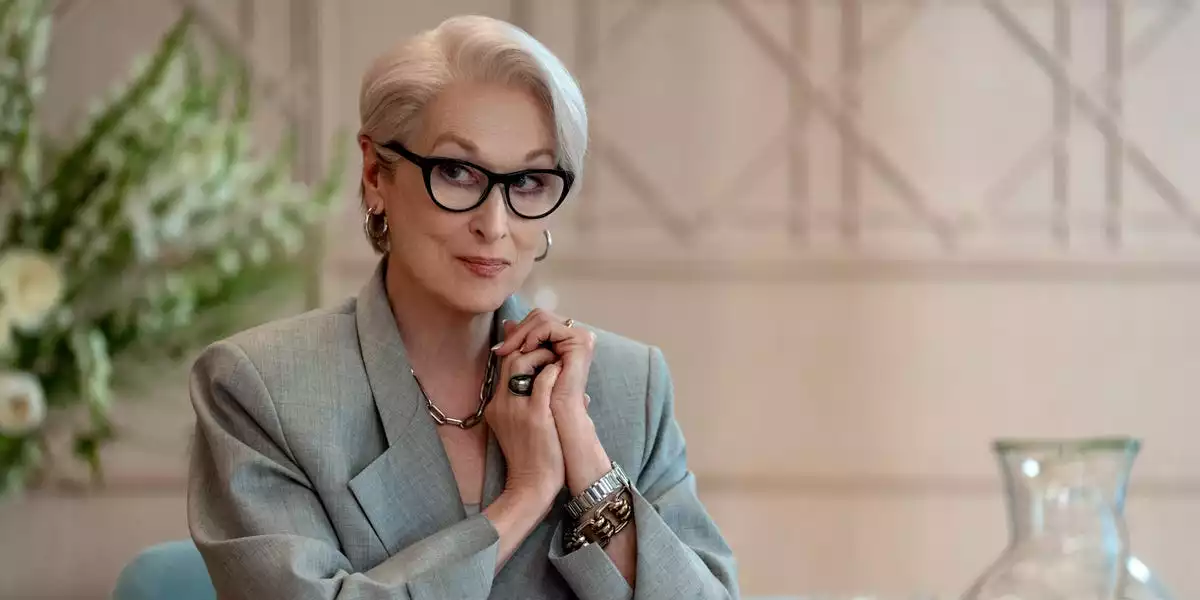
Two decades after *The Devil Wears Prada* crystallized the mythology of the all-powerful editor, “The Devil Wears Prada 2” reframes Miranda Priestly as a legacy leader navigating a corporate ecosystem that no longer treats authority as self-justifying. The narrative’s most telling pivot is not simply that Miranda is “back,” but that the institutional scaffolding around her has changed: expanded HR protocols, formalized governance, and a workplace culture that increasingly demands transparency, documentation, and behavioral accountability.
In business terms, Miranda represents the classic 20th-century “heroic boss” archetype—high-performing, exacting, and insulated by results. The sequel’s satire lands because it mirrors a real shift across corporate America: power has migrated from individuals to systems. Policies, compliance tooling, and employee expectations now act as counterweights to singular executive dominance. Even the comedic detail that Miranda must manage her own wardrobe reads as a symbolic demotion of executive exceptionalism—an era where leaders once had “people for that” is being replaced by organizations that insist on procedural parity, at least on paper.
This is not merely cultural; it is structural. The film’s workplace conflict becomes a proxy for a broader question facing legacy executives and legacy brands alike: What happens when the leadership style that built the institution is no longer socially or operationally acceptable inside it?
From “tough love” to “soft power”—and the risks of performative informality
The introduction of Jay Ravitz, a younger, costumed-casual boss, sharpens the sequel’s critique by refusing to romanticize the new order. Jay’s flippant disregard for tenure and traditional seniority signals a familiar post-2010s managerial posture: flatter hierarchies, looser norms, and a preference for “culture” over command. Yet the film’s subtext is more pointed—informality can become its own kind of coercion, especially when it masks contempt for expertise.
Where Miranda’s authority was explicit and hierarchical, Jay’s is implicit and socially coded. The sequel appears to argue that corporate power has not disappeared; it has changed its wardrobe. The danger is that “openness” becomes a brand aesthetic rather than a governance commitment, producing a workplace where:
- Experience is treated as obstruction, not institutional memory
- Casualness becomes a shield against accountability (“it’s not that serious”)
- Respect is replaced by vibe, and performance becomes harder to evaluate fairly
In this sense, “The Devil Wears Prada 2” critiques both extremes. Miranda’s top-down command style is shown as increasingly incompatible with contemporary expectations around psychological safety and inclusion. Jay’s posture, meanwhile, risks becoming a reverse tyranny—less about fear and more about erosion of standards, disguised as modernity.
For business leaders, the takeaway is uncomfortably practical: the modern workplace is not choosing between “strict” and “chill.” It is demanding competence plus legitimacy—clear direction paired with humane execution, and authority that can be explained, not merely asserted.
HR tech, AI governance, and the new compliance reality behind the jokes
Beneath the humor, the sequel gestures toward the technological substrate now shaping corporate life: digital-first HR systems, compliance automation, and data-driven oversight. The gag of Miranda being forced into procedural self-management echoes a real operational trend—platforms that standardize everything from asset tracking to performance documentation, reducing the discretionary space where powerful individuals once operated.
In many organizations, leadership behavior is increasingly legible to systems:
- Pulse surveys and engagement tools quantify sentiment and flag hotspots
- Performance management platforms standardize feedback cycles and escalation paths
- Communication analytics can surface patterns associated with burnout, exclusion, or managerial risk
- Compliance workflows create audit trails that make “that’s just how I am” a liability
The film’s implied “micromanagement risk score” dynamic is especially resonant in an era when reputational damage travels faster than internal memos. Executives are learning that culture is now measurable enough to be enforceable, even if imperfectly so. That creates a new tension: governance can protect employees, but it can also drift into surveillance and dehumanization if deployed without ethical guardrails.
The sequel also nods to how media itself has changed. In a streaming-first economy, audience expectations are shaped by rapid feedback loops—social sentiment, algorithmic recommendations, and data-informed content decisions. Workplace satire becomes not only entertainment but a calibrated product, designed to resonate across generations: Gen X nostalgia for the original’s sharp hierarchy, and Gen Z skepticism toward both authoritarianism and corporate performativity.
Runway as a legacy brand under pressure—and why leadership now equals narrative strategy
Runway magazine’s implied struggle to defend relevance in a saturated digital landscape mirrors the predicament of many legacy brands: the old revenue engines no longer guarantee the old influence. Print-era dominance has given way to platform competition, creator economies, and fragmented attention. In that environment, Miranda’s potential memoir project reads less like vanity and more like strategy—an attempt to convert institutional authority into portable intellectual property.
For executives and brand stewards, the film’s business logic points to a few durable implications:
- Balanced authority models win: leaders must pair strategic clarity with credible empathy, using feedback loops to detect cultural friction early.
- Continuous upskilling is the new mentorship: micro-learning and adaptive development systems replace apprenticeship-by-osmosis.
- Narrative intelligence becomes a competitive moat: brands that can tell coherent stories—internally to employees and externally to customers—retain trust amid volatility.
- IP extension is no longer optional: memoirs, podcasts, webinars, and direct-to-consumer storytelling are modern equivalents of legacy media leverage.
Ultimately, “The Devil Wears Prada 2” positions Miranda’s fight for relevance as more than personal drama. It is a portrait of what happens when legacy leadership collides with modern governance, and when the symbols of power—titles, assistants, unquestioned deference—are replaced by systems, norms, and audiences that demand justification. The film’s sharpest insight is that the future of authority is not about being feared or being liked; it is about being trusted under scrutiny, even when the rules—and the people enforcing them—keep changing.

 By
By
 By
By
 By
By
 By
By