


A data-analytics veteran’s pivot spotlights a growing market for offline life-skills education
Kristin Howard’s 2024 launch of “Going Up,” a residential life-skills camp in suburban Chicago for middle-school students, reads like a personal career reinvention—and a signal flare for a broader shift in the youth enrichment economy. After two decades in data analytics, Howard redirected her systems mindset toward a different kind of performance gap: the widening distance between what modern life demands of young people and what many are explicitly taught to do independently.
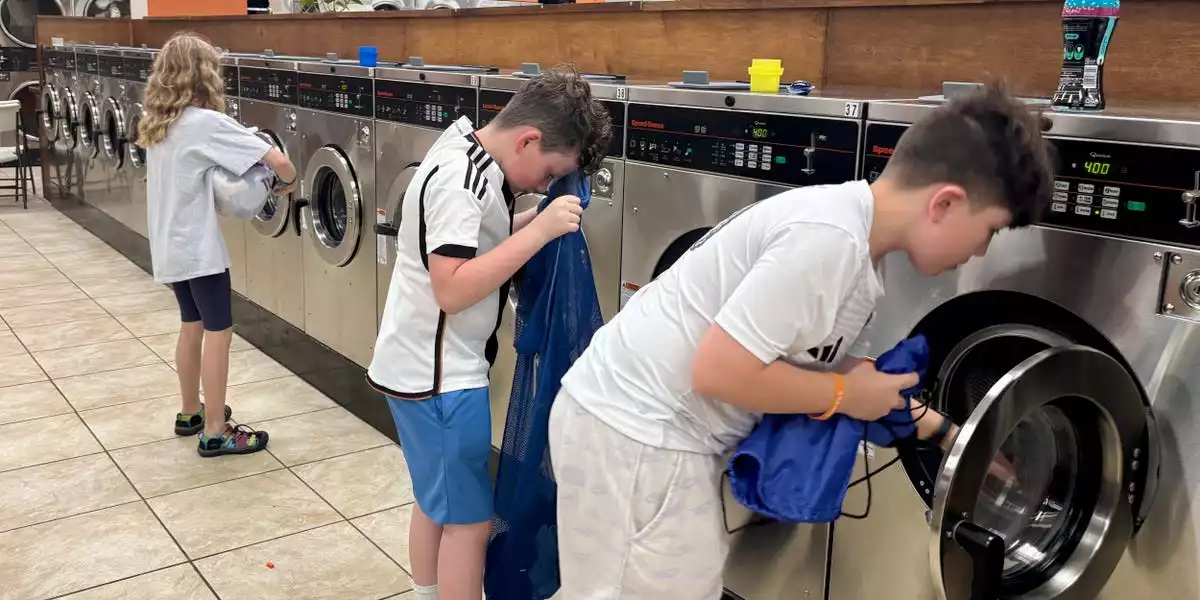
The camp’s premise is straightforward and quietly radical in an era dominated by edtech: teach practical self-sufficiency—laundry, meal planning, budgeting, map-reading, and interpersonal competence—through immersive, in-person routines. The program began with 11-year-olds and expanded to grades 6–9, with parents reporting noticeable gains in confidence, resilience, and real-world problem-solving. Howard’s decision to step aside to pursue a new role adds a business inflection point: early product-market fit appears strong, but leadership continuity and operational scalability will determine whether “Going Up” remains a local success or becomes a replicable model.
For business and technology leaders, the story is less about nostalgia for “simpler times” and more about a measurable demand for capability-building experiences that schools, apps, and busy households often struggle to provide consistently.
The “digital detox” proposition: analog competence as a modern differentiator
What distinguishes Going Up is not merely that it teaches life skills—it does so entirely offline, intentionally excluding smartphones and app-based scaffolding. Participants navigate with paper maps, track spending without digital wallets, and practice planning without algorithmic prompts. This design aligns with a rising parental concern: that constant connectivity can erode attention, self-direction, and tolerance for friction—the very conditions under which competence is built.
The camp’s offline posture also reframes the technology debate. Rather than positioning tech as the villain, Going Up implicitly argues that digital fluency is incomplete without analog mastery. Many students can operate interfaces but struggle with foundational tasks when the interface disappears—an increasingly relevant risk in a world where outages, fraud, and misinformation make blind reliance on tools costly.
Key elements of the model resonate with current labor-market and education signals:
- Soft skills as “hard outcomes”: communication, adaptability, teamwork, and self-advocacy are repeatedly cited by employers as scarce entry-level competencies.
- Financial literacy without fintech crutches: budgeting on paper forces mental models—tradeoffs, constraints, and prioritization—before automation.
- Independent navigation and situational awareness: map-reading and planning cultivate spatial reasoning and decision-making under uncertainty.
- Confidence through earned autonomy: competence becomes durable when it is practiced, not merely explained.
In this sense, Going Up functions as a counterweight to edtech-centric enrichment: it complements STEM and digital curricula by training the human operating system—judgment, self-management, and interpersonal effectiveness.
Measurement-minded enrichment meets a $100B out-of-school-time economy
The business context is difficult to ignore. The U.S. after-school and summer learning market is often estimated at roughly $100 billion, spanning tutoring, camps, enrichment, and childcare-adjacent services. Public-sector budgets remain strained, while districts face pressure to address learning loss and broaden “whole child” outcomes. That combination creates room for private programs that can credibly claim a return on confidence—and demonstrate it.
Howard’s analytics background appears to shape Going Up’s operational DNA. Rather than treating enrichment as purely experiential, the program uses feedback loops—parent input, simple surveys, and group debriefs—to iterate curriculum relevance and track outcomes. This is not “big data,” but it is measurement discipline, and it points toward a new category: evidence-informed enrichment that borrows the accountability language of business without reducing development to test scores.
From an industry perspective, several monetization and scaling pathways emerge:
- Licensing and franchising: a modular curriculum can be replicated through instructor certification, standardized lesson plans, and quality controls.
- Corporate sponsorship and CSR/ESG alignment: employers seeking workforce readiness pipelines may underwrite camps as early talent development, while also strengthening ESG narratives around youth capability and community resilience.
- Co-branded partnerships: fintech firms could support budgeting modules; consumer brands could sponsor meal planning or home economics components—if the program’s offline integrity is preserved.
- Operations dashboards: a “back-office” digital layer (for staff scheduling, safety, inventory, and assessment) can scale the business without putting screens back into the student experience.
The strategic tension is clear: the camp’s differentiation is its low-tech student environment, yet scaling efficiently often requires technology behind the scenes. The winners in this niche will likely be those who maintain a strict boundary between participant experience (analog) and program management (digital).
What comes next: hybrid reinforcement, ethical data, and a new standard for “life readiness”
Demand signals suggest that programs like Going Up are tapping into a durable need: families want children who can function competently in the real world, and employers want future hires who can communicate, adapt, and manage basics like time and money. The next phase of this market may be defined by how thoughtfully providers blend rigor, scalability, and trust.
Several forward-looking implications stand out:
- Hybrid reinforcement models: while the camp itself is offline, a carefully designed companion layer could support year-round practice—“analog challenges,” milestone tracking, and parent guidance—without turning the experience into another screen-based product.
- Outcome data as an asset—and a liability: aggregated metrics such as budgeting accuracy or independence milestones could interest educational publishers and workforce-development consultants. The opportunity is real, but so is the reputational risk; ethical governance, anonymization, and clear consent will be non-negotiable.
- Policy and standard-setting potential: as “non-cognitive skills” gain prominence in education frameworks, life-skills camps could influence how readiness is defined and assessed—especially if aligned with PTAs, community organizations, or policy think tanks.
- Global adaptation: in emerging markets, analog navigation and budgeting intersect with financial inclusion and urban mobility realities, potentially attracting impact capital for localized versions.
Going Up ultimately underscores a pragmatic truth for the business-and-technology landscape: the most future-proof capability may be the ability to operate without the future’s tools. In a labor market that prizes adaptability, and a culture recalibrating its relationship with screens, offline life-skills education is starting to look less like a niche—and more like infrastructure for the next generation’s independence.

 By
By
 By
By
 By
By
 By
By
 By
By


 By
By







