

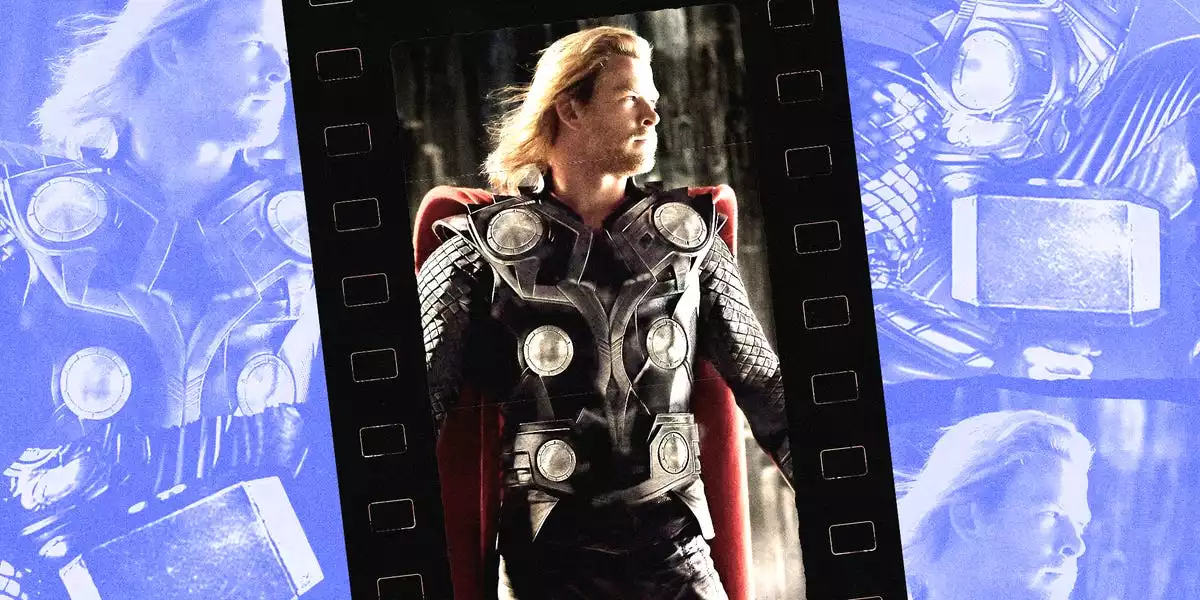

A Shakespearean director’s wager that helped industrialize the MCU
Fifteen years after its May 2011 debut, Kenneth Branagh’s *Thor* reads less like a standalone superhero film and more like an early blueprint for what would become the Marvel Cinematic Universe (MCU) operating system: a repeatable method for turning character IP into interconnected, high-frequency cultural product.
Branagh arrived with a reputation forged in Shakespeare—an unusual credential for a studio then still proving that comic-book properties could sustain a long-horizon strategy. Yet that background became a competitive advantage. His unsolicited, decisive pitch in Los Angeles—a direct act of creative entrepreneurship inside a risk-managed corporate environment—illustrates how major studios sometimes reward initiative when it comes packaged as a coherent vision. In business terms, Branagh didn’t merely “direct a movie”; he activated dormant intellectual property by reframing Norse mythology as emotionally legible, character-driven spectacle.
That reframing mattered. *Thor* had to accomplish multiple objectives simultaneously:
- Introduce a new hero with enough depth to sustain sequels and crossovers
- Establish a mythic realm (Asgard) without alienating mainstream audiences
- Balance tone—serious stakes with accessible humor—without breaking credibility
- Prove commercial viability, not just critical competence, for a less familiar Marvel character
The result—$449 million in global box office—validated Marvel’s approach at a pivotal moment. It demonstrated that a “mid-tier” tentpole could become a cornerstone asset, underwriting the confidence required for larger ensemble bets that followed, including *The Avengers*. For franchise economics, this is the equivalent of an early product release that proves market fit before the company scales the platform.
Rehearsals, casting chemistry, and the hidden mechanics of blockbuster execution
One of the most instructive aspects of *Thor* is how its success is attributed not only to visual effects or brand power, but to production methodology—a reminder that execution, not just IP, determines whether a franchise compounds.
Branagh’s theater-rooted discipline—particularly a rigorous rehearsal regimen—functioned like an analog precursor to modern iterative pipelines. In technology terms, it resembles agile prototyping: workshopping performance choices early to reduce downstream rework, avoid expensive reshoots, and keep narrative intent coherent under schedule pressure. While contemporary tentpoles rely heavily on previs and post-production flexibility, *Thor* underscores the enduring value of “front-loading” clarity.
Casting choices also reveal a deliberate strategy that maps cleanly onto organizational design:
- Chris Hemsworth was positioned to deliver physical credibility while remaining emotionally accessible—crucial for global resonance.
- Tom Hiddleston’s Loki provided psychological complexity, giving the film a relational engine rather than a purely external conflict.
- Anthony Hopkins and other seasoned performers acted as stabilizers—“talent stacking” that elevates the ensemble and accelerates learning curves, much like pairing veteran engineers with high-potential hires in a scaling product team.
This blend of casting chemistry, rehearsal discipline, and tonal calibration created a film that could play as myth, family drama, and blockbuster—without collapsing into parody or self-seriousness. That tonal equilibrium became a touchstone for the MCU’s broader brand promise: high stakes, human emotion, and enough levity to keep the experience broadly accessible.
From theatrical dominance to platform logic: what *Thor* foreshadowed about media ecosystems
Seen through a business and technology lens, *Thor* is also a case study in ecosystem building. The MCU’s “shared universe” model behaves like a platform: each film is both a product and an on-ramp to adjacent products. That logic has only intensified under Disney’s ownership, where vertical integration—control of IP, production, marketing, and distribution—mirrors the way tech conglomerates build contiguous service suites to reduce churn and increase lifetime value.
Key parallels between MCU franchise architecture and platform strategy include:
- Modular storytelling: characters and plotlines can be recombined across films and series like interoperable components.
- Recurring engagement loops: sequels, spin-offs, merchandise, and now streaming series function as retention mechanics.
- Barrier creation: scale and integration raise the cost for competitors to replicate the ecosystem, while also inviting regulatory and market scrutiny.
Yet the environment that *Thor* benefited from in 2011 has changed. Studios then optimized a relatively stable theatrical-to-home window, and MCU films helped preserve cinema’s event status. Today, compressed release cycles, streaming-first consumption, and global volatility have complicated the profitability math. Rising production and marketing costs mean franchise entries increasingly require precision in forecasting—audience demand, release timing, and international performance—while competing against an attention economy fragmented across social platforms, games, and creator ecosystems.
In that context, *Thor* stands as a reminder that franchise durability is not guaranteed by IP alone. It is earned through repeatable craft and operational rigor.
Practical lessons for executives navigating IP, analytics, and creative risk
For business and technology leaders, the enduring relevance of *Thor* lies in how it blends artistic integrity with scalable commercial design—a balance many organizations struggle to maintain as they grow.
Several transferable lessons emerge:
- Empower entrepreneurial agency inside large systems: Branagh’s pitch shows how initiative can unlock value when leadership allows room for distinct vision within guardrails.
- Adopt rehearsal-like iteration in product development: controlled experimentation early—before full-scale rollout—reduces costly corrections later.
- Use “talent stacking” intentionally: mixing veterans and emerging talent can raise baseline quality while building the next generation of leaders.
- Treat IP as a platform, not a single asset: modular narratives that travel across film, series, gaming, and live experiences create resilience in fragmented markets.
- Balance analytics with taste: predictive tools can optimize casting, tone, and timing, but the differentiator remains a coherent creative thesis audiences can feel.
Branagh has spoken of interest in revisiting *Thor* with a more grounded, “*Logan*-style” gravity—an idea that captures the central tension facing modern franchises: ubiquity versus depth. As media economics tighten and attention splinters, the next competitive edge may belong to studios and platforms that can scale spectacle while still making room for boutique, character-forward entries that restore emotional stakes—because even the biggest universes are ultimately sustained by stories that feel personal.

 By
By
 By
By
 By
By
 By
By
 By
By


 By
By







